

[For Beginners] Recommended Enka Classics for Karaoke — Women Singers Edition

In recent years, as Showa-era kayōkyoku has been attracting attention not only in Japan but also overseas, enka—often called the spiritual hometown of the Japanese—has also been drawing keen interest among younger generations.
Enka is a genre that has evolved in many forms, from classic, orthodox styles to songs with a strong kayōkyoku flavor and even pieces that fuse multiple genres, and it continues to enjoy enduring popularity in the Reiwa era.
For those new to enka, this article introduces classic enka masterpieces by female singers that are easy to try at karaoke.
We’ve compiled a lineup of timeless hits that even beginners are likely to know, so if you’re interested, be sure to check it out.
By the way, we also introduce a male-singer version in another article, so don’t miss that, either!
- [Enka] Songs that are easy to sing even for those who are tone-deaf [Female singers edition]
- [2026] Easy Enka Songs for Karaoke: Recommended Picks — Women Singers Edition
- [2026] Easy-to-Sing Enka: From Classic Masterpieces to Recent Hits [Female Singers Edition]
- [For Beginners] Recommended Enka Masterpieces for Karaoke — Male Singers Edition
- [For Women] A roundup of enka songs that can score high in karaoke
- A roundup of female enka singers in their 70s: voices that evoke nostalgia
- [2026] Amazing if you can sing them! Enka Masterpieces [Women Singers Edition]
- A roundup of leading female enka singers representing the Showa era
- [For Women] Masterpiece Enka Songs with a High Degree of Difficulty
- 【2026】Difficult Enka Songs to Sing — Women Singers Edition
- [Asian Songstress] A Collection of Teresa Teng’s Easy-to-Sing Songs
- [Enka] Songs That Are Easy to Sing Even for the Tone-Deaf [Male Singer Edition]
- Nostalgic enka. A collection of classic enka hits from the Showa era.
[For Beginners] Recommended Enka Classics for Karaoke – Women Singers (21–30)
Festival MamboMisora Hibari

Hibari Misora’s classic “Omatsuri Mambo.” While this song falls under the enka category, it shares many elements with J-pop, and among Misora’s works, it’s one of the easiest to sing.
Its vocal range is somewhat broad at mid1 C to hi C, but the pitch movement isn’t very drastic, so overall it’s arranged to be easy to sing.
However, the tempo is relatively fast at BPM 120, so you’ll need decent articulation.
Even so, there are no highly demanding enka-style embellishments like complex kobushi, so it’s fair to say the song still firmly maintains its singability.
It’s a very lively, feel-good number that really gets the crowd going, so consider adding it to your repertoire.

From Kyoto to HakataTanaka Aimi

Kyoto kara Hakata made is a memorable piece with a full-fledged enka style suffused with melancholy.
Among Aimi Tanaka’s songs, this one especially emphasizes the low register, with the A melody sustaining low tones that make use of overtones.
The overall range isn’t very wide, so it’s by no means a difficult song; however, if you want to bring out its charm to the fullest, align the key around the A melody rather than the chorus.
Mixing in as much breath as if your lungs were being squeezed makes it easier to acquire overtones, so why not practice that technique while working on this song?
Don’t scold me.Tanaka Aimi
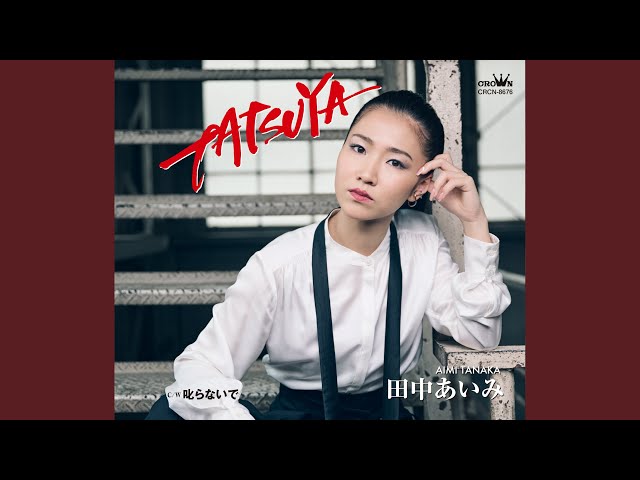
A rare work for Aimi Tanaka that’s arranged in a classic enka style, “Shikara-naide.” The melody feels like orthodox enka from the ’60s–’70s, but in fact the song contains no difficult kobushi (melismatic ornamentation) at all.
The basics stick to a single note, with at most a two-note change, and even those changes don’t move at the brisk speed typical of folk songs.
As an enka number, it’s undoubtedly among the easiest to sing.
The vocal range is fairly narrow as well, but since high notes appear several times on the “i” vowel, be careful not to let your tone become too thin.
Ishikari ElegyTanaka Aimi

Although Aimi Tanaka is strongly associated with kayōkyoku, she’s also outstanding at enka, partly because she’s a disciple of Takashi Hosokawa.
Among her enka-style songs, the one I especially recommend is Ishikari Banka.
It’s authentic enka, but rather than relying on detailed techniques like kobushi, it showcases fundamental vocal skills—such as overtones and dynamics—so the vocal line itself isn’t too difficult.
There are several instances of a slightly flipped tone that’s somewhat similar to the hiccup technique, so keep that in mind when you sing.
Farewell SongIchikawa Yukino

Beloved by many fans as a tear-jerking masterpiece, Yukino Ichikawa’s signature song “Nagori-uta.” While it’s a piece that evokes melancholy in an enka style, if you pay attention to the finer details, you’ll notice it’s actually closer to Showa-era kayōkyoku than to traditional enka.
In fact, techniques associated with enka—such as kobushi ornamentation—are used sparingly, and the enka flavor is largely limited to the melody.
The vocal range isn’t particularly wide either, making it a song that anyone can tackle with ease.
Consider adding it to your repertoire.
evening primroseIchikawa Yukino

It’s a very emotional song when you listen to it as a whole.
Because of that, I want you to pay attention to dynamics so it doesn’t become monotonous, and make sure to come in clearly on the first word of each phrase.
The overall vocal range is C#3 to B4; the verses (A and B sections) sit low, and the chorus jumps up into the high range all at once.
Sing the A and B sections gently, as if you’re speaking, without overexerting.
In the chorus, every phrase starts with “na,” but the N-line tends to be nasal and can make pitching difficult.
Bring it out more strongly and accented than you think! The note right after that “na” is the highest note in the song.
Use the “na” as a runway and then release the next note in one go.
It’s a bit of a challenging song, but give it some practice.

Coral AnthologyIchikawa Yukino

The song Sango-sho, released as the coupling track for Yukino Ichikawa’s popular hit Nostalgic Match Flame.
While it’s classified as enka, from a technical standpoint it leans heavily toward kayōkyoku, so the vocal difficulty is relatively low.
The range is about average, with many passages sitting in the low to mid register throughout.
Since it doesn’t demand anything particularly challenging in terms of vocal range or technique, it’s a comparatively easy song to sing even for those not accustomed to enka.