

![[For Women] Sing challenging songs at karaoke and steal the spotlight!](https://i.ytimg.com/vi_webp/258qUAI7rck/maxresdefault.webp)


If you’re blessed with a singing voice you’re proud of, you’ll want to make the most of it and show it off to friends and everyone around you, right? In this special feature, we’ve collected challenging songs recommended for women like you.
Even when we say “songs that are hard to sing,” the difficult points vary: some demand a very wide vocal range, while others require delicate expressiveness, and so on.
Each song’s article includes notes on what makes it challenging and tips on how to sing it well, so be sure to use this as a guide and show off your wonderful voice to the fullest!
- Cool If You Can Sing! Popular Karaoke Songs Recommended for Women
- [Taking on a song with a wide vocal range] An S-class challenge track
- [High-pitched warning!] Songs with high notes that are hard to sing
- Songs Men Want Women to Sing at Karaoke: Irresistible Tracks [2026]
- Pick out the challenging songs that will earn you respect if you can nail them at karaoke!
- Songs to Help Women Sing Better: Practice Tracks for Improving at Karaoke
- Songs you’d want women to sing at karaoke! Karaoke picks recommended for Gen Z
- Karaoke songs that make it easy to score 100 points [for women]
- [For Women] Masterpiece Enka Songs with a High Degree of Difficulty
- [Songs That Make You Popular] Sing these to be a hit! Women’s karaoke songs
- A must-see for low-voiced women! Popular songs that are easy to sing at karaoke
- [For Women] Easy-to-Sing and Crowd-Pleasing Karaoke Songs
- A collection of cool songs that sound great when sung by women, originally male songs
[For Women] Sing challenging songs at karaoke and steal the spotlight! (1–10)
I can’t be rightzutto mayonaka de ii no ni.

This is a song written by vocalist ACA-ne as the theme for the live-action film The Promised Neverland, released on December 18, 2020.
The overall vocal range is A3–F5, and it opens with the chorus melody, jumping straight to a D5.
If you can’t hit that first note, the following range will be tough as well, so make sure to prepare thoroughly before singing and aim for it with focus.
It’s definitely not an easy range overall, but the pre-chorus might be the only section you can sing without straining.
Also, with a song that has such a wide range, relying on your throat will make every register harder, so be careful.
To prevent your pitch from dropping, keep your eyebrows and facial muscles lifted and open your throat.
The trick is to commit and project your voice confidently without hesitation.

AdrenaYOASOBI

A light and poppy song quintessentially YOASOBI, released digitally on January 4, 2026.
It was written as the opening theme for the TV anime “Hana Zakari no Kimitachi e.” While it sounds cute, the melody has a brisk tempo with fine pitch movements up and down.
If you power through in chest voice alone, your throat can get strained, so it’s better to incorporate some head voice as you sing.
When you try singing it, you’ll probably find the tempo is faster than you expected.
The key is not to let your body ride the beat too much.
Core support is important, so engage your lower abdomen and try to sing straight without letting your voice waver.
Start by memorizing the melody—lightly humming it as you learn works well!
danceAdo

It was selected as the theme song for NHK’s music program “Yakou Ongaku VocaloP 5min.” I hear the show features a different Vocaloid producer each time and introduces how Vocaloid music is made.
Among those songs, many people probably think, “I want to sing that!” when it’s a track sung not by a synthesized voice but by Ado.
I like ‘Odo’ too and used to sing it a lot, but when I thought, “Let’s sing it again after a while!” and tried it at karaoke the other day, the melody had completely slipped my mind and I couldn’t sing it at all…
It really drove home how, if you don’t listen regularly, you forget such a complex melody.
I get the impression it has dramatic pitch jumps and lots of melodic figures.
Still, the belted parts in the chorus are truly cool, and it feels great to sing—highly recommended!
promiseHirose Kōmi

She’s often called the “Queen of Winter,” and “promise” is also loved as part of that tradition during the winter season.
It features a passionate, dramatic melody and a structure that shows off vocal ability, with a chorus that leaps into the high register from the A and B sections.
I sing it often myself, but the tricky part is definitely the chorus.
It combines a brisk tempo, fast passages, and extremely high notes—all three at once.
Also, it’s easy to speed up in the chorus once you get into it, so aim to sing with enough composure.
When transitioning from the A/B sections to the chorus, try lifting your eyebrows and engaging your facial muscles so the shift in melody feels smoother.
Into The LightMISIA

People who excel at soaring high notes often choose to sing MISIA’s songs! Among them, I picked “INTO THE LIGHT” this time.
It was released the same year as her debut single “Tsutsumi Komu Yō ni…” and is extremely popular among fans.
The powerful vocals and those strikingly high tones that make you think “How high can she go?” are signature features.
The overall range spans from F#3 to F#5, reaching notes you don’t often use—truly impressive.
Because it’s so high throughout, you really need to focus on breath volume, explosiveness, and core engagement; delivering it like a piercing, chest-voice-like sound is quite challenging.
But the exhilaration after finishing is incredible, so sing it boldly and wow everyone around you!
Fiancé-kkyunano

It’s the opening theme of Ranma 1/2, with a poppy, catchy, very anime-like vibe.
The song title is read as “Ii na Zukkyun.” It’s notably upbeat, and the words come fast right from the start, so it can be tough unless you’ve memorized the lyrics.
The overall vocal range is F#3–D5, with a higher chorus.
If you imitate ano’s singing style, it can turn nasal; for those not used to it, hitting the high notes or staying on pitch may feel difficult.
First, focus on properly engaging your vocal cords.
Place your hand in the hollow between your collarbones and sing as if the sound is vibrating out from there.
At the same time, aim to resonate in your head; that will make the high notes easier and help you sing more comfortably.
Heralding springyama
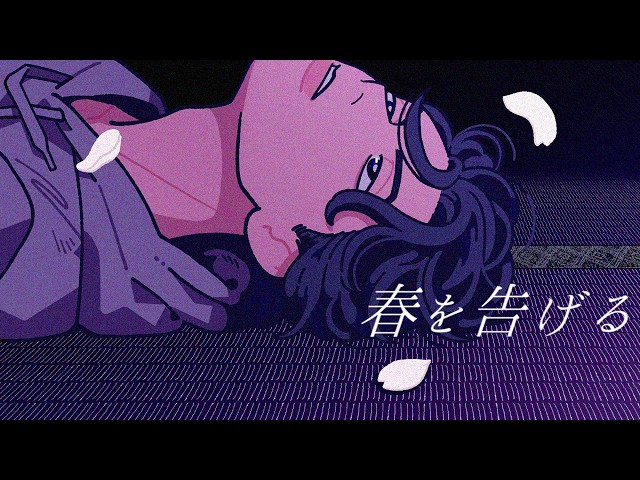
Yama’s “Haru wo Tsugeru” suddenly drew a lot of attention.
Some of you might recognize the opening phrase.
However, when you actually try singing it, it’s known for being difficult due to its dramatic jumps in pitch.
The rhythm is crucial and the tempo is on the faster side, so it’s best to learn it slowly, step by step at first.
YouTube lets you change the playback speed, so I recommend using that.
When you sing, try not to push on the high notes; if you stay relaxed, you’ll be able to use your falsetto effectively.
It might help to practice singing lightly, with a bit of bounce.
As you get a feel for the melody line, you’ll naturally figure out where to place accents and where to cut off your voice.
Once you’re comfortable, try using a bit more breath—switching between chest voice and falsetto should then feel more natural.