

Songs to Help Women Sing Better: Practice Tracks for Improving at Karaoke


Conditions for becoming a better singer.
Of course, acquiring correct and efficient vocal production is the most important point, but if you can’t apply the fundamentals you’ve learned to actual songs, it won’t amount to much.
To build that kind of “real-world ability,” it’s crucial to choose appropriate practice songs and, by singing them, develop the expressive skills needed to perform actual pieces.
In this article, I’ve selected songs that seem optimal for the goal of “getting better at singing.”
Even when someone says, “I want to become a better singer,” everyone’s current level varies, so I’ve chosen a wide range—from beginner-friendly songs to more difficult ones.
Some of the individual song introduction articles also include brief tips on how to sing them, so please use those as references and do your best to further improve your skills with the help of this article.
That said, the most important thing is to pick songs you love—the ones that make you think, “I want to sing this!” or “I want to be able to sing this!”—and enjoy singing them.
- [Karaoke] A roundup of songs that are easy for women to sing!
- Practice Songs Helpful for Learning Mixed Voice (Middle Voice) [For Women]
- Cool If You Can Sing! Popular Karaoke Songs Recommended for Women
- Karaoke songs that are easy to sing even if you’re not confident in your pitch (for women in their 50s)
- A must-see for low-voiced women! Popular songs that are easy to sing at karaoke
- Easy-to-sing karaoke songs: Classic picks for women in their 40s
- Karaoke songs that make it easy for women to score high
- [Songs That Make You Popular] Sing these to be a hit! Women’s karaoke songs
- Even if you’re tone-deaf, it’s okay! Easy karaoke songs for women
- [For Women] Easy-to-Sing and Crowd-Pleasing Karaoke Songs
- Great for karaoke song selection! Recommended easy-to-sing songs for Gen Z women
- Karaoke songs that are easy to sing even with a low voice (for women in their 30s)
- [For women] Songs with a narrow vocal range that are easy to adjust the key for!
[For Women] Songs That Make You a Better Singer: Practice Tracks for Improving at Karaoke (61–70)
the NOISE (Contains a Samples of Into The Night)Le Sserafim × YOASOBI

LE SSERAFIM’s track “the NOISE (Contains a Samples of Into The Night),” a collaboration with YOASOBI’s iconic song “Yoru ni Kakeru,” is based on a piece that featured many high-register passages.
In this new song, the high notes and melodic leaps are toned down, making it easier to sing.
However, unlike the original’s straightforward, full-on on-beat feel, the vocal lines here are built primarily around a backbeat that most Japanese listeners don’t naturally perceive.
As a result, you’ll need to sing with a solid sense of the off-beat and groove.

On your marksaimyon

This is a song scheduled for digital release in July 2025, selected as the theme song for the TBS drama “The 19th Chart.” In an interview, Aimyon said, “It’s my first song at 30, and it also has the meaning of returning to my roots.” The tempo is very relaxed, with little pitch fluctuation, making it an easy key to sing.
If you want to return to your origins or make a fresh start, why not learn this song? Also, as the song progresses into the latter half, Aimyon’s singing shifts from falsetto to chest voice.
Even without consciously trying, I think you’ll naturally be drawn into the world of the song as you sing it.
In particular, the latter half of the final chorus is sung with great power.
As your emotions rise, it’s easy to tense up, so try singing while projecting your voice into the distance to avoid straining.

periodIkuta Erika
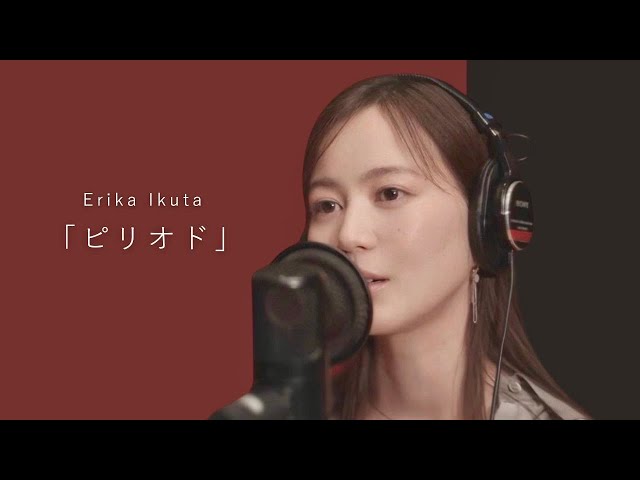
Erika Ikuta, a former member of Nogizaka46, has been highly praised for her vocal ability since her idol days, and after graduating she has been active both as a TV personality and as an artist.
Among her songs, the one I especially recommend is Period.
While the track features many falsetto passages, they’re not the ultra-high kind; they’re at a level you can comfortably handle with a whispery-leaning mixed voice, and the lowest notes are fairly high as well, so the high range shouldn’t feel too demanding.
Because the song allows for a wide key drop, I also recommend lowering the key as much as you need to find a comfortable range.
The color of loveHiguchi Ai

Ai Higuchi, who is active as a singer-songwriter, released this digital-only single in July 2023.
Over a simple backing track centered on piano and strings, she delivers a stunning vocal performance.
In particular, the sections sung in her powerful mid-to-high alto range let you fully savor the appeal of her voice.
If you listen with attention to how she closes phrases, her use of rests within the melody, and the effective placement of breath noises, you’ll truly appreciate her exceptional expressive singing technique.

Futabaaimyon

It’s Aimyon’s fourth digital-only single, released on March 24, 2022.
Apparently, it served as the theme song for NHK’s “Aimyon 18 Festival.” What leaves the strongest impression on first listen is, above all, Aimyon’s very powerful singing.
Judging from that powerful voice, it seems likely that throughout the entire track she uses solid chest resonance—in other words, chest voice—very effectively, making this one of the best songs to study for learning chest voice.
If you try to imitate only the power and end up tensing your throat, your voice won’t resonate and you may hurt your throat, so please practice with plenty of caution.
Until I know loveaimyon

This is Aimyon’s 11th major single, released digitally in advance on May 7, 2021, and on CD on May 26 of the same month.
Built around a very approachable vocal melody and set at an easy-to-sing mid-tempo, it’s one of those songs that’s easy to pick for karaoke.
While it has that kind of accessibility, there’s also a lot to note in Aimyon’s vocal expression here—her powerful singing in the chorus, in particular, is remarkable.
It’s an ideal piece to use as practice material if you’re looking to improve your vocal expression, so definitely give it a try! I especially recommend it to women aiming to be pop/rock-style singers.
HikariIkuta Rira

Rira Ikuta, who is also active as the vocalist “Ikura” of the buzzworthy vocal duo YOASOBI, released this song digitally in December 2020, written and composed by herself.
It’s a gentle ballad, but the high tones showcased in the chorus are truly impressive, and it may be one of the best practice pieces for women aiming to master mixed voice and falsetto.
There’s a lot to learn from her singing and vocal production, which never loses its shine at any point in the song.
If you play the piano, it might be great to try singing it as a piano-vocal performance rather than just karaoke.