

Songs to Help Women Sing Better: Practice Tracks for Improving at Karaoke


Conditions for becoming a better singer.
Of course, acquiring correct and efficient vocal production is the most important point, but if you can’t apply the fundamentals you’ve learned to actual songs, it won’t amount to much.
To build that kind of “real-world ability,” it’s crucial to choose appropriate practice songs and, by singing them, develop the expressive skills needed to perform actual pieces.
In this article, I’ve selected songs that seem optimal for the goal of “getting better at singing.”
Even when someone says, “I want to become a better singer,” everyone’s current level varies, so I’ve chosen a wide range—from beginner-friendly songs to more difficult ones.
Some of the individual song introduction articles also include brief tips on how to sing them, so please use those as references and do your best to further improve your skills with the help of this article.
That said, the most important thing is to pick songs you love—the ones that make you think, “I want to sing this!” or “I want to be able to sing this!”—and enjoy singing them.
- [Karaoke] A roundup of songs that are easy for women to sing!
- Practice Songs Helpful for Learning Mixed Voice (Middle Voice) [For Women]
- Cool If You Can Sing! Popular Karaoke Songs Recommended for Women
- Karaoke songs that are easy to sing even if you’re not confident in your pitch (for women in their 50s)
- A must-see for low-voiced women! Popular songs that are easy to sing at karaoke
- Easy-to-sing karaoke songs: Classic picks for women in their 40s
- Karaoke songs that make it easy for women to score high
- [Songs That Make You Popular] Sing these to be a hit! Women’s karaoke songs
- Even if you’re tone-deaf, it’s okay! Easy karaoke songs for women
- [For Women] Easy-to-Sing and Crowd-Pleasing Karaoke Songs
- Great for karaoke song selection! Recommended easy-to-sing songs for Gen Z women
- Karaoke songs that are easy to sing even with a low voice (for women in their 30s)
- [For women] Songs with a narrow vocal range that are easy to adjust the key for!
[For Women] Songs That Make You Better at Singing: Practice Tracks for Improving at Karaoke (81–90)
Final Callmilet
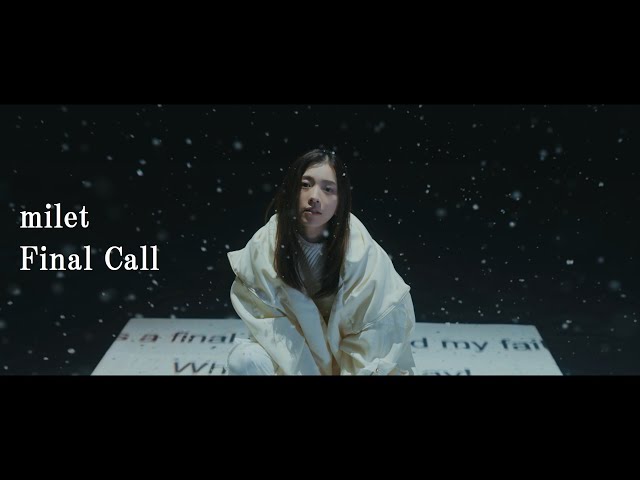
This is Milet’s digital-only single, released in October 2022.
It was selected as the theme song for “Seven Secretaries THE MOVIE.” The track fully showcases milet’s highly dynamic vocals.
While it’s a slightly advanced pick, it’s an excellent practice piece for developing powerful, dynamic vocal expression.
When singing the high notes, firmly engage the muscles around your solar plexus to support your upper body, and try to avoid constricting your throat as much as possible.
You should feel a greater sense of openness in your upper range.
But please be careful not to strain your throat!

A Naked Heartaimyon

This was Aimyon’s 10th major single, released in June 2020.
It also served as the theme song for the TBS Tuesday drama “My Housekeeper Mr.
Nagisa.” Aimyon’s singing never tries to exaggerate her “vocal prowess,” yet on a solid foundation she delivers a plain, unaffected voice and performance that beautifully captures the subdued atmosphere of this ballad.
It’s a song that makes you realize that making a song sound good doesn’t depend solely on vocal technique.
FriendsRebekka

It’s the fourth single by the Japanese band Rebecca, released in October 1985.
It was used as the ending theme for the Nippon TV drama “Half Potato na Oretachi” and became a big hit.
With its medium-to-up-tempo beat and exhilarating drive, it’s an easy, fun song to sing at karaoke.
However, to sing it like the original, you’ll need to belt in chest voice, especially for the high notes in the chorus, so it’s an ideal piece for practicing high-tone chest voice.
The dynamics are also easy to grasp in this song, so try studying and practicing with a focus on that aspect.
CAN YOU CELEBRATE?Amuro Namie

This is Namie Amuro’s ninth single as a solo artist, released on February 19, 1997.
It served as the theme song for Fuji TV’s Monday 9 p.m.
drama “Virgin Road” and as the image song for the Hitachi Maxell “Platinum & Gold MD” commercial in which she appeared—a double tie-in.
Even as of 2022, when this article is being written, it remains a classic and hugely successful song often played at weddings.
The vocal melody—crafted by Tetsuya Komuro, often called a genius at producing hits—is highly memorable, making it an ideal piece for women to use as a practice song.
Since it’s a gentle ballad, be mindful during practice to produce soft, relaxed high notes in the chorus without tightening your throat.
The Kouga Ninja ScrollsOnmyoza

The 10th single by the Japanese metal-influenced rock band Onmyo-za, released in April 2005.
The most important requirement for singing this song is a high, ringing tone that doesn’t clamp the throat.
If you’re confident in your high range or want to train it, definitely give this track a try.
Many of my vocal training students choose it as practice material.
If you belt the high notes in full chest voice, you risk losing clarity and straining your throat, so being able to use a metallic, breath-efficient mixed voice will likely determine whether you can sing it well.
Engage your core to support your upper body, keep the throat relaxed and open, and aim for a free, effortless high register.
Watch Me!YOASOBI

It’s a bright, electro-pop-leaning sound with a light beat and a chorus melody that really sticks in your head.
It’s a cute song that feels very YOASOBI, so I’d love for teenage girls to sing it energetically! By the way, it seems the English version was released on May 30, 2025.
Feel free to choose whichever language you like when you sing! The chorus is catchy and easy to remember, but the parts outside the chorus seem tricky… Rather than trying to memorize everything at once, let’s master it step by step.
The overall vocal range is G3–F5, and singing lightly with a bouncy feel without forcing your voice will match the song’s vibe.
If you keep time by tracing a circle with your hand from your brow to above your head while singing, it helps you relax and sing more lightly.
Bending your knees slightly to the rhythm at the same time will help you relax even more, so definitely give it a try!

[For Women] Songs That Make You a Better Singer: Practice Tracks for Improving at Karaoke (91–100)
flameLiSA

This is LiSA’s 17th single, released on October 14, 2020.
By the way, the title is read as “Homura.” It was also chosen as the theme song for the film Demon Slayer: Kimetsu no Yaiba – The Movie: Mugen Train and became a huge hit along with the movie, so many of you have probably heard it.
Musically, at first listen it’s a quiet, female-vocal ballad, but within that calmness it carries a passionate feeling and expression, making it a song that truly embodies its title.
It may be a slightly advanced pick, but I think it’s an ideal piece to use as practice material for enhancing vocal expression.