

Songs to Help Women Sing Better: Practice Tracks for Improving at Karaoke


Conditions for becoming a better singer.
Of course, acquiring correct and efficient vocal production is the most important point, but if you can’t apply the fundamentals you’ve learned to actual songs, it won’t amount to much.
To build that kind of “real-world ability,” it’s crucial to choose appropriate practice songs and, by singing them, develop the expressive skills needed to perform actual pieces.
In this article, I’ve selected songs that seem optimal for the goal of “getting better at singing.”
Even when someone says, “I want to become a better singer,” everyone’s current level varies, so I’ve chosen a wide range—from beginner-friendly songs to more difficult ones.
Some of the individual song introduction articles also include brief tips on how to sing them, so please use those as references and do your best to further improve your skills with the help of this article.
That said, the most important thing is to pick songs you love—the ones that make you think, “I want to sing this!” or “I want to be able to sing this!”—and enjoy singing them.
- [Karaoke] A roundup of songs that are easy for women to sing!
- Practice Songs Helpful for Learning Mixed Voice (Middle Voice) [For Women]
- Cool If You Can Sing! Popular Karaoke Songs Recommended for Women
- Karaoke songs that are easy to sing even if you’re not confident in your pitch (for women in their 50s)
- A must-see for low-voiced women! Popular songs that are easy to sing at karaoke
- Easy-to-sing karaoke songs: Classic picks for women in their 40s
- Karaoke songs that make it easy for women to score high
- [Songs That Make You Popular] Sing these to be a hit! Women’s karaoke songs
- Even if you’re tone-deaf, it’s okay! Easy karaoke songs for women
- [For Women] Easy-to-Sing and Crowd-Pleasing Karaoke Songs
- Great for karaoke song selection! Recommended easy-to-sing songs for Gen Z women
- Karaoke songs that are easy to sing even with a low voice (for women in their 30s)
- [For women] Songs with a narrow vocal range that are easy to adjust the key for!
[For Women] Songs That Make You a Better Singer: Practice Tracks for Improving at Karaoke (91–100)
SeventeenYOASOBI

This is the 18th digital-only single by the Japanese music duo YOASOBI, released in March 2023.
Ikura, the vocalist of YOASOBI, is widely recognized for her exceptional singing ability, and mastering this song could be expected to significantly improve your own skills as well.
In particular, the chorus showcases rapid shifts between chest voice and falsetto—and back again—within an up-tempo arrangement, making it an ideal piece for practicing voice transitions.
While it’s a bit challenging for the average singer, I encourage you to master it and aim for the next level.

boyfriendaiko

This is aiko’s sixth major-label single, released in September 2000.
It became her first song to reach No.
1 on the Oricon chart.
The vocal melody moves dramatically up and down, so while it may be a slightly advanced choice for karaoke practice, it’s ideal for training accurate pitch.
Moreover, if you can make a complete copy of this song, you’ll develop a smooth transition from chest voice to falsetto from the pre-chorus into the chorus, and the ability to control continuous pitch changes at the end of the chorus.
Be sure to practice so you can replicate every note without missing any!
Tears aren’t just for show.Nakamori Akina
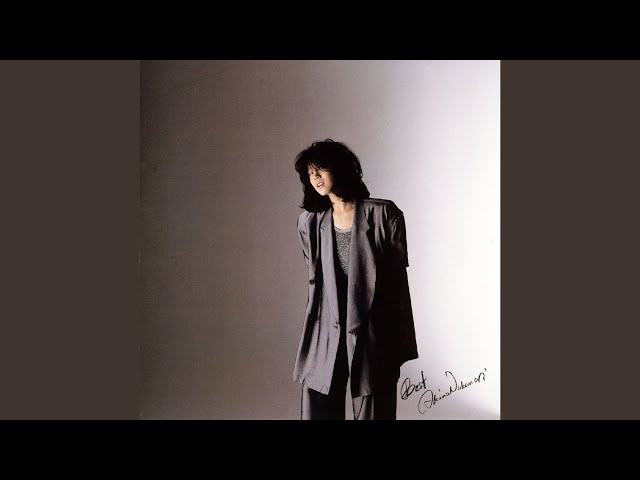
Written and composed by Yosui Inoue, this was Akina Nakamori’s 10th single, released in November 1984.
While traces of Inoue’s signature quirks can be heard throughout the melody, it’s still very much a Showa-era kayokyoku at heart—fundamentally simple in its construction.
It’s one of the best choices both as a vocal practice piece and as a relatively approachable karaoke song.
In particular, it’s likely an ideal selection for women with lower voices.
To further enrich your expressiveness, it might be worth studying Inoue’s own self-cover version as reference material.
First LoveUtada Hikaru

Released in April 1999 as Hikaru Utada’s third single.
Perhaps due to her background, Utada’s songs—highly praised for a vocal ability uncommon in Japan—make this one an advanced selection for karaoke.
To sing it cleanly and dynamically like she does, precise control of both “voice” and “breath” is crucial.
While the powerful mix voice and beautiful falsetto are striking, what truly stands out here is the low register singing in the A section.
It might not be an exaggeration to call it astonishing for a young woman to produce such solid low notes.
This song is an ideal practice piece for mastering a wide range of vocal techniques.
Revolutionary Journey – On the WayAina ji Endo

Since Aina the End is famous for her husky voice, I imagine some low-voiced women have included her songs in their repertoire.
“Kakumei Dōchū – On The Way” has great tempo and is a really cool track! There’s a call-and-response section in the A-melody, and it seems like it would be a blast at karaoke—perfect for getting the crowd going—so I’d love for low-voiced women to try singing it! The chorus mainly sits on higher notes, reaching up to C5, but sing boldly without fear—project your voice as if you’re sending it far, and add some drive.
If you can get through this part, you’ll definitely level up!

frecklesJUDY AND MARY

It’s JUDY AND MARY’s 9th single, released in February 1996.
YUKI’s bright, straightforward high-toned voice feels very pleasant, and to sing this song, you’ll need a no-frills, straight-ahead vocal approach.
I think it’s best suited for those confident with relatively high ranges, but if you can learn to reproduce that clear, piercing high register, your vocal ability will surely improve dramatically.
Start from a comfortable key and gradually get used to it, practicing to produce a free, expansive high tone without constricting your throat.
To avoid injuring your voice, I recommend taking vocal training lessons.
A bouquet of flowers with loveSuperfly

Superfly’s fourth single, released in February 2008.
To sing this song, it’s essential to have firmly mastered proper vocal technique.
On top of that, it’s an ideal choice as a practice piece for producing straight high notes without resorting to falsetto.
At first, it’s fine to use head voice in the tougher parts, but I encourage you to try to make the performance as dynamic as possible.
It’ll be perfect once you free your throat and can use high head voice notes with ease.