

Karaoke songs that are easy to sing even if you’re not confident in your pitch (for women in their 50s)


When you’re invited to go to karaoke with friends or coworkers, it’s hard to decline just because you’re not good at singing or you’re not a fan of karaoke, right? So in this article, we’ve gathered songs that seem easy to sing even for women in their 50s who aren’t confident singers.
If you’re going to sing, familiar tunes are best, aren’t they? With that in mind, we’ve focused on hit songs from the ’80s and ’90s, and we’ve also included some new releases by artists who were active back then! The article includes tips for singing as well, so please use it as a reference and enjoy your karaoke time! And for younger readers, we hope this helps you choose songs when you go to karaoke with people in their 50s.
- [For People in Their 50s] Ranking of Easy-to-Sing Karaoke Songs [2026]
- Easy-to-sing Japanese karaoke songs recommended for women in their 50s
- [Karaoke] A roundup of songs that are easy for women to sing!
- Even if you’re tone-deaf, it’s okay! Easy karaoke songs for women
- A must-see for low-voiced women! Popular songs that are easy to sing at karaoke
- Recommended for women in their 50s! A curated selection of classic and popular karaoke hits that will get the crowd going
- Recommended for women in their 60s! Easy-to-sing Japanese karaoke songs
- Famous songs we’d like women in their 50s to sing (by age group)
- [Women in Their 40s] Even If You’re Tone-Deaf, You Can Sing! Karaoke Songs That Fit a Woman’s Vocal Range
- Recommended for women in their 60s! Songs that get the crowd going at karaoke
- Easy-to-sing karaoke songs: Classic picks for women in their 40s
- [Calling all low-voiced women in their 40s!] Songs that are easy to sing at karaoke
- Recommended for millennial women who aren't confident singers: easy-to-sing karaoke songs
[Women in their 50s] Karaoke songs that are easy to sing even if you're not confident in your pitch (111–120)
Cutie HoneyKōda Kumi

If you want a song to get everyone hyped, I recommend Cutie Honey.
It’s known across generations, so it’s a blast to sing at karaoke! Since many people are already familiar with the tune, you can probably breeze through it even if you’re not confident in your pitch.
The chorus does go a bit higher, so try to keep relaxed and avoid forcing your voice.
That said, this is a song where vibe matters more than vocal technique—if you move your body and use hand gestures to the rhythm, the tension naturally eases and it becomes much easier to sing! In fact, for people who aren’t used to karaoke, gestures are surprisingly important.
Standing stiff will almost always make you sing from your throat, so I highly recommend moving your body to the beat.
You’ll have a great time—don’t be shy, give it a try!

Return to MyselfHamada Mari

Mari Hamada, the female artist who sparked a pop-rock boom in Japan.
Known for her vibrant vocals, she has produced numerous classics with her upbeat rock sound.
Among her songs, the one I especially recommend is Return to Myself.
It’s a powerful track, yet the vocal range isn’t very wide, and the melodic leaps aren’t extreme.
For women in their 50s, whose lower to mid register tends to gain richness, it’s an especially singable song.

Detective StoryYakushimaru Hiroko

The classic film “Detective Story,” starring Hiroko Yakushimaru.
This piece was released as the movie’s theme song.
When it comes to Hiroko Yakushimaru’s vocals, her enveloping, gentle voice is distinctive, and this song showcases exactly that.
Overall, the vocal line has little fluctuation, and the range is kept relatively narrow.
It may feel slightly high, but you can handle that with key adjustment, so consider adding it to your repertoire.
Mr. Summertimesaakasu

Circus’s biggest hit song, “Mr.
Summertime.” It’s a Japanese-language cover of Michel Fugain & Le Big Bazar’s “Une Belle Histoire,” and it enjoyed nationwide popularity.
For women in their 50s, it’s safe to say almost everyone has heard this classic.
The song as a whole is arranged with a downbeat vocal line, so there are hardly any high notes.
If you’re a woman in your 50s who finds it hard to hit high pitches, give this one a try.
It can also be performed as a duet with a man, making it a great choice for getting the crowd going.
Kiss me right nowLINDBERG

This was LINDBERG’s second single overall, released on February 7, 1990.
It was used as the theme song for Fuji TV’s Monday 9 p.m.
drama “Sekai de Ichiban Kimi ga Suki!” (aired January–March 1990).
The song has a very simple, straightforward vocal melody, so even those who aren’t confident singers should be able to hum along with ease.
Speaking of 1990, it was the height of the band boom, and many women now in their 50s may have covered this song with their bands and sung or played it at school festivals.
It’s an up-tempo, exhilarating tune, so don’t worry about whether you’re good or bad at singing—just belt it out and feel energized!

Farewell, Siberian RailwayŌta Hiromi

Hiromi Ohta, the female singer known for songs like “Cotton Handkerchief.” Because many people have the impression that her voice is high, some may assume her songs are difficult to sing.
That’s why I recommend “Farewell Siberian Railway.” This piece features a very refined, understated melody and is set within a fairly narrow vocal range.
With its strong Showa-era kayōkyoku essence, the vocal line rises and falls gently, making it easier to sing.
Pink sighTakahashi Mariko
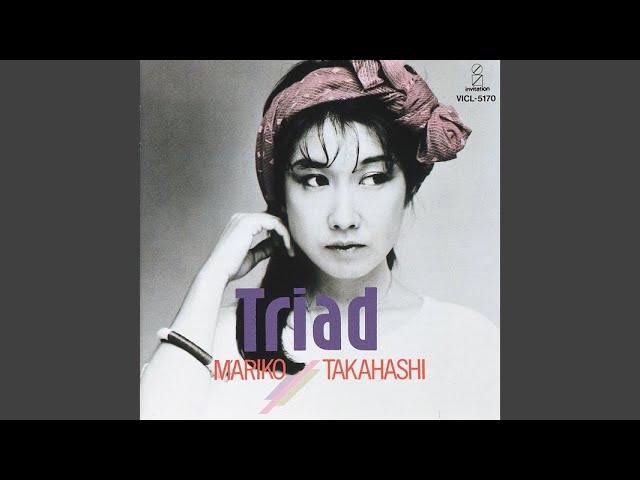
After gaining popularity as the vocalist of Pedro & Capricious and then achieving great success as a solo artist, singer Mariko Takahashi has produced many classic songs.
When it comes to her signature works, many people likely think of Momoiro Toiki (Pink Sigh).
Composed by ASKA of CHAGE and ASKA, the song features a stylish melody that evokes the atmosphere of the late 1980s and early 1990s.
Though distinctive, it’s easy to sing in tune and doesn’t have high parts, making it perfect for women in their 50s.