

Fireworks Trivia & Fun Facts Summary

Fireworks have long been loved by many people as a classic symbol of summer.
From large aerial fireworks to simple handheld sparklers, they come in many sizes and shapes—but plenty of people enjoy them all the same.
In this article, we’ll introduce a collection of fun facts related to fireworks all at once!
We’ve gathered a wide range of topics, from how to enjoy watching fireworks to their history, so learn lots of trivia as you read!
They’re all the kind of tidbits that will make you want to share them with someone once you know them, so please enjoy!
- Handheld fireworks. From classics to popular novelty fireworks!
- Trivia you think you know but surprisingly don’t? August trivia and fun facts quiz!
- Collection of trivia and fun facts about stars shining in the night sky
- Useful right away in daily life! Surprising trivia and handy tips
- So interesting you’ll want to tell someone! December Trivia & Fun Facts Special
- Insect trivia quiz: A collection of fun facts and questions about bugs for children.
- [Great for speeches] Trivia and fun-fact quizzes recommended for morning assemblies
- A collection of trivia and fun facts about September as we await autumn
- Firework sounds. Sound effects and relaxing ambient sound
- Trivia about hydrangeas. A collection of fun facts related to ajisai (hydrangeas).
- A song perfect for fireworks that color the summer night sky
- A collection of trivia and fun facts about August that will warm your heart
- [Tanabata Quiz] Three-choice questions to enjoy trivia and fun facts
Fireworks trivia & fun facts roundup (11–20)
There are two types of sparklers.
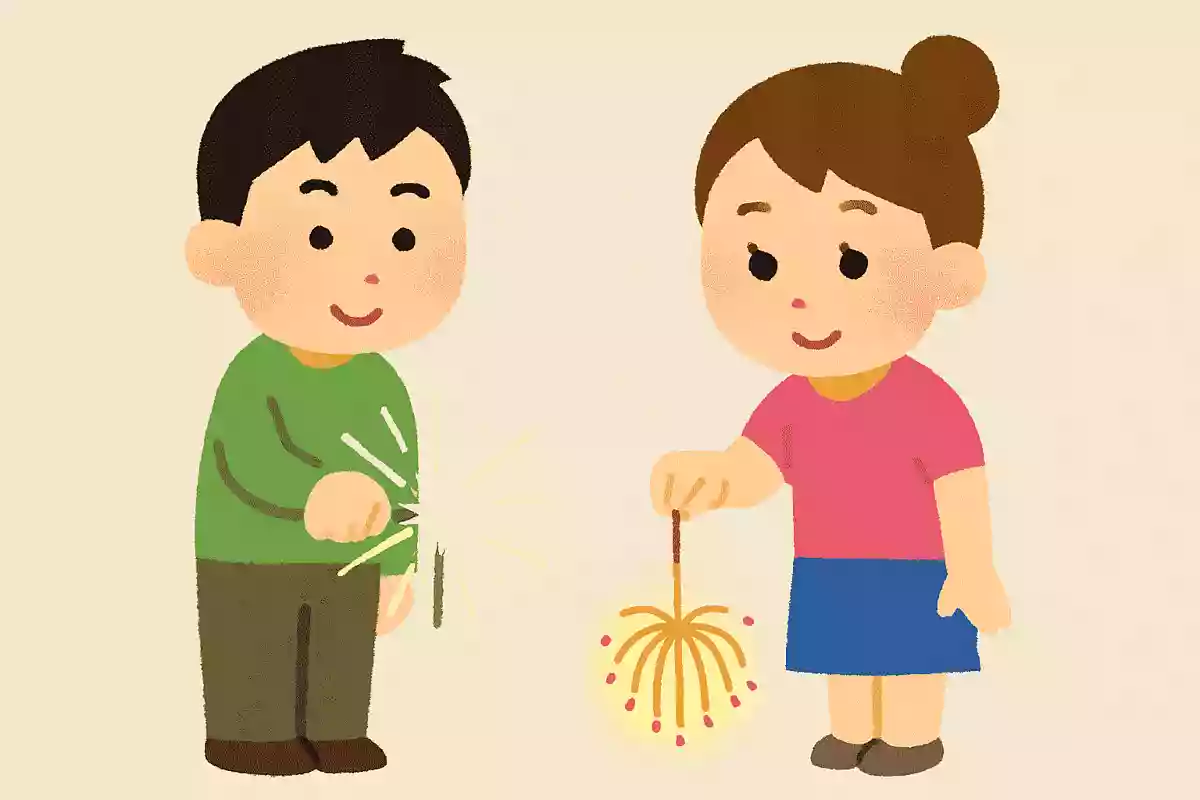
Sparklers may feel delicate amid the lively burst of fireworks, but did you know there are actually two types? In eastern Japan (Kanto) and western Japan (Kansai), sparklers differ.
In Kanto, the mainstream type is called nagate-botan, a sparkler with gunpowder wrapped in colorful paper.
In the Kansai region, people have long favored the subote-botan type, which has gunpowder attached to the tip of a straw.
Because rice cultivation thrived in Kansai, the plentiful straw with gunpowder attached is said to be the original form of the sparkler.
In Kanto, where papermaking was more common than rice growing, people used paper instead of straw.
There’s also a difference in how you hold them: you point the Kanto nagate-botan slightly downward after lighting it, while the Kansai subo-botan is held slightly upward.

In conclusion
We introduced lots of fun facts about fireworks, ranging from little tidbits about aerial fireworks and handheld sparklers to topics related to their history. Be sure to remember the facts we shared in this article and try talking about them with your family and friends!