



Fireworks have long been loved by many people as a classic symbol of summer.
From large aerial fireworks to simple handheld sparklers, they come in many sizes and shapes—but plenty of people enjoy them all the same.
In this article, we’ll introduce a collection of fun facts related to fireworks all at once!
We’ve gathered a wide range of topics, from how to enjoy watching fireworks to their history, so learn lots of trivia as you read!
They’re all the kind of tidbits that will make you want to share them with someone once you know them, so please enjoy!
- Handheld fireworks. From classics to popular novelty fireworks!
- Trivia you think you know but surprisingly don’t? August trivia and fun facts quiz!
- Collection of trivia and fun facts about stars shining in the night sky
- Useful right away in daily life! Surprising trivia and handy tips
- So interesting you’ll want to tell someone! December Trivia & Fun Facts Special
- Insect trivia quiz: A collection of fun facts and questions about bugs for children.
- [Great for speeches] Trivia and fun-fact quizzes recommended for morning assemblies
- A collection of trivia and fun facts about September as we await autumn
- Firework sounds. Sound effects and relaxing ambient sound
- Trivia about hydrangeas. A collection of fun facts related to ajisai (hydrangeas).
- A song perfect for fireworks that color the summer night sky
- A collection of trivia and fun facts about August that will warm your heart
- [Tanabata Quiz] Three-choice questions to enjoy trivia and fun facts
Fireworks Trivia & Fun Facts Roundup (1–10)
The “whoosh” sound of fireworks is made on purpose.

You’ve probably heard the “whooo” sound as a firework shoots up into the sky.
You might think it’s a natural noise before the firework bursts, but surprisingly, that sound is actually made on purpose! The source is a “whistle” attached to the firework shell, and it produces the sound when the powder inside it ignites.
That whistle builds anticipation—making you wonder, “What kind of firework will come next?” Enjoy fireworks not just with your eyes, but with your ears as well.

A round firework looks the same shape from any direction.

When you think of typical aerial fireworks, the round shape comes to mind, right? Did you know that this round firework actually looks round from any angle? Not only from the front, but even from above or directly from the side of the launch stand, it still appears circular.
The reason is that the pyrotechnic pellets called “stars” packed inside the shell spread out neatly in a radial pattern when the firework bursts.
However, fireworks with special shapes—like hearts or smiley faces—can look different depending on the viewing angle.
Sparklers last longer if you hold them at a 45-degree angle.
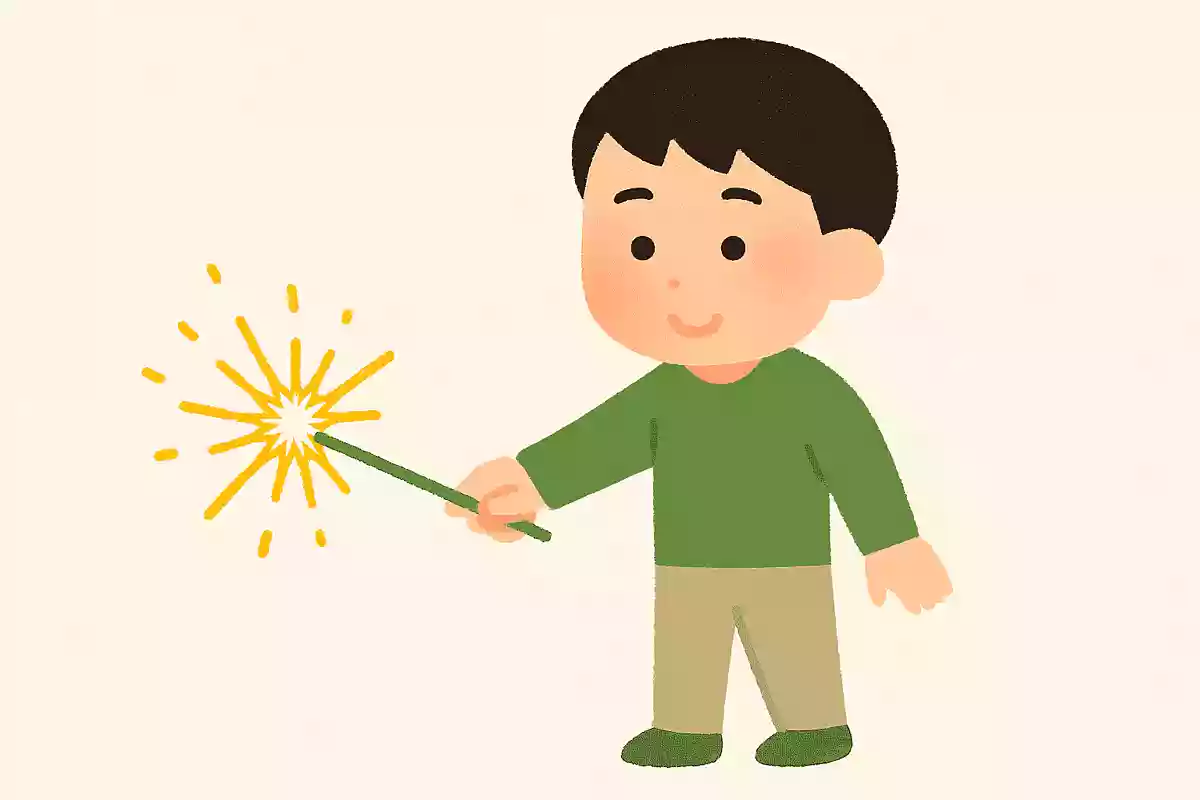
Many people feel disappointed when sparklers (senko hanabi) fizzle out quickly.
The solution lies in how you hold them.
While many hold them straight, if you want them to last longer, it’s recommended to tilt them at a 45-degree angle.
When held straight, the burning part is confined to the small area at the tip, and it can’t withstand the weight of the fire.
However, if you hold it at a 45-degree angle, the flame at the tip spreads slightly to the side, increasing the area that sustains the fire.
This helps the sparkler last longer.
Give it a try!
The world’s largest launched firework opened to a diameter of 800 meters.
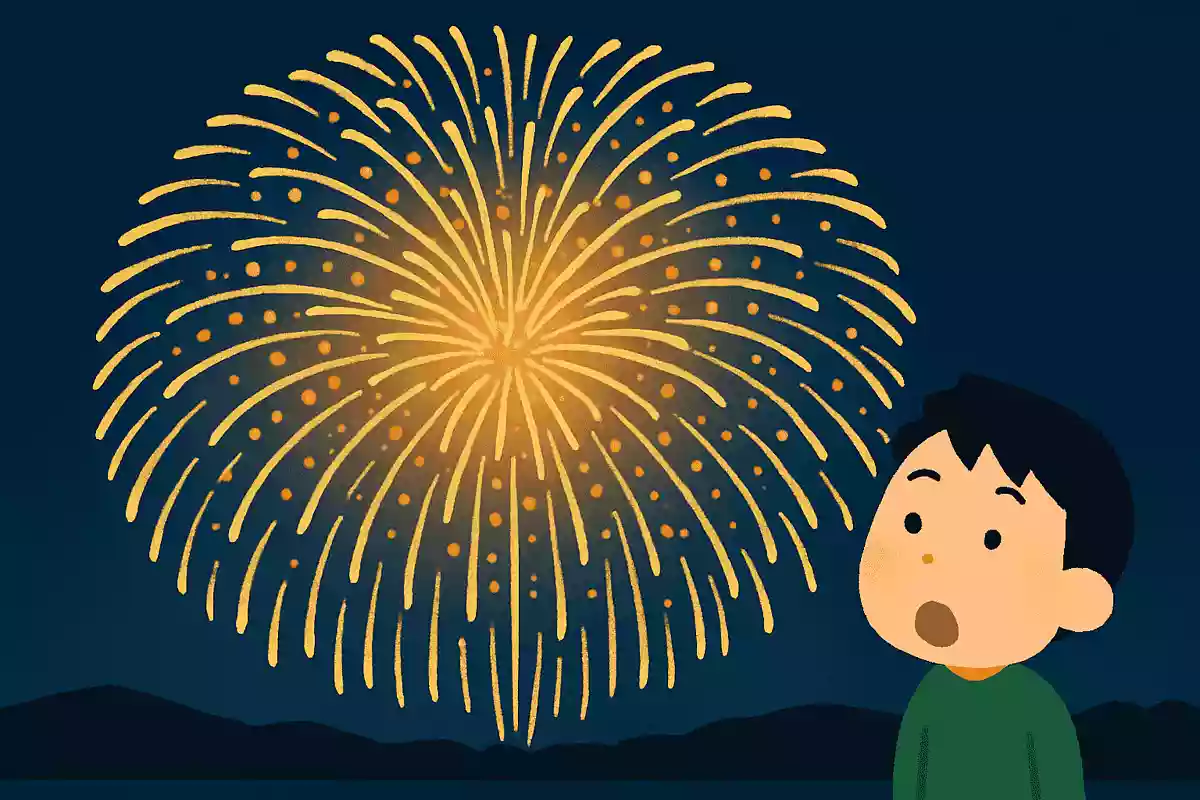
In summer, fireworks festivals are held in various regions.
Fireworks are a quintessential part of the season that people of all ages look forward to.
There are many shapes and sizes of aerial fireworks, but a firework called the “four-shaku shell” launched at the Katakai Festival in Niigata Prefecture in 1985 expanded to a diameter of 800 meters in the sky and is registered in the Guinness World Records as the “largest aerial firework.” Since then, launching the four-shaku shell has become a staple of the Katakai Festival, so why not visit at least once?

The “go” and “shaku” used to indicate the size of fireworks refer to the inner diameter of the launching tube.
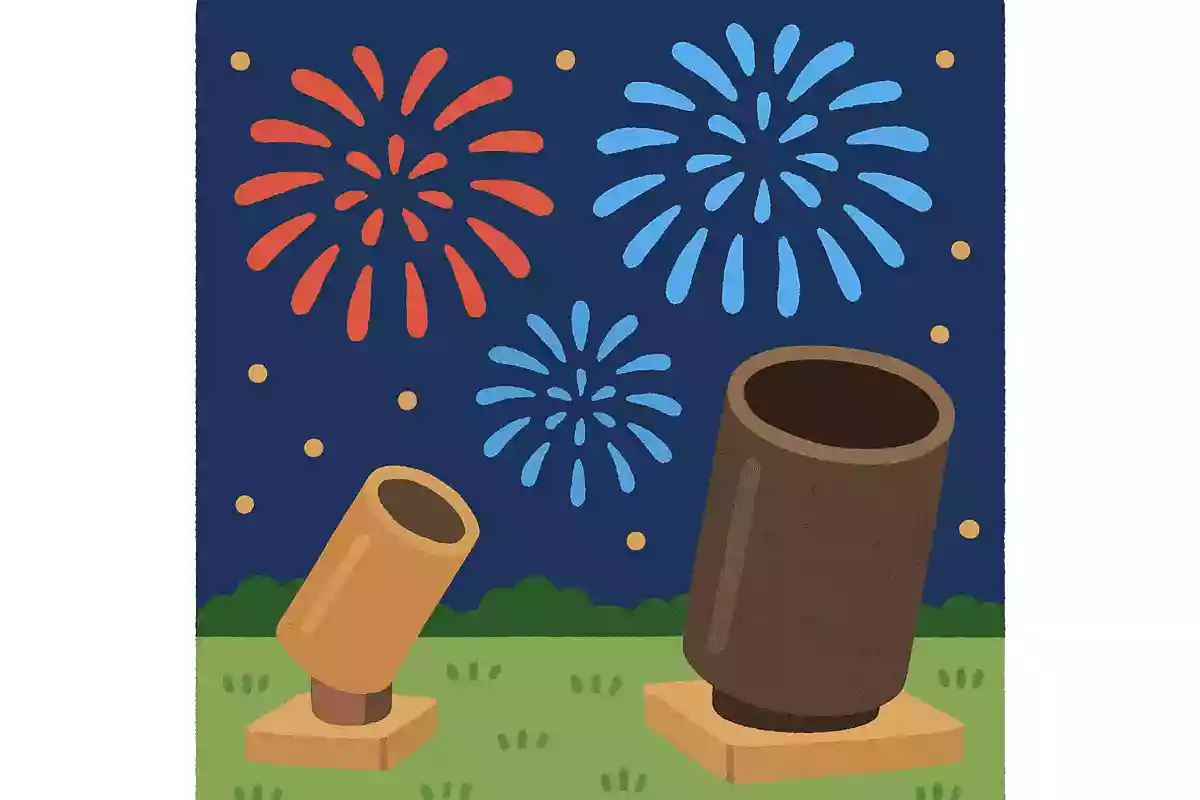
Fireworks sizes are expressed in terms such as “go” and “shaku.” These refer to the size of the launch tube that holds the firework shell—in other words, the tube’s inner diameter.
The sizes are based on the traditional shakkanhō (Japanese system of measurement): sizes under 10 are given in “go,” and sizes of 10 and above are given in “shaku.” Sizes 3 to 5 go are the most commonly seen.
Depending on the size, not only the amount of gunpowder but also the length of the fuse and the launch height will vary.
The largest, size 40 go fireworks are said to be launched at a festival in Niigata Prefecture.
There are as many as three fireworks days in a year.

Japan has many commemorative days, and there’s even a “Fireworks Day.” While commemorative days are usually once a year, Fireworks Day actually occurs three times.
May 28, August 1, and August 7 are designated as Fireworks Days.
May 28 was established because it is the date when the fireworks festival corresponding to today’s Sumida River Fireworks Festival was held—the first fireworks festival in Japan.
August 1 was chosen due to events related to fireworks, such as the day fireworks resumed for the first time after World War II.
And August 7 is, strictly speaking, “Toy Fireworks Day” and “Hanabito (Fireworks People) Day,” established to further popularize toy fireworks and promote the development of fireworks culture.
The Kagiya of “Tamaya!” and “Kagiya!” still exists.

When fireworks are launched, you often hear people shouting “Tamaya!” and “Kagiya!” at them.
These “Tamaya” and “Kagiya,” written as 玉屋 and 鍵屋, were the actual shop names of fireworks masters in the Edo period.
Spectators would call out the name of the fireworks maker whose display they thought was more beautiful—a custom that seems to have carried over to the present day.
However, only Kagiya remains today; Tamaya was banished after causing a fire and no longer exists.
Kagiya is still based in Edogawa Ward, Tokyo, and puts on beautiful fireworks displays every year, mainly around the Kanto region.