

Trivia about hydrangeas. A collection of fun facts related to ajisai (hydrangeas).


Hydrangeas are a common sight in parks, city streets, and temples once the rainy season arrives.
They come in a variety of colors—blue, purple, red, and more—and many people find their rain-dappled appearance especially charming.
In this article, we’ll introduce a collection of fun facts about hydrangeas, a quintessential symbol of early summer.
We’ve gathered information from various angles, including the structure of hydrangeas, the origin of their name, and the reasons behind their colors.
We hope this article inspires you to learn more about hydrangeas.
After reading, be sure to go out and observe real hydrangeas for yourself!
Hydrangea trivia: A collection of fun facts about hydrangeas (1–10)
Actually, it’s poisonous.
Hydrangeas bloom beautifully during the rainy season.
They are widely planted in parks, schools, and tourist spots, adding lovely color to the rainy time of year.
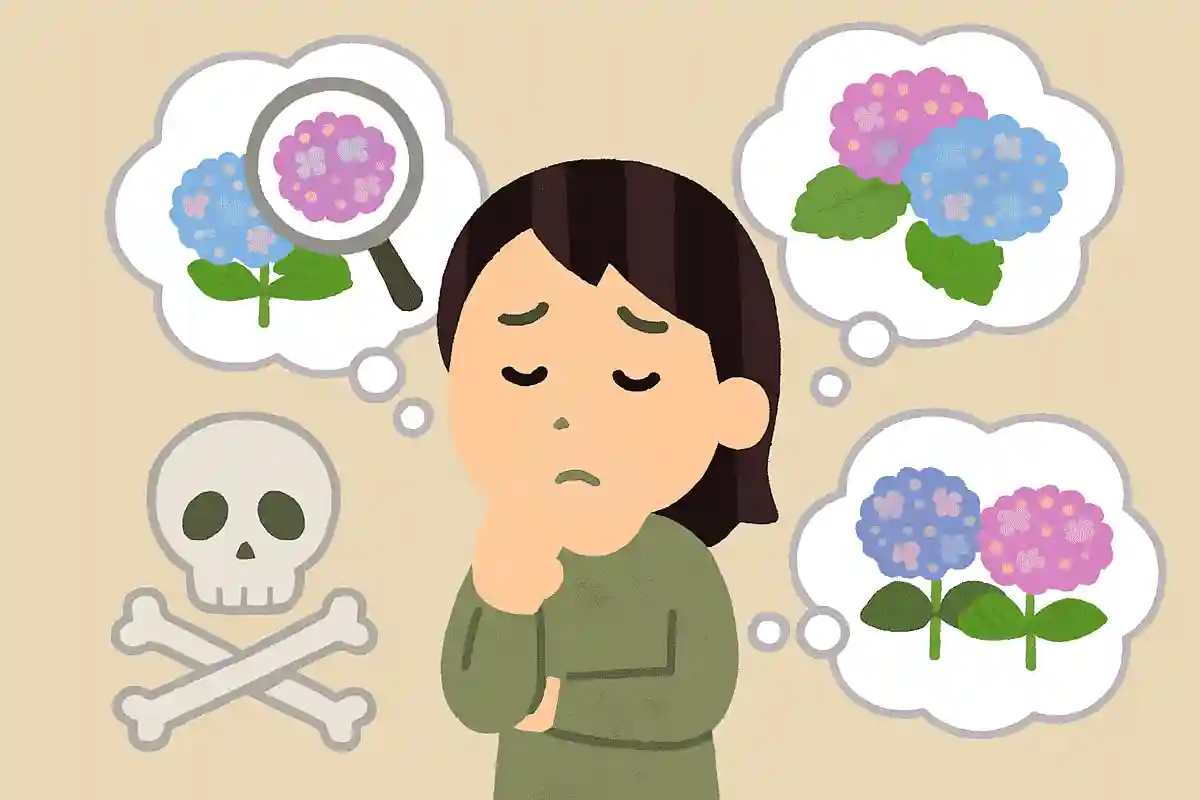
However, be aware that hydrangeas contain toxic components.
Much about hydrangea toxicity remains unclear, but the presence and amount of toxins can vary by variety.
Ingesting the flowers, stems, or leaves can cause poisoning symptoms such as vomiting and convulsions.
There have even been cases where customers experienced poisoning after eating hydrangea leaves that were used as garnish at restaurants.
Please be careful, especially if you have small children or keep pets.

There is a tea made from young hydrangea leaves.
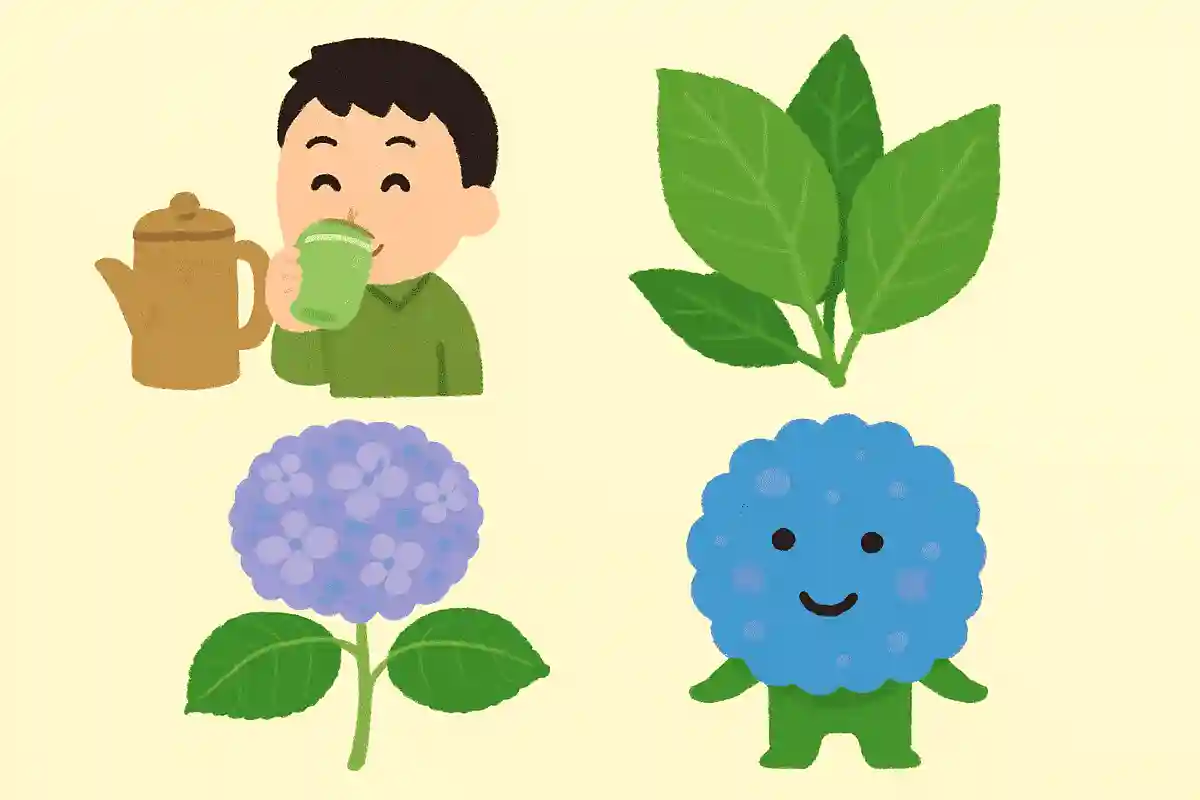
In Buddhist observances, the sweet tea familiar from the Flower Festival celebrating the Buddha’s birth is actually made from Amacha, a plant related to hydrangeas.
Amacha is a sweet-flavored variant of mountain hydrangea.
This sweet tea is produced by drying the leaves of Amacha and fermenting them through processing to bring out a distinctive sweetness.
With its smooth mouthfeel and natural sweetness, it has long been cherished in Japan.
It is also said to have been valued as a medicinal herb since around the Edo period for its anti-allergic and antibacterial properties.

The part that looks like petals is actually the sepals.
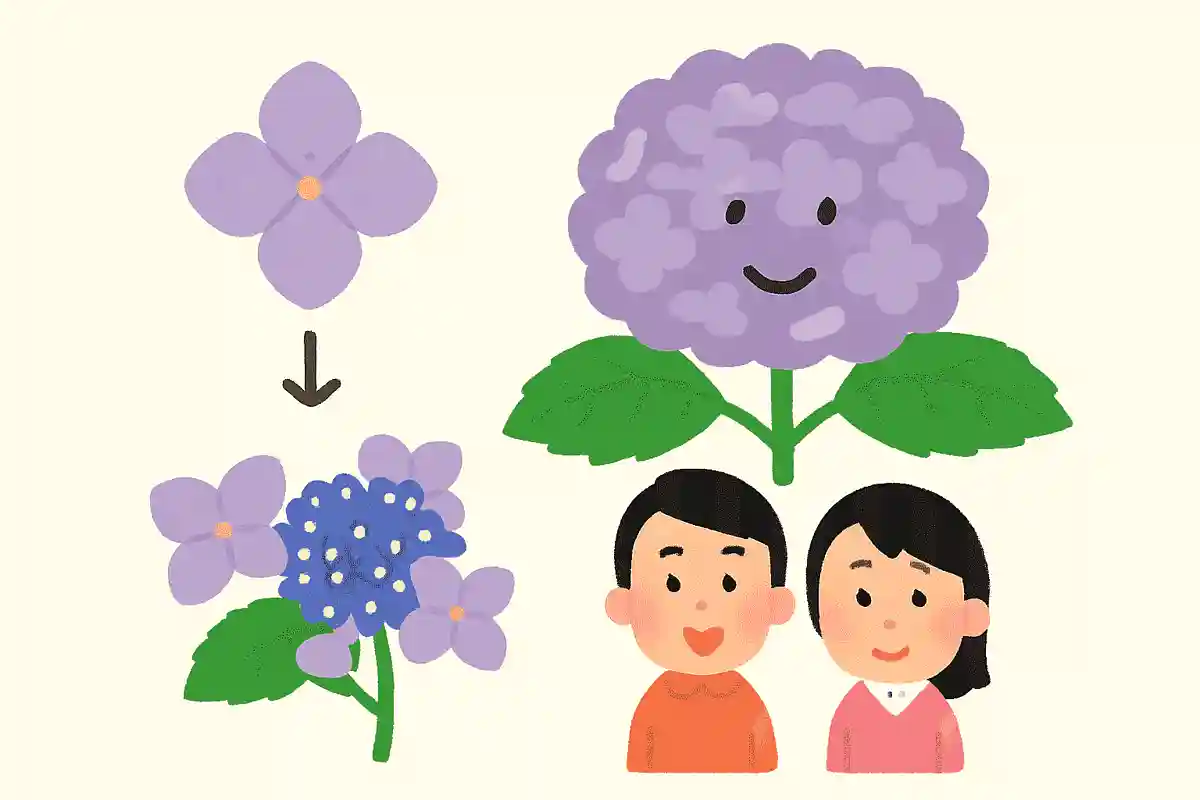
Many people may think the parts that look like large petals are the flowers.
In fact, these showy parts are ornamental flowers formed from developed sepals; it’s said that the sepals have changed to attract pollen-carrying insects.
The true flowers are the small bud-like parts in the center, which have stamens, pistils, and petals, and where seeds develop.
By the way, the Japan Meteorological Agency defines the hydrangea’s “start of flowering” as the point when two to three true flowers have opened.
The scientific name Hydrangea means “vessel of water.”
The scientific name of hydrangea, “Hydrangea,” comes from Greek and means “water vessel.” It seems to have been named for its ability to absorb a lot of water, which makes it a perfect symbol of the rainy season.
Hydrangeas love water and look lively when it rains, making them a symbol of freshness.
On the other hand, they are vulnerable to drying out, so if left dry, the flowers may wither or discolor, which requires caution.
Of course, overwatering can cause root rot, but if the soil surface is dry, be sure to give it plenty of water.
The counter is “da” (used for flowers or pendants).
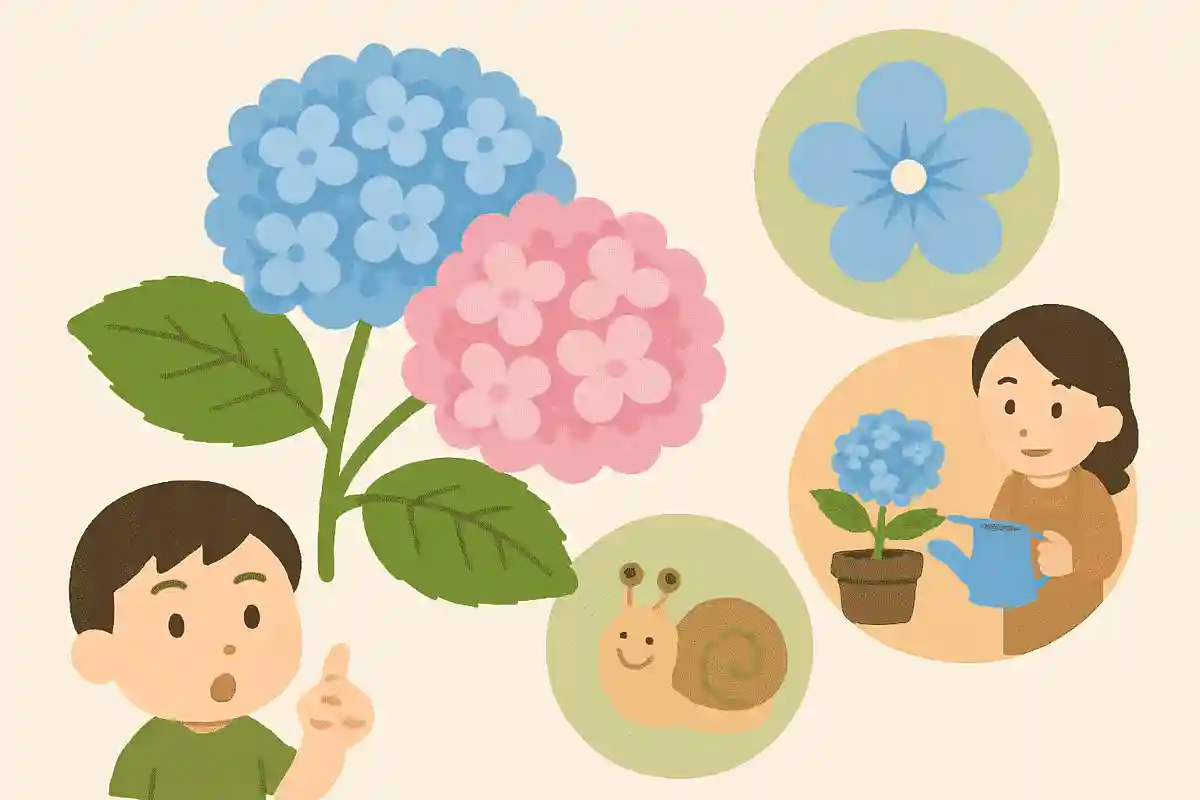
Do you know how to count hydrangeas in Japanese? When counting the small clusters of flowers that bloom on a branch, the counter “da” (朶) is used.
『朶』は本来、垂れ下がった木の枝を意味し、枝に付いた花の房の数や枝の本数、さらには雲のまとまりを数えるのにも用いられます。
Of course, hydrangeas can also be counted as whole plants using the counter “hon,” but “da” is a less familiar counter that feels a bit refined and poetic.
また、ガクアジサイには助数詞「輪」も使用できます。
I’m sensitive to sunlight.
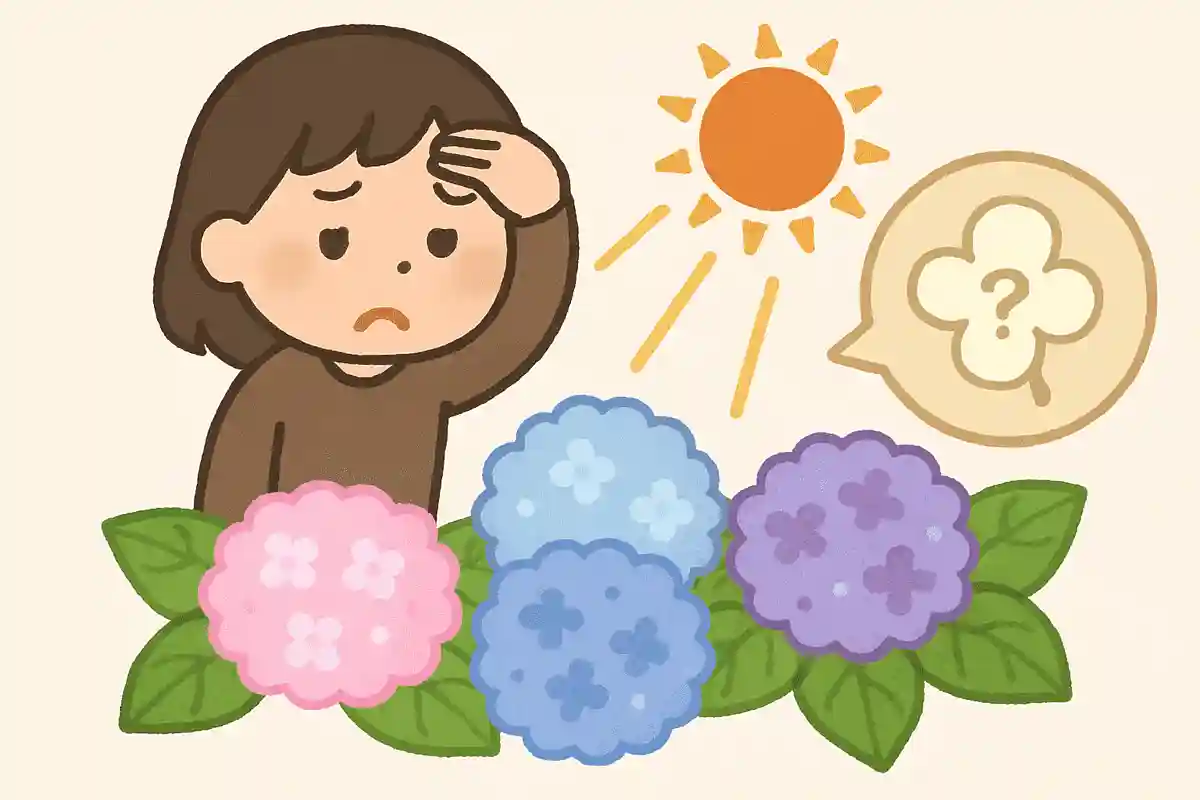
Hydrangeas burst into beautiful bloom all at once during the rainy season, but did you know they actually don’t like direct sunlight? Hydrangeas are plants that absorb plenty of water and prefer well-ventilated spots.
If they’re exposed to strong sun for too long, their leaves can scorch and they may suffer poor growth due to lack of moisture.
So, when keeping them indoors, avoid places with prolonged western sun or direct sunlight, and when planting them outdoors, choose spots shaded by trees or fences.
Siebold once tried to name the hydrangea “Otaku-sa.”
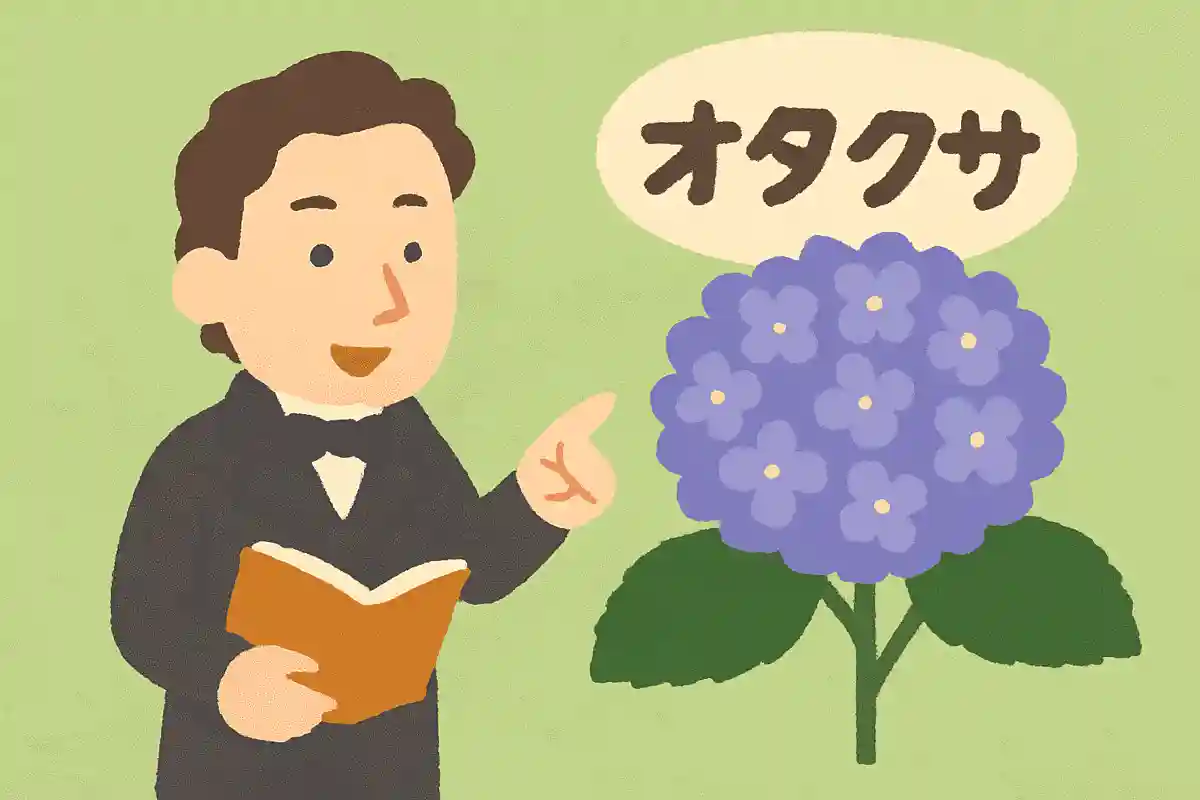
Siebold, who was active as a physician and naturalist, often appears in textbooks, doesn’t he? He was the one who brought the latest Western medicine of the time to Japan during the Edo period.
While in Japan, Siebold fell in love with a woman named Otaki-san.
However, since romances with foreigners were still rare in those days, their love ended sadly.
Moved by his feelings, Siebold is said to have named a certain hydrangea “Otakusa.” Of course, Otakusa is a variation on Otaki-san’s name—how romantic.
However, the hydrangea he named Otakusa had already been given another name, so his name was not accepted.