

Trivia about hydrangeas. A collection of fun facts related to ajisai (hydrangeas).


Hydrangeas are a common sight in parks, city streets, and temples once the rainy season arrives.
They come in a variety of colors—blue, purple, red, and more—and many people find their rain-dappled appearance especially charming.
In this article, we’ll introduce a collection of fun facts about hydrangeas, a quintessential symbol of early summer.
We’ve gathered information from various angles, including the structure of hydrangeas, the origin of their name, and the reasons behind their colors.
We hope this article inspires you to learn more about hydrangeas.
After reading, be sure to go out and observe real hydrangeas for yourself!
- [For General Audience] Little-Known Trivia and Fun Facts About Hay Fever
- Fireworks Trivia & Fun Facts Summary
- Rainy season trivia roundup: fun facts you'll want to share with someone
- [Snake Quiz] Surprisingly fascinating once you know! Snake ecology & characteristics
- Trivia & fun facts about June
- Trivia about cherry blossoms: a roundup of fun facts to make springtime hanami even more enjoyable
- Collection of trivia and fun facts about stars shining in the night sky
- Learn to Love the Rain! Fun Facts & Trivia Quiz about the Rainy Season for Kids
- Let's take on a four-choice quiz that everyone can enjoy together!
- Useful right away in daily life! Surprising trivia and handy tips
- [3-Choice Quiz] Cherry Blossom Trivia You'll Want to Share with Someone
- Let’s learn more about hydrangeas! Trivia quiz and fun facts about hydrangeas for kids
- [Rain Songs] Songs to listen to on rainy days. A special feature on Japanese rain-themed songs [2026]
Hydrangea trivia: A collection of fun facts about hydrangeas (1–10)
There’s a reason they’re often raised in temples.
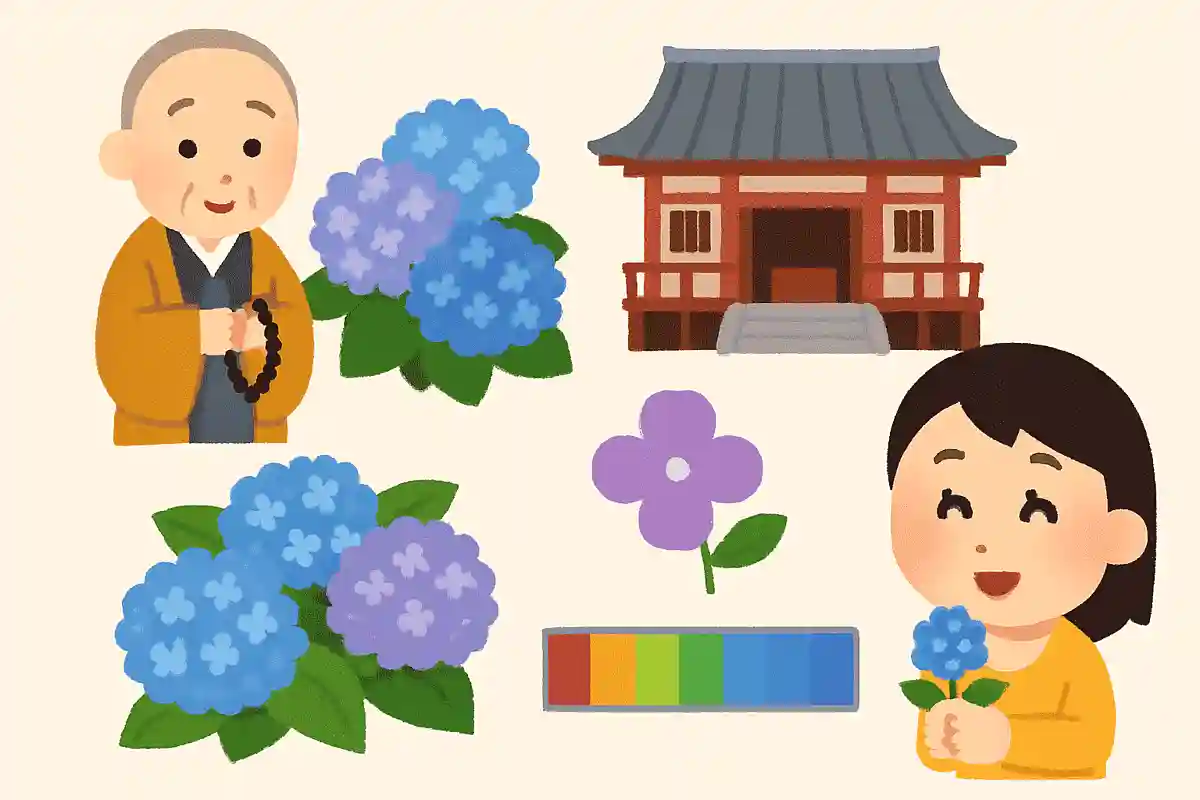
You hear the term “hydrangea temple” so often because many temples have hydrangeas planted on their grounds.
Why have hydrangeas been indispensable at temples since ancient times? Hydrangeas are plants that grow with little fuss and are easy to care for.
In eras when medical technology was not advanced, many people died during seasonal transitions in June, so hydrangeas may have been easy to procure as temple flowers for memorial offerings.
There are also theories that, because they have four petals, they symbolize “four = death,” and that they are connected to amacha (sweet hydrangea tea), which has deep ties to Buddhism.

The sterile florets of the lacecap hydrangea flip over.
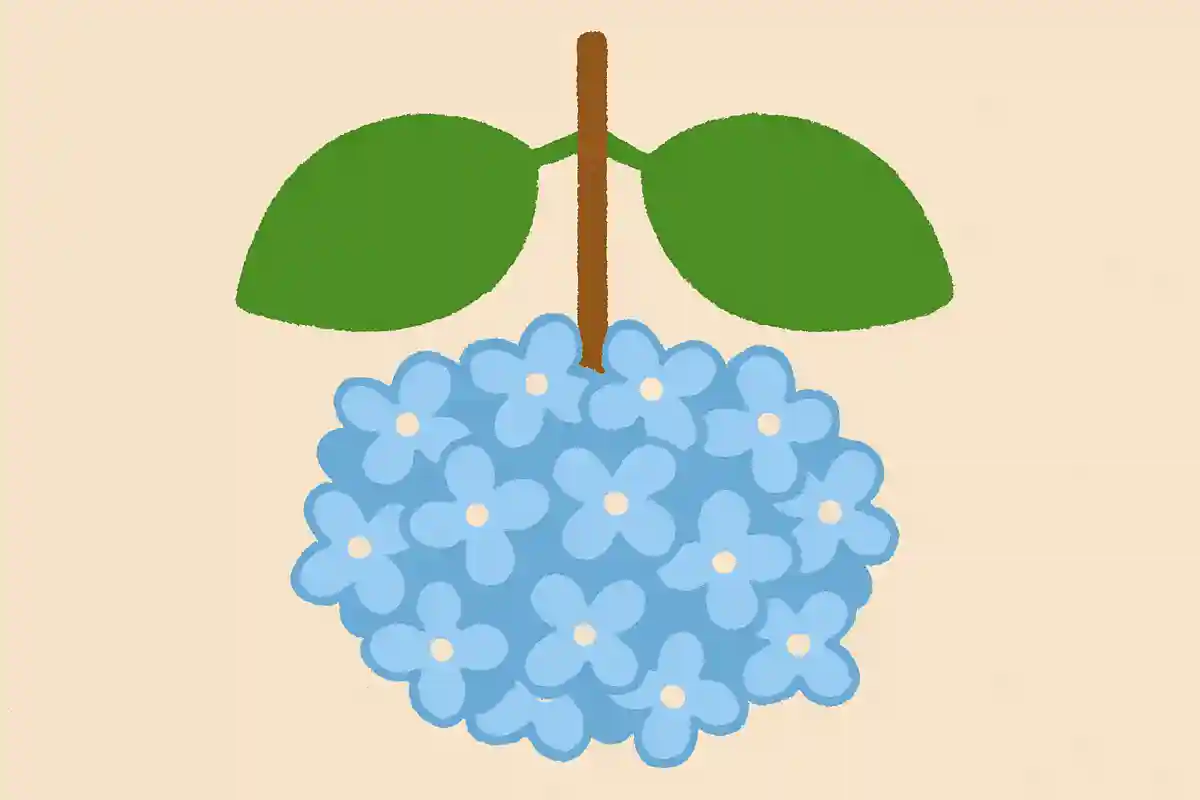
Don’t you associate hydrangeas with vividly colored petals in full bloom? In fact, the parts commonly thought to be hydrangea petals aren’t actually flowers.
They’re the outermost organs surrounding the true flowers, called decorative or sterile florets.
The grainy-looking parts at the center of those are the actual flowers.
One reason the decorative florets of lacecap hydrangeas become so vibrant is to lure insects like bees for pollination.
Once that goal is achieved and seeds form in the central flowers, the decorative florets flip backward.
This is said to prevent them from getting in the way so the newly formed seeds can be dispersed farther.
It’s a surprisingly strategic design—something you wouldn’t expect from such a beautiful-looking plant.

become an antipyretic

Among the plants and flowers we casually encounter in daily life, quite a few are actually used medicinally.
Hydrangeas, for example, have long been used as a medicine and were believed to help reduce fever and treat colds.
The part used medicinally is the dried flowers.
However, hydrangeas also contain toxins, so great care is required when handling them.
There have even been incidents of poisoning caused by people eating hydrangea leaves used as food garnishes.
By the way, like hydrangeas, other ornamental plants such as fragrant olive (osmanthus) and pinks (dianthus) are also said to have medicinal effects.
Hydrangea Trivia: A Collection of Fun Facts About Hydrangeas (11–20)
There’s a charm for boosting financial luck that uses hydrangeas.
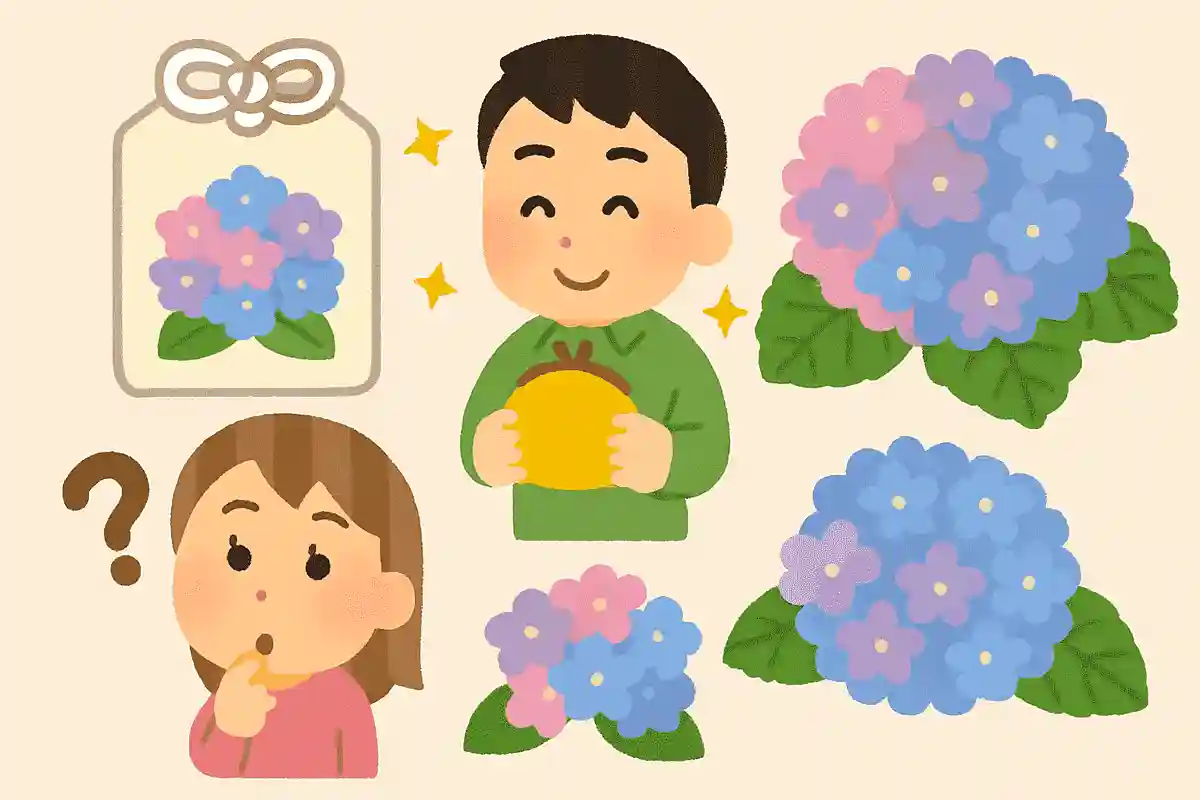
Did you know that hydrangeas are believed to bring good fortune in money? This originates from the custom of displaying beehives as lucky charms under the eaves or indoors.
The yellow color of bees evokes money, and because bees are hard workers and reproduce vigorously, they became symbols of thriving business.
Since the structure of hydrangea blossoms resembles that of a beehive, hydrangeas came to be displayed as a substitute.
It’s said that hanging them at the entrance on dates with a 6 in June, on the summer solstice, or on the Day of the Ox in midsummer can boost financial luck.
In particular, June 26 is considered the most effective day.
The color of the flowers changes depending on the soil’s pH.
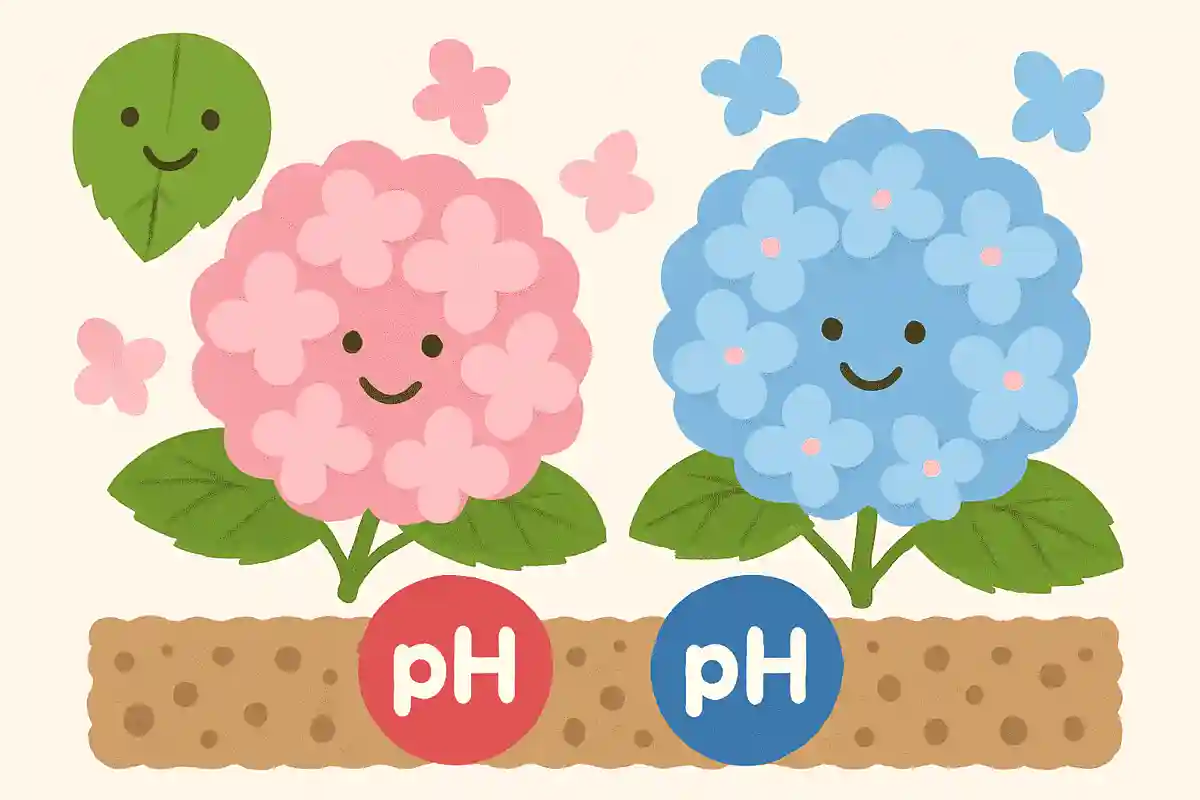
Hydrangeas bloom in a variety of colors—red, blue, purple, pink.
Because their colors change, they even have floral meanings like “fickleness” and “seven transformations.” But why do their colors change? Hydrangea color shifts due to a chemical reaction between anthocyanins in the flowers and aluminum present in the soil.
In acidic soil, aluminum dissolves more readily, tending to shift the color toward blue.
The color also responds to other factors such as varietal traits, soil moisture, and phosphate content, making their depth and complexity part of their charm.
It is a plant native to Japan.
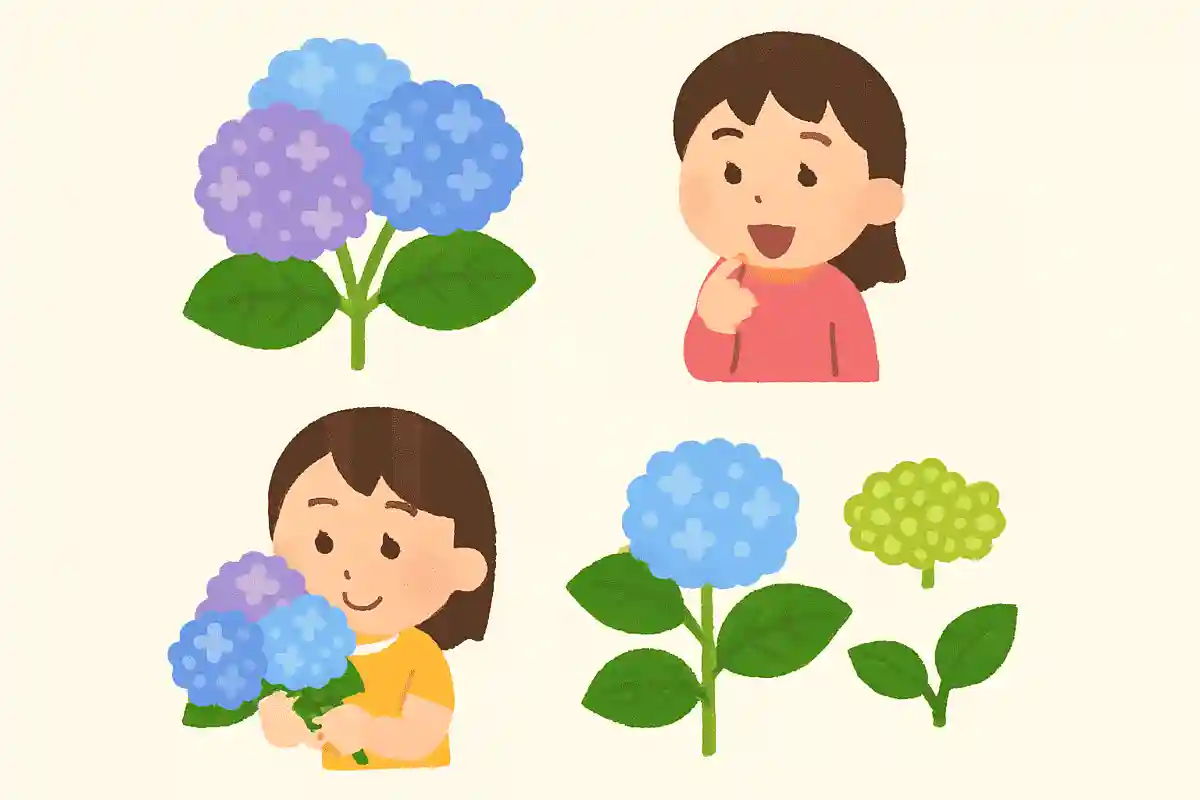
Around June, hydrangeas delight us with a variety of colors—blue, white, pink, and more.
Although hydrangeas come in many varieties and hues, they actually originate from Japan.
Incidentally, a German physician named Philipp Franz von Siebold, who lived in Japan during the Edo period, brought hydrangeas and other plants back to Europe, where breeding advanced and the richly diverse Western hydrangeas we know today were developed.
They were later reintroduced to Japan.
In one of Siebold’s books, Western hydrangeas are referred to as Hydrangea otaksa.
“Hydrangea” is the term for Western hydrangeas, and “otaksa” is said to come from the nickname of Siebold’s Japanese wife.
Hydrangea is a summer kigo (seasonal word).

When it comes to rules in haiku, they include the 5-7-5 syllable pattern and the use of a seasonal word (kigo).
The hugely popular variety show “Prebat!!,” which features haiku, is known for its strict yet thoughtful commentary.
By the way, do you know which season hydrangeas are considered a kigo for? Kigo in haiku are often based on the old lunar calendar, and hydrangeas are treated as a summer kigo within that framework.
They can be classified even more specifically as a mid-summer (chūka) kigo.
When composing a haiku with hydrangeas, it might be best to keep the designated season in mind.