

Folksongs, children's songs, and nursery rhymes of Fukushima: the heart of our hometown passed down in song

The Tohoku region has traditionally been rich in folk songs.
Since ancient times, there have been festival songs and the like that are rooted in the local land.
Many of these songs are ones that everyone from the area would know, but this time we’ve gathered pieces to help more people appreciate the beauty of folk music.
Younger people and others may not be very familiar with it nowadays, so I’d be happy if this sparks your interest!
- [Songs of Fukushima] Thinking of my hometown | A heartwarming collection of classic songs celebrating the beautiful “Fukushima”
- Folksongs, children's songs, and nursery rhymes of Fukushima: the heart of our hometown passed down in song
- Beautiful Folk Songs Passed Down in Miyagi Prefecture: A Collection of Masterpieces that Play the Heart of the Hometown
- [Folk Songs of Yamagata] The Heart of Our Hometown Passed Down in Song: Feelings Woven into Nostalgic Melodies
- Ranking of Popular Folk Songs
- [Folk Songs and Children's Songs of Akita] A curated selection of local masterpieces that evoke love for one’s hometown
- Songs for January: Nursery rhymes and fingerplay songs we want children to grow familiar with
- Japanese counting songs: nostalgic temari (handball) songs and children’s folk songs
- Folk songs, children's songs, and nursery rhymes of Iwate: the heart of the hometown passed down through song
- Folk Songs, Children's Songs, and Nursery Rhymes of Aomori: Japanese Songs from Tsugaru and Hachinohe that Resonate with the Heart
- Niigata’s folk songs, children’s songs, and nursery rhymes: the heart of our hometown passed down in song
- Nostalgic Children’s Songs, Folk Songs, and Nursery Rhymes: The Heart of Japan Passed Down Through Song
- Folk songs, children’s songs, and nursery rhymes of Kumamoto: the enduring spirit of our hometown passed down through song.
Folk songs, children’s songs, and nursery rhymes of Fukushima: The enduring heart of our hometown (1–10)
Takada JinkuAizumisato-machi
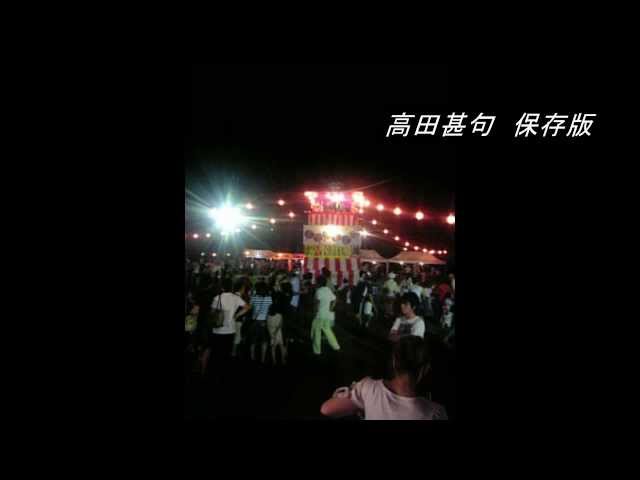
A folk song from Aizumisato Town, Onuma District, Fukushima Prefecture.
Formerly known by the place name Aizu Takada, it was sung as a Bon dance song at Isasumi Shrine and has become an important hometown folk song for local residents.
The lyrics, led by references to Isasumi Shrine, praise the virtues of Takada by comparing them to natural seasonal scenes.
The song is quite long, so memorizing all the verses might be difficult.
Mount Bandai of AizuOtsuka Fumio

Aizu Bandai-san, famous for its distinctive opening that begins with “Enya,” was released nationwide by Victor in 1934 (Showa 9) in a version sung by Kouta Katsutaro.
However, because the lyrics differed so much from the original, it was criticized as an affront to local sentiment.
The original “Aizu Bandai-san” is said to have as many as 162 verses and is known as the “authentic Aizu Bandai-san.” The version most people are familiar with starts at what is considered verse 21.
Miharu Bon Odori SongMurata Kenji

A bon dance song passed down in Miharu, Tamura District, Fukushima Prefecture.
The name Miharu (“three springs”) comes from the fact that plum, peach, and cherry blossoms bloom at the same time, allowing you to see three springs at once.
The Miharu Bon Song is also known as the “Miharu Jinku.” It originated when the Echigo jinku was brought to Aizu and then spread to the Iwaki area.
The Miharu Bon Dance is among the most vibrant in the prefecture, and during the Obon season in August it is danced throughout Miharu.
It is said that in the past, there were times when people danced in grand fashion until morning.
Folk songs, children’s songs, and nursery rhymes of Fukushima: The heart of our hometown passed down in song (11–20)
Soma Bon SongShūko Tarō

As its name suggests, this is a Bon dance song from Soma City in Fukushima Prefecture.
It originally derives from the Akita Jinku and was passed down from the Shonai and Murayama regions of Yamagata Prefecture to the Nakadori and Hamadori areas of Fukushima.
It is a harvest dance expressing gratitude for a bountiful rice crop, and it features distinctive festival chants interspersed between the verses.
In urban centers, where there are often no local Bon songs, familiar tunes like Tokyo Ondo, Hokkai Bon Uta, and Soma Bon Uta are widely enjoyed.
Kanchororin SongBonchi no Chamejii
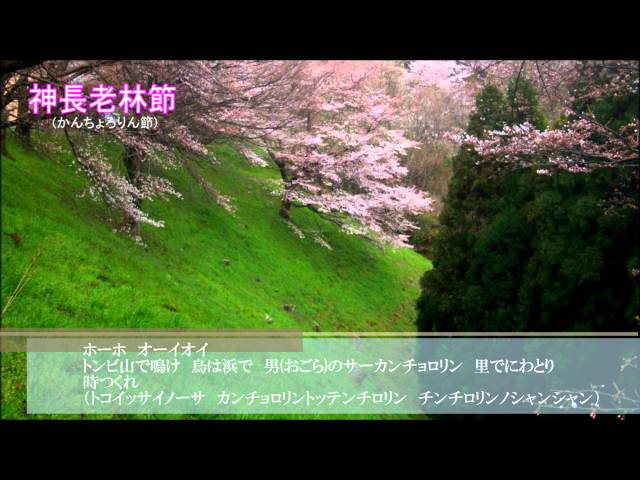
This is a folk song said to have originated in the Kashima area of Soma City, Fukushima Prefecture, and perhaps due to the arrangement, it has a somewhat bright tone.
A boy and a girl wear kites’ crowns and dance while exchanging the peculiar calls that also appear in the lyrics.
“Kanchororin” is also written as 神長老林, but the reason for these characters is unknown.
One theory claims that kanchororin is the cry of a bird, though the details are unclear.
Morning on the Ranch

It is said that the lyrics of “Morning on the Ranch” were written with Iwase Farm in Kagamiishi, Fukushima Prefecture as their model.
The lyrics depict the ranch at daybreak, shrouded in mist, interweaving scenes of sound and light along with the people working on the ranch and the sheep.
Describing how morning arrives on the wide ranch and a new day begins, the song’s lyrics are also included in elementary school textbooks.
Asking children what kinds of animals might be on a ranch, or explaining the kinds of work people do there, may help them form a clearer image of the piece.

Wonderful FukushimaSakushi: Reiwa Ichirou / Sakkyoku: Koseki Yuji

This heartwarming local song pairs a melody by Yuji Koseki, a composer from Fukushima City, with modern lyrics.
The words, woven with landmarks such as the Abukuma River, Iizaka Onsen, and the Azuma mountain range, express a deep love for the homeland.
Released in 2021, the song emerged amid renewed attention following the NHK morning drama “Yell,” in which the Koseki couple served as models.
It is a hometown anthem filled with affection, meant for Fukushima residents working toward recovery from the earthquake disaster, people from Fukushima living far away, and anyone who wants to experience the beauty and charm of Fukushima.