

Folksongs, children's songs, and nursery rhymes of Fukushima: the heart of our hometown passed down in song

The Tohoku region has traditionally been rich in folk songs.
Since ancient times, there have been festival songs and the like that are rooted in the local land.
Many of these songs are ones that everyone from the area would know, but this time we’ve gathered pieces to help more people appreciate the beauty of folk music.
Younger people and others may not be very familiar with it nowadays, so I’d be happy if this sparks your interest!
- [Songs of Fukushima] Thinking of my hometown | A heartwarming collection of classic songs celebrating the beautiful “Fukushima”
- Folksongs, children's songs, and nursery rhymes of Fukushima: the heart of our hometown passed down in song
- Beautiful Folk Songs Passed Down in Miyagi Prefecture: A Collection of Masterpieces that Play the Heart of the Hometown
- [Folk Songs of Yamagata] The Heart of Our Hometown Passed Down in Song: Feelings Woven into Nostalgic Melodies
- Ranking of Popular Folk Songs
- [Folk Songs and Children's Songs of Akita] A curated selection of local masterpieces that evoke love for one’s hometown
- Songs for January: Nursery rhymes and fingerplay songs we want children to grow familiar with
- Japanese counting songs: nostalgic temari (handball) songs and children’s folk songs
- Folk songs, children's songs, and nursery rhymes of Iwate: the heart of the hometown passed down through song
- Folk Songs, Children's Songs, and Nursery Rhymes of Aomori: Japanese Songs from Tsugaru and Hachinohe that Resonate with the Heart
- Niigata’s folk songs, children’s songs, and nursery rhymes: the heart of our hometown passed down in song
- Nostalgic Children’s Songs, Folk Songs, and Nursery Rhymes: The Heart of Japan Passed Down Through Song
- Folk songs, children’s songs, and nursery rhymes of Kumamoto: the enduring spirit of our hometown passed down through song.
Folk songs, children's songs, and nursery rhymes of Fukushima: The heart of our hometown passed down in song (21–30)
Soma Earth-Ramming SongKaneyama Takeshi

This folk song contains three meanings: a practical one about firming the ground, which is necessary when building a house; a religious one about sealing powerful spiritual forces within the earth; and a celebratory one that regards the master who built the house as the central pillar of the household.
The famous “Hanagasa Ondo” and “Hanagasa Dance” originated from the Soma Tsuchitsuki-uta (earth-tamping song).
Aizu Nagamochi SongHasebe Masayuki

The Long-mochi (Nagamonji) song is a folk song traditionally sung by the people carrying the bride’s chest of drawers in a wedding procession.
It is a well-known folk song in Miyagi and Akita Prefectures, and as it spread to different regions it took on local characteristics, becoming the Aizu Nagamochi Song.
In the Aizu area, it is still passed down today as a celebratory wedding song.
New Soma Bon UtaHarada Naoyuki
After the war, Masao Suzuki I began singing it, and it became famous nationwide.
Today it is one of the folk songs that represent Fukushima Prefecture.
It is a new folk song created by combining three pieces: the “Haa” of Miyagi’s Ishinage Jinku, Soma’s Kusakari-uta (Grass-Cutting Song), and the drinking song Soma-bushi.
Although it was Masao Suzuki who sang it and spread it across the country, it was composed by his mentor, Hide-no-shin Horiuchi from Soma City.
Since the Soma region is the birthplace of many folk songs, it is said to have been created by combining traditional folk melodies.
Aizu MatsuzakaNemoto Miki

It is always sung at wedding and celebratory gatherings throughout the Aizu region.
I looked into whether the correct form is Matsusaka or Matsuzaka, and found that it was originally composed by Mr.
Kenryō Matsunami, who was born in Shibata City, Niigata Prefecture.
The term “Matsuzaka” originally refers to a type of celebratory song distributed mainly in Echigo and across the Tohoku region, and it is called by different names depending on the area, such as Nikata-bushi or Kenryō-bushi.
In modern usage, the kanji 松坂 (Matsuzaka) appears to be more common.
Since versions of “Matsuzaka” exist in various regions, we prefixed the title with “Aizu” to distinguish it as an Aizu folk song.
Soma Grass-Cutting SongMitsubishi Michiya

It is said to have begun as a song sung during grass-cutting work and on morning trips to cut grass.
Although it is considered originally a rowdy drinking song, it is also said to be a variation of the Soma Jinku.
Because it was sung during fieldwork, it naturally became a slow song, and the hayashi accompaniment may sound somewhat coarse.
The interjected phrase “Nanda kora yōto,” too, was likely a shout to spur themselves on during hard labor.
Song of JangaraShimo-tsudzuri Seinenkai
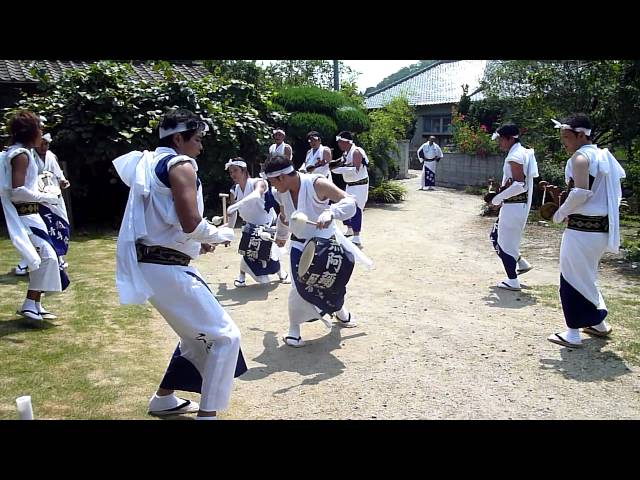
This is a folk song sung during the Jangara Nenbutsu Dance, an intangible folk cultural property passed down in Iwaki City since the Edo period.
During the Obon season, youth associations and volunteers from various parts of Iwaki visit households observing their first Obon to offer memorial services.
They perform dances to the chant of Namu Amida Butsu, imbuing the singing and dancing with prayers for the repose of the deceased, accompanied by drums and hand gongs.
Commonly called “Jangara,” it has become a hallmark of the Obon season in Iwaki.
The dance styles and melodies vary widely—even within Iwaki—and the lyrics differ by region, but the meaning of Jangara remains the same.
Soma NagareyamaNakanishi Natsuko

The Soma Nomaoi is a festival held at Soma Nakamura Shrine, Soma Ota Shrine, and Soma Odaka Shrine, centered on the Nakamura area of Soma City in Fukushima Prefecture.
At the Hibari-ga-hara festival grounds, armored horse racing and a sacred flag contest are conducted.
At each shrine, the eve festival on July 23 serves as a departure ceremony, during which the Soma Nagareyama is sung.