

[Intermediate Level] A curated selection of piano masterpieces featuring strikingly brilliant melodies!


When you think of brilliant, showy piano pieces, what comes to mind?
The piano can play melody and accompaniment simultaneously, not only connecting lines smoothly but also creating bold, percussive rhythms—it’s even said to be an instrument capable of recreating an orchestra all on its own.
Piano timbre has many facets—beauty, poignancy, fragility—but this time we’ve selected intermediate-level works that let you fully savor its bright, powerful, and dazzling side!
Even if you prefer gentle or wistful pieces, we hope this will be a chance to discover a new charm of the piano and inspire you to give these works a try.
- [For Intermediate Players] Challenge Yourself! Recommended Masterpieces That Shine at Piano Recitals
- [For Adults] Recommended for Piano Recitals! A Curated Selection of Impressively Sounding Masterpieces
- Piano Masterpieces: Surprisingly Easy Despite Sounding Difficult!? A Curated Selection Perfect for Recitals
- [Piano Recital] Perfect Pieces for Middle Schoolers! A Curated Selection of Impressive, Audience-Pleasing Works
- [Intermediate] Recommended Piano Duets | A Curated Selection of Cool and Dazzling Pieces
- [Intermediate Level] Cool Piano Pieces You Can Play [Great for Recitals Too]
- For Advanced Players: Showstopping Classics to Play at a Piano Recital
- [Latest] Piano Solo Intermediate | Picked Recommended & Popular Sheet Music
- Masterpieces of classical piano that are too beautiful for words. A gathering of delicate tones that cleanse the soul.
- [For Piano Recitals] Simple yet Cool Classical Pieces
- [Classical Music] All pieces under 3 minutes! A collection of short and cool piano pieces
- [For Advanced Players] A Curated Selection of Classical Masterpieces to Tackle at Piano Recitals
- [Low Difficulty] Recommended Tchaikovsky Piano Pieces [Intermediate]
[Intermediate Level] Carefully selected piano masterpieces with dazzling melodies! (1–10)
Ballade No. 1, Op. 23Frederic Chopin

This is a solo piano piece composed in 1835 by Frédéric Chopin, a leading composer of the Romantic era.
It was the first of his four ballades to be written and belongs to the relatively early period of his short life.
While it conveys an energetic youthful spirit compared to his later works, it also possesses ample substance and emotional depth.
It is known for its use in the 2002 film The Pianist, as well as by figure skaters Mao Asada and Yuzuru Hanyu.
This piece is highly recommended for those who want to fully savor the allure of the piano.
Liebesträume No. 3Franz Liszt

Composed by the Hungarian composer Franz Liszt, this piece expresses profound feelings of love.
In particular, it is a gem that gently yet poignantly conveys thoughts for a beloved person.
It was composed as a song in 1845 and arranged for solo piano in 1850.
Noted for its beautiful melody, the work captures both the preciousness and transience of love.
The middle section builds passionately, combining not only a tender lyricism but also brilliance, making it a highly recommended piece.
Arabesque No. 1Claude Debussy

Claude Debussy’s frequently performed masterpiece, Arabesque No.
1, is essential when learning polyrhythms.
Even if you don’t know it by name, many of you have probably heard it—it’s even used in car commercials in Japan.
If I had to sum it up in a single phrase, I’d call it a fountain of sound.
It’s a remarkably beautiful piece that is both brilliant and delicately fluid, like water.
The atmosphere changes significantly depending on the pedaling, so it can be interesting to compare performances by different pianists.

[Intermediate Level] A curated selection of famous piano pieces with strikingly brilliant melodies! (11–20)
Etude Op. 10 No. 1Frederic Chopin

Etude Op.
10 No.
1 by Frédéric Chopin, a leading Romantic composer of the 19th century, is a work with a brilliant and powerful character.
It is distinguished by wide-ranging arpeggios in the right hand that evoke the flow of a waterfall.
As the title “Etude” suggests, it is a technically demanding study, yet it also places emphasis on musical expression, allowing one to sense changes in sonority and scenery.
The right-hand arpeggios span more than four octaves, fully showcasing the performer’s technique.
It’s a highly recommended piece for those who want to savor the piano’s charm to the fullest or who enjoy dazzling melodies.
Happiness, Opus 292-6Gustav Lange

Marked by graceful melodies and rhythmic playing, this work is a beautiful piano piece that combines refinement with brilliance.
It fully captures the charm of salon music that gained popularity in 19th-century Europe, with gentle, elegant melodies that soothe the listener’s heart.
Its richly sonorous harmonies and a simple yet emotionally expressive melodic line are woven together in an exquisite balance, making it a joy to perform with nuance and expressiveness.
Ideal for home settings or small gatherings, it has long been cherished as one of Gustav Lange’s signature works.
Highly recommended for those who wish to share a sense of happiness through music or are seeking a piece with an elegant atmosphere.
Piano Sonata K. 545 in C majorWolfgang Amadeus Mozart

This work harmoniously blends a serene, graceful melody with a light, sprightly rhythm.
Composed in three movements, it brims with the charm of feeling as though you are listening to a single story.
The first movement is marked by a bright, refreshing theme; the second unveils a gentle character, exuding elegance; and the third delights with a playful, luminous melody that lifts the heart.
Written in June 1788, the piece showcases Wolfgang Amadeus Mozart’s delicate technique and rich expressiveness to the fullest, offering a sound that is both dazzling and refined.
Filled with heartwarming melodies and the unique appeal of the piano, it is a highly recommended choice for those seeking a change of mood or a moment of calm.
The EntertainerScott Joplin
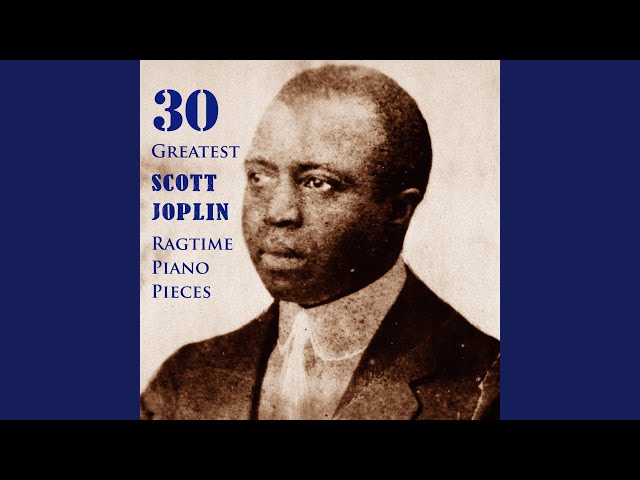
Scott Joplin, the great composer known as the King of Ragtime, influenced countless artists.
He was one of the most active musicians during the era when ragtime, like jazz, was enjoying widespread popularity.
Among Joplin’s works, a particularly dazzling piece I highly recommend is The Entertainer.
It’s frequently performed in Japan on YouTube and variety shows, so many of you may already know it.
While it’s easy to associate it with its television image, if you listen with a fresh ear, you’ll appreciate just how brilliant and captivating its melody truly is.