

[Intermediate Level] A curated selection of piano masterpieces featuring strikingly brilliant melodies!


When you think of brilliant, showy piano pieces, what comes to mind?
The piano can play melody and accompaniment simultaneously, not only connecting lines smoothly but also creating bold, percussive rhythms—it’s even said to be an instrument capable of recreating an orchestra all on its own.
Piano timbre has many facets—beauty, poignancy, fragility—but this time we’ve selected intermediate-level works that let you fully savor its bright, powerful, and dazzling side!
Even if you prefer gentle or wistful pieces, we hope this will be a chance to discover a new charm of the piano and inspire you to give these works a try.
- [For Intermediate Players] Challenge Yourself! Recommended Masterpieces That Shine at Piano Recitals
- [For Adults] Recommended for Piano Recitals! A Curated Selection of Impressively Sounding Masterpieces
- Piano Masterpieces: Surprisingly Easy Despite Sounding Difficult!? A Curated Selection Perfect for Recitals
- [Piano Recital] Perfect Pieces for Middle Schoolers! A Curated Selection of Impressive, Audience-Pleasing Works
- [Intermediate] Recommended Piano Duets | A Curated Selection of Cool and Dazzling Pieces
- [Intermediate Level] Cool Piano Pieces You Can Play [Great for Recitals Too]
- For Advanced Players: Showstopping Classics to Play at a Piano Recital
- [Latest] Piano Solo Intermediate | Picked Recommended & Popular Sheet Music
- Masterpieces of classical piano that are too beautiful for words. A gathering of delicate tones that cleanse the soul.
- [For Piano Recitals] Simple yet Cool Classical Pieces
- [Classical Music] All pieces under 3 minutes! A collection of short and cool piano pieces
- [For Advanced Players] A Curated Selection of Classical Masterpieces to Tackle at Piano Recitals
- [Low Difficulty] Recommended Tchaikovsky Piano Pieces [Intermediate]
[Intermediate Level] A curated selection of iconic piano masterpieces with dazzling melodies! (41–50)
Three Military Marches, D.733 Op.51 No. 1Franz Schubert

Franz Schubert’s masterpiece Three Military Marches, frequently performed by orchestras and wind ensembles, is a collection notable for its dazzling, RPG-like melodies accompanied by fanfare figures.
Among them, the especially recommended piece is the first of the Three Military Marches.
As the opening work of the set, it is in 2/4 time and D major, and its brilliant melody exudes a sense of uplift, evoking the beginning of an adventure or journey.

[Intermediate Level] A curated selection of famous piano pieces with strikingly brilliant melodies! (51–60)
“Butterflies,” Op. 2: No. 10, “Unmasking the Mask”Robert Schumann

An early piano suite by Robert Schumann, captivating for its thrilling melodies and delicate expression.
Comprising just twelve short pieces, this work is a small collection of stories that musically depicts a masked ball.
Written in 1831, it reaches its dramatic climax in No.
10, vividly portraying the moment when masks are exchanged.
Inspired by literature, the music offers a world rich in Romantic lyricism while remaining accessible to beginners.
It’s perfect for those who have just started the piano or who want a sense of accomplishment with short pieces.
Since it isn’t technically demanding, it’s also ideal for honing expressive skills.
Brilliant WaltzGlenda Austin

Set to a brilliant and elegant waltz rhythm, this piece captivates listeners as jazz elements are skillfully interwoven.
While the flowing melodies are enhanced with modern arrangements, the refined character of the music draws out the performer’s expressive abilities.
Glenda Austin’s works are often adopted as teaching materials in piano studios and music education settings, and are frequently chosen for recitals and competitions.
This piece, which values the distinctive feel of the waltz while combining technical challenges with musical enjoyment, is an ideal choice for upper elementary-level learners.
I am (Theme Song of “Hodo Station”)Morita Manami

A famous piece that just about every Japanese person has heard at least once: “I am.” It’s known as the theme song for the well-known news program “Hodo Station.” The difficulty of this work is on the higher end of intermediate—roughly equivalent to Czerny studies around Nos.
50 to 60.
The genre is jazz, and the toughest section is the intense high-register passage near the beginning.
It features a kind of jazz-specific difficulty that’s hard to find in classical music, but it’s such a cool piece that you should definitely give it a try.
gold dustErik Satie

Erik Satie, the composer famed as an enfant terrible of the music world.
It’s no exaggeration to call him a pioneer of easy listening, and he had a profound influence on later composers such as Debussy and Ravel.
His sparkling piano piece “Poudre d’or” (Gold Dust) is packed with his distinctive sensibilities.
Even as it offers moments of brilliance and excitement, it ultimately remains restrained overall—a quality that truly reflects Satie’s aesthetic.
Be sure to give it a listen.
Carnival, Op. 9Robert Alexandet Schumann

A collection of piano pieces composed between 1834 and 1835 by Robert Schumann, a leading composer of the German Romantic school.
Consisting of 21 short movements, it portrays participants at a masked ball, friends, and characters from the Italian commedia dell’arte.
Each movement has its own character and theme, expressing both Schumann’s introspective and passionate sides.
Distinctive harmonies and inventive rhythms are evident, richly embodying the spirit of Romantic music.
The work reflects Schumann’s feelings for his fiancée and his literary tastes, embedding cryptic messages in note sequences such as “A-S-C-H” and “S-C-H-A.” In 1910, it was also adapted into a ballet, influencing other artistic fields.
ParadeMaurice Ravel
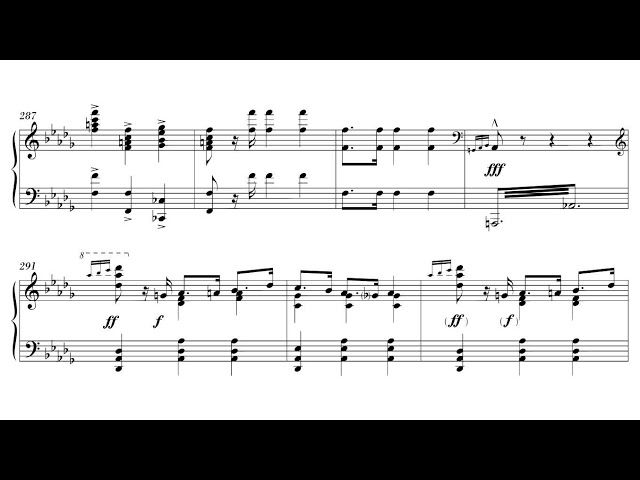
A piece whose powerful, dramatic sound stirs the listener’s heart, as if heralding the beginning of a grand tale.
It is a work by Toshio Horiuchi, who teaches in Hiroshima Prefecture and has composed numerous band pieces.
From the delicate interplay of sounds in the quiet sections to the breathtaking build toward a climax where the full ensemble charges forward as one, the piece offers a deeply immersive experience—like living through the prologue of a legend in music.
Composed in 2006 as a set piece for the All Japan Band Competition, it is featured in the album “Reference Performances of Set Pieces for the All Japan Band Competition 2005‑2008.” Demanding not only individual technique but the expressive power of the entire band, this masterpiece is one you’ll want to perform when you and your ensemble wish to weave a single, sweeping story together.