

[Folk and Children's Songs of Hokkaido] Songs of Hokkaido that continue to be loved across generations

The folk songs and children’s songs that resound across Hokkaido’s land carry the lives, joys, and prayers of people who have long faced its harsh nature.
Traditional music such as Esashi Oiwake and Soran Bushi has been passed down across generations and remains deeply rooted in many hearts today.
In this article, we introduce beloved classics—folk songs, children’s songs, and nursery rhymes—that have been handed down in Hokkaido and are still cherished today.
Why not lend an ear to these nostalgic melodies and feel the allure of music nurtured by the northern land?
- [2026] Masterpieces that sing of Hokkaido: the heart of a beloved homeland passed down in song
- December children's songs, folk songs, and nursery rhymes: fun winter hand-play songs
- Ranking of Popular Folk Songs
- Collection of winter nursery rhymes, folk songs, and children's songs. Includes fun winter hand-play songs too.
- Folk songs, children’s songs, and nursery rhymes of Kumamoto: the enduring spirit of our hometown passed down through song.
- Beautiful Folk Songs Passed Down in Miyagi Prefecture: A Collection of Masterpieces that Play the Heart of the Hometown
- Folk Songs, Children's Songs, and Nursery Rhymes of Aomori: Japanese Songs from Tsugaru and Hachinohe that Resonate with the Heart
- Japanese counting songs: nostalgic temari (handball) songs and children’s folk songs
- Okinawan folk songs, children’s songs, and nursery rhymes: the heart of our hometown passed down through song.
- Tokushima’s Folk Songs, Children’s Songs, and Nursery Rhymes | Traditional Songs Rooted in the Region, Including Awa Odori
- Folk songs, children's songs, and nursery rhymes of Iwate: the heart of the hometown passed down through song
- Japanese Shoka, Children's Songs, and Nursery Rhymes | Timeless masterpieces that resonate in the heart, passed down across generations
- [Folk Songs of Yamagata] The Heart of Our Hometown Passed Down in Song: Feelings Woven into Nostalgic Melodies
[Hokkaido Folk Songs and Children’s Songs] Hokkaido Songs Loved Across Generations (1–10)
Hokkai Daikoku Dance

A lively celebratory song that heralds the arrival of spring in the northern lands.
You can just picture Daikoku, the god of fortune, dancing into the home as the Seven Lucky Gods cheerfully start a sake feast—an auspicious scene if ever there was one.
Buoyant melodies woven by shakuhachi and shamisen mingle with a bright, resonant singing voice, lifting the listener’s spirits.
This piece is imbued with prayers for good fortune rooted in everyday life, making it perfect for New Year’s and festive gatherings.
It carries the unique brightness and strength of the north—qualities that have allowed it to be sung across generations.
Hokkai Magouta

It is a piece that feels as if you can hear the soul’s cry of people who make their living by labor, riding horses across the harsh northern land.
In 2021, a recording was made of a performance sung by Tsugaru folk song virtuoso Tokie Sasaki.
The great appeal of this song lies in the masterful fusion of the robust phrasing of a work song with the lyrical melodies handed down from Esashi Oiwake.
In the first half, it portrays the hardiness of a packhorse driver facing untamed nature; in the second half, it depicts a heartrending longing for one’s hometown and loved ones, leaving you with the moving sense of having listened to a grand tale within a single piece.
If you want to reflect deeply on the history of Hokkaido, why not give it a listen?
Soran Bushi

The powerful folk song Soran Bushi, born from Hokkaido’s landscape and still alive today.
Echoing the voices of fishermen at work, this piece gained nationwide popularity after being featured in the TV drama Mr.
Kinpachi in Class 3B.
It has been performed twice on NHK’s Kōhaku Uta Gassen, helping to spread the appeal of folk music.
Today, it’s a staple for livening up school events like sports days and field festivals—a perfect song for making memories with family and friends.
[Folk Songs and Children’s Songs of Hokkaido] Hokkaido Songs Loved Across the Ages (11–20)
Three-step descent of the Northern Sea
A new folk song of Hokkaido crafted by a folk singer from Hakodate.
You can feel the creator’s warm gaze, aiming to gently ease hearts stiffened by the long, harsh winter cold.
Its lively “mi-sagari” mode follows the lineage of the Oiwake style passed down from regions like Shinshu, and the tones of shamisen and shakuhachi evoke a nostalgic mood.
Listening to this piece conjures up images of the grand nature of the North and the breath of life of the people who live there.
It’s a gentle song that softly warms the heart—perfect for when you want to experience music nurtured by the northern land.
Pechka (a type of Russian masonry stove)

A pechka is a fireplace made of materials like brick.
The children’s song “Pechka” originated in Northern Europe, then traveled to Russia, and is said to have reached Hokkaido around 1880.
Chatting in front of a pechka feels homey, warming both body and soul to the core, doesn’t it? It’s truly a song that seems perfectly suited to Hokkaido.
Hokkai-hama-bushi

Hokkai Hamabushi is a Hokkaido folk song that depicts the lively shores of Otaru and its fishermen during the prosperous herring fishing days.
It is said to have originally derived from Akita’s Hachiro-bushi.
The lyrics, filled with dreams wishing for bountiful catches on the majestic sea, and the vigorous tones of the shamisen leave a strong impression.
At the Hokkai Hamabushi National Competition, this piece is performed every year by folk song enthusiasts.
Ho-hora-hoi Bushi
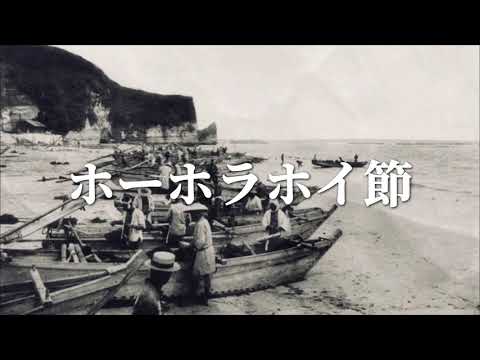
It’s a song that vividly evokes a young man, having finished his fishing in the harsh northern seas, hurrying back to the hometown where his lover awaits.
Even within its wistful melody, a powerful rhythm rooted in work songs pulses through, stirring the listener’s heart.
This piece is a Hokkaido folk song that draws from various currents, including Ainu laments and Honshu folk music.
It is also included on the album “Hokkaido Min’yō Ketteiban – Vol.
1,” sung by Emiko Kodama.
When you think of a distant homeland or someone dear to you, this work overflows with a mysterious charm that seems to transform that loneliness into a warm strength.