

![[Folk and Children's Songs of Hokkaido] Songs of Hokkaido that continue to be loved across generations](https://i.ytimg.com/vi_webp/oluwszXDSDs/maxresdefault.webp)

The folk songs and children’s songs that resound across Hokkaido’s land carry the lives, joys, and prayers of people who have long faced its harsh nature.
Traditional music such as Esashi Oiwake and Soran Bushi has been passed down across generations and remains deeply rooted in many hearts today.
In this article, we introduce beloved classics—folk songs, children’s songs, and nursery rhymes—that have been handed down in Hokkaido and are still cherished today.
Why not lend an ear to these nostalgic melodies and feel the allure of music nurtured by the northern land?
- [2026] Masterpieces that sing of Hokkaido: the heart of a beloved homeland passed down in song
- December children's songs, folk songs, and nursery rhymes: fun winter hand-play songs
- Ranking of Popular Folk Songs
- Collection of winter nursery rhymes, folk songs, and children's songs. Includes fun winter hand-play songs too.
- Folk songs, children’s songs, and nursery rhymes of Kumamoto: the enduring spirit of our hometown passed down through song.
- Beautiful Folk Songs Passed Down in Miyagi Prefecture: A Collection of Masterpieces that Play the Heart of the Hometown
- Folk Songs, Children's Songs, and Nursery Rhymes of Aomori: Japanese Songs from Tsugaru and Hachinohe that Resonate with the Heart
- Japanese counting songs: nostalgic temari (handball) songs and children’s folk songs
- Okinawan folk songs, children’s songs, and nursery rhymes: the heart of our hometown passed down through song.
- Tokushima’s Folk Songs, Children’s Songs, and Nursery Rhymes | Traditional Songs Rooted in the Region, Including Awa Odori
- Folk songs, children's songs, and nursery rhymes of Iwate: the heart of the hometown passed down through song
- Japanese Shoka, Children's Songs, and Nursery Rhymes | Timeless masterpieces that resonate in the heart, passed down across generations
- [Folk Songs of Yamagata] The Heart of Our Hometown Passed Down in Song: Feelings Woven into Nostalgic Melodies
[Hokkaido Folk Songs and Children’s Songs] Hokkaido Songs Loved Across Generations (1–10)
Red mountain, blue mountain, white mountain

Akai yama, Aoi yama, Shiroi yama (The Red Mountain, the Blue Mountain, and the White Mountain) was broadcast on NHK’s Minna no Uta in 1974 and became known nationwide.
Although it is a children’s song handed down in the Obihiro region, it is said to be the original tune for Hakushū Kitahara’s nursery rhyme Akai Tori Kotori (Red Bird, Little Bird).
The song depicts the four seasons of the Hidaka Mountains: the red mountain represents autumn, the blue mountain represents spring and summer, and the white mountain represents winter.
Esashi Oiwake

The “Mago-uta” from Shinano was brought to Hokkaido and became one of the representative folk songs of the region.
Esashi Oiwake is a folk song known for its complex melodic ornamentation and has been designated as an intangible folk cultural asset of Hokkaido.
It seems the more difficult it is, the more rewarding it is to sing, and there is even a national competition held every year where performers compete in singing this piece.
Hokkai Iwai Nagashi Song

A traditional song from Hokkaido brimming with vitality.
This piece celebrates the rugged strength of those who work on the northern seas and the lively revelry of feasts held for big catches.
Its melody, set to the rhythm of rowing, conjures images of people who live with harsh nature, their joy, and the strong bonds among comrades.
The warmth of people nurtured by such a severe climate gently seeps into the listener’s heart.
It’s a perfect song for moments when you want to reflect on Hokkaido’s majestic landscapes or enjoy lively times with friends.
Esashi Packhorse Driver’s Song

This is a song that vividly conjures up the scenes seen through the eyes of a traveler leading a horse—the beautiful sea of Esashi and the bittersweet partings with people along the way.
While cherishing the melancholy of traditional work songs, it blends in a familiar, pop-like melody.
Created as part of the “new folk songs” by lyricist Yurio Matsui and composer Joji Osawa, the piece gently unravels the faint loneliness felt on the road and the sudden longing for home with its tender tune.
It’s a warm, heart-filled song that will resonate with anyone who wishes to encounter something nostalgic.
Hidaka Uma Kata Mikudari
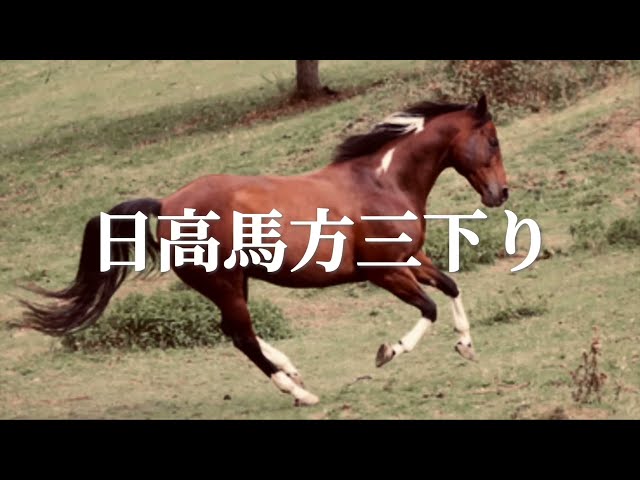
This is a quintessential Hokkaido parlor song in which the melancholy of horse drivers and the lively atmosphere of the red-light districts blend beautifully.
The plaintive resonance of the sansagari mode, with its bass-rich shamisen, is overlaid with the powerful, soaring melodic turns derived from horse-driver songs, stirring the listener’s heart.
It is said that this piece was once sung at banquets in towns that prospered from herring fishing.
When Reiko Yamamoto recorded it in the late 1930s, it spread nationwide, and thanks to its intricate technique, it has also been cherished as a listening piece to savor carefully.
Brimming with profound appeal, it evokes both the resilience of those who lived on the northern frontier and the fervor of their festivities.
Choi-sa section

Set against the majestic seas of Hokkaido, this lively song celebrates the spirited energy of fishermen and the joy of a great catch.
You can picture the scene: tightening their bold “tairyo” tenugui headbands, comrades join forces to celebrate a bountiful haul.
The song’s greatest charm is, without a doubt, the rousing chant “Choisa.” It’s wonderful how it creates a participatory excitement, bringing singers and listeners together as one.
Its popularity is evident from the way it has been passed down by many performers, including Motoharu Sasaki.
Heard at Bon dances or festivals, it conveys the strength and vitality of people living in the northern country.
Hokkai Yanresa-bushi

A heart-thumping song from Hokkaido, its rousing “Yanresa” chants linger in the ear.
The lively rhythm woven by shamisen and drums conjures up a scene of people forming a circle and dancing on the northern land.
Unlike traditional folk songs that depict harsh nature, this piece celebrates warm moments of voices joined together and hope for the future.
Included on Erina Kato’s album “Michishirube,” released in June 2023, its call-and-response format naturally invites participation—an irresistible charm.
It’s a song that symbolizes life in Hokkaido, often heard at local festivals.