


How many four-character idioms related to horses can you think of? From familiar ones like “horse’s ear, east wind” (bajitōfū: turning a deaf ear) and “Saiō losing his horse” (saiō shitsu ba: a blessing in disguise) to lesser-known expressions, there’s a wealth of idioms featuring horses.
Horses have long been close to people’s lives, and their form and nature have been etched into many words.
In this article, we highlight common four-character idioms that you can use in everyday conversation and business settings.
Once you learn their meanings and usage, you’ll find yourself nodding in agreement at the depth of the language.
Put them to use to boost your vocabulary!
- [New Year’s Cards for the Year of the Horse] Clever phrases that use “horse” well. Funny one-liners to spark the year’s first laugh.
- A one-line message to add to New Year’s cards! Horse-themed ideas that elementary school kids can write
- Amusing four-character idioms you’ll want to use right away! A collection of expressions to remember as general knowledge.
- Become positive with four-character idioms that resonate with the heart! Common yet deeply meaningful words.
- Interesting four-character idioms for elementary schoolers! Words you'll want to use once you understand their meanings
- [Four-Character Idioms] Impressive and Cool Sound! A Collection of Famous Quotes Worth Knowing as General Knowledge
- [Kakizome] Four-character idioms fit for the New Year: Introducing words that resonate with the heart and their meanings
- Four-character idioms with numbers: clear explanations of meanings and usage
- Four-character idioms that help you achieve goals! Phrases you can use in everyday situations
- General: Four-character idioms that encourage determination—powerful, heart-stirring words
- Enrich your heart with beautiful four-character idioms! A collection of expressions you'll want to use in everyday life.
- Learn the meanings too! Cool four-character idioms that elementary school students will want to remember
- Boost your vocabulary with four-character idioms that include numbers! A collection of four-character idioms for elementary school students to learn.
2026 is the Year of the Horse! A detailed guide to four-character idioms related to horses (1–10)
unconstrained and imaginative; freewheeling like a heavenly steed (soaring imagination)
@yoji_niki Four-character idiom: Tenma Kōkū (Heavenly Horse Gallops Through the Sky) Knowledge Kirishima Hikaru VOICEVOX: Sayo/ SAYO VOICEVOX: Sayo/ SAYO
♪ Original Song – Four-Character Idiom Master – Hikaru Kirishima
The four-character idiom “天馬行空” (tenba kōkū or tenma kōkū) depicts a celestial steed galloping freely across the sky.
By extension, it has come to refer to people whose writing or behavior is uninhibited and unconstrained by anything.
You might use it like this: “That person who lives tenma kōkū—so free and unbound—looks very happy.” Depending on the person, the phrase can be taken positively or negatively, but there are probably more people than you’d expect who wish to live in a tenma kōkū way.

Even a slow horse can reach its destination with ten days’ travel. (Meaning: Steady effort over time can compensate for a lack of talent.)
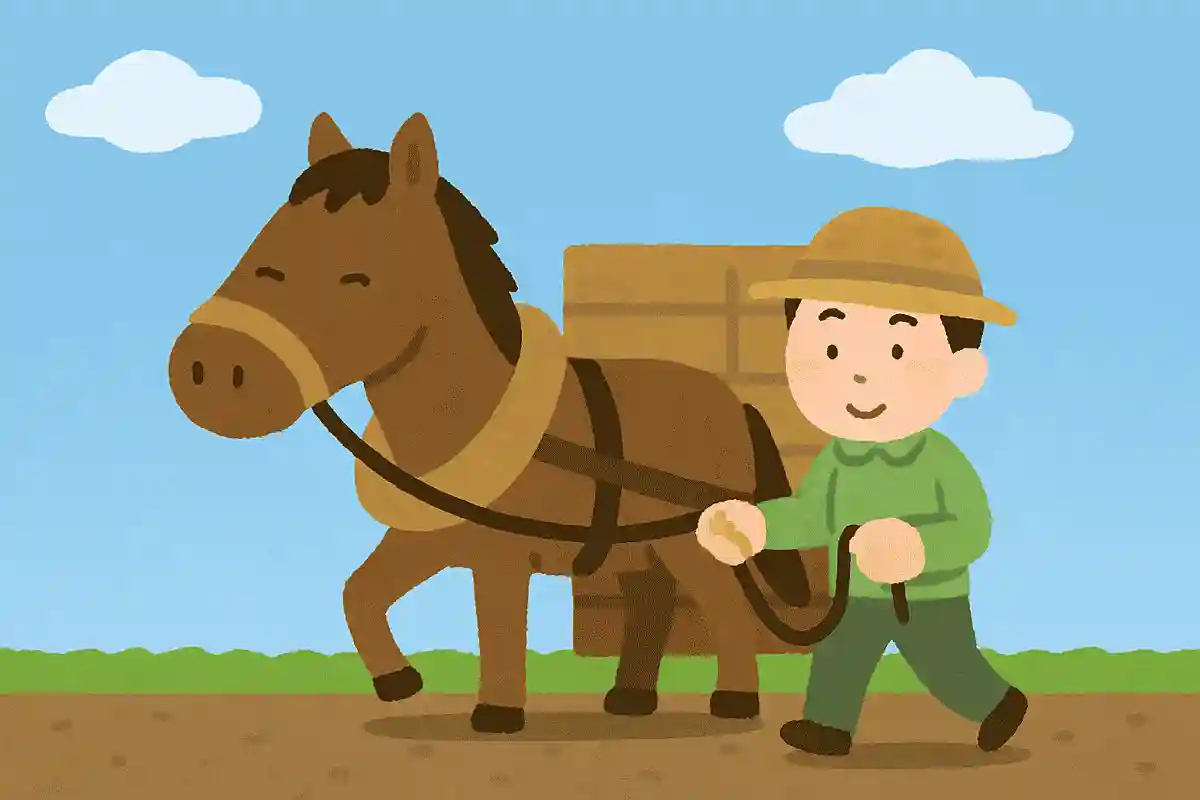
It sounds like an encouraging phrase suggesting that even someone without natural talent can stand alongside the talented if they put in the effort.
“Numa” refers to a slow horse, and it expresses the idea that even such a slow horse can catch up to a fast one if it keeps running for ten days.
The use of specific numbers is also key, conveying the message that effort will surely bear fruit.
It’s exactly the kind of saying you want to recall when you feel your efforts aren’t paying off—words that support your resolve to keep going.

Seven Sheets While Leaning on a Horse
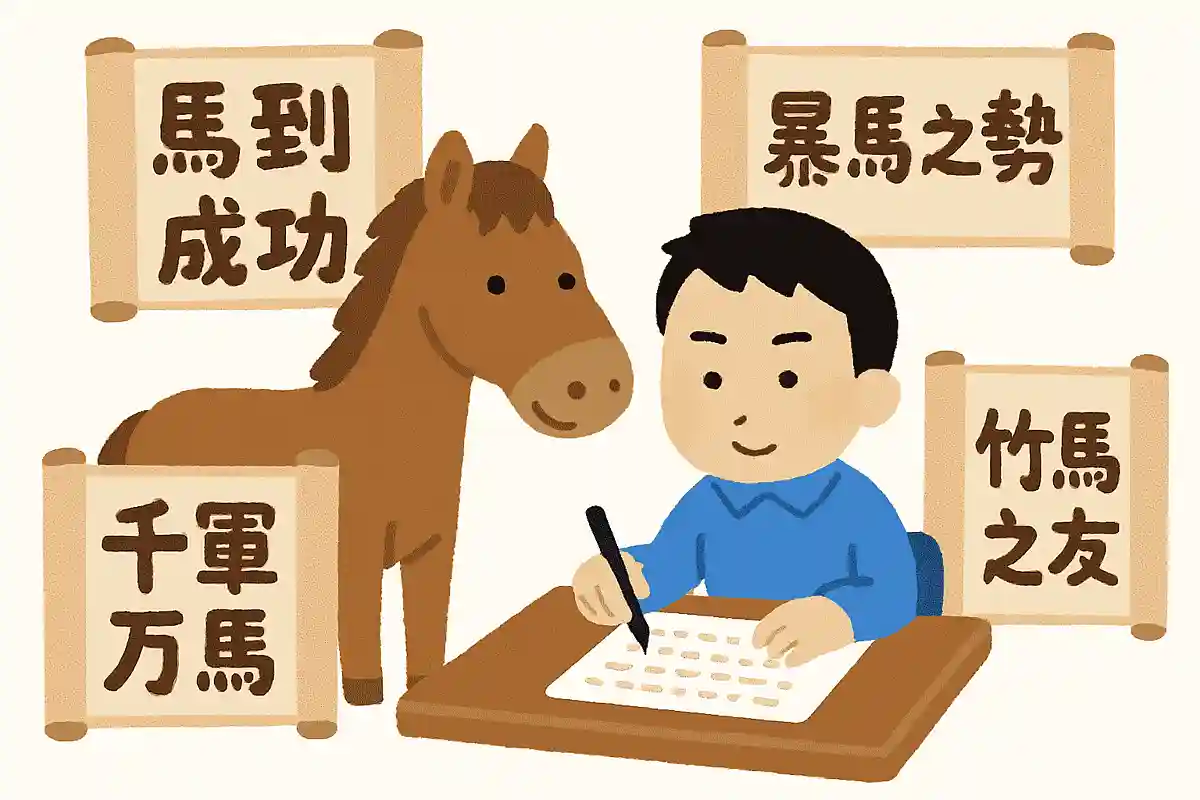
“Yima Qizhi” refers to an exceptional talent for producing brilliant writing in no time at all.
“Yima” means standing by a horse, and “Qizhi” indicates a text so long it would fill seven sheets of paper.
The term comes from a story in the Chinese classic Shishuo Xinyu: in ancient China, during the Eastern Jin, Huan Wen ordered Yuan Hu to draft a proclamation, and Yuan completed it while Huan Wen was still leaning against his horse.
It’s a talent one can’t help but wish to have at least once.
This four-character idiom is the kind of compliment you’d love to hear from someone.
like the east wind to a horse (an admonition goes unheeded; words fall on deaf ears)

The expression “馬耳東風” (bajitōfū) describes letting others’ opinions or evaluations go in one ear and out the other.
It is said to originate from a line in Li Bai’s poem “Answer to Wang Twelve on a Cold Night”: “People hear this and all shake their heads; it is like the east wind shooting past a horse’s ears.” The “east wind” refers to the spring wind—just as a horse feels nothing when the spring breeze brushes its ears, it means not being affected no matter what anyone says.
It’s a four-character idiom generally used with a negative nuance.
Wisdom of an old horse
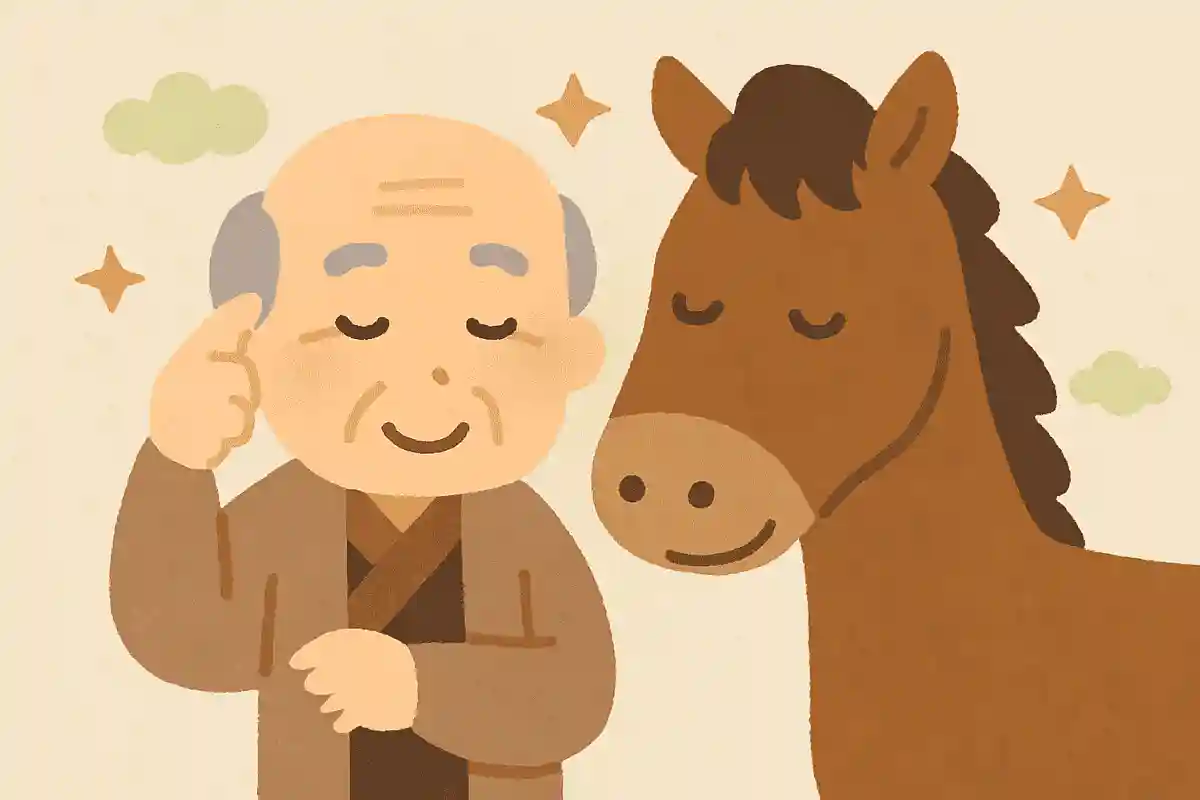
A four-character idiom that means the superior wisdom and knowledge possessed by someone with long experience, and by extension conveys the message that one should heed the opinions of those with experience.
It originates from an episode involving the Chinese figure Guan Zhong, who was able to find his way back from a confusing road by following an old horse.
It tells us that long experience stores solid knowledge, and that following it can have a positive impact on ourselves.
It encourages us to first follow those with experience, and from there resolve to steadily accumulate our own experience.
To drink water, throw a coin (into the well).
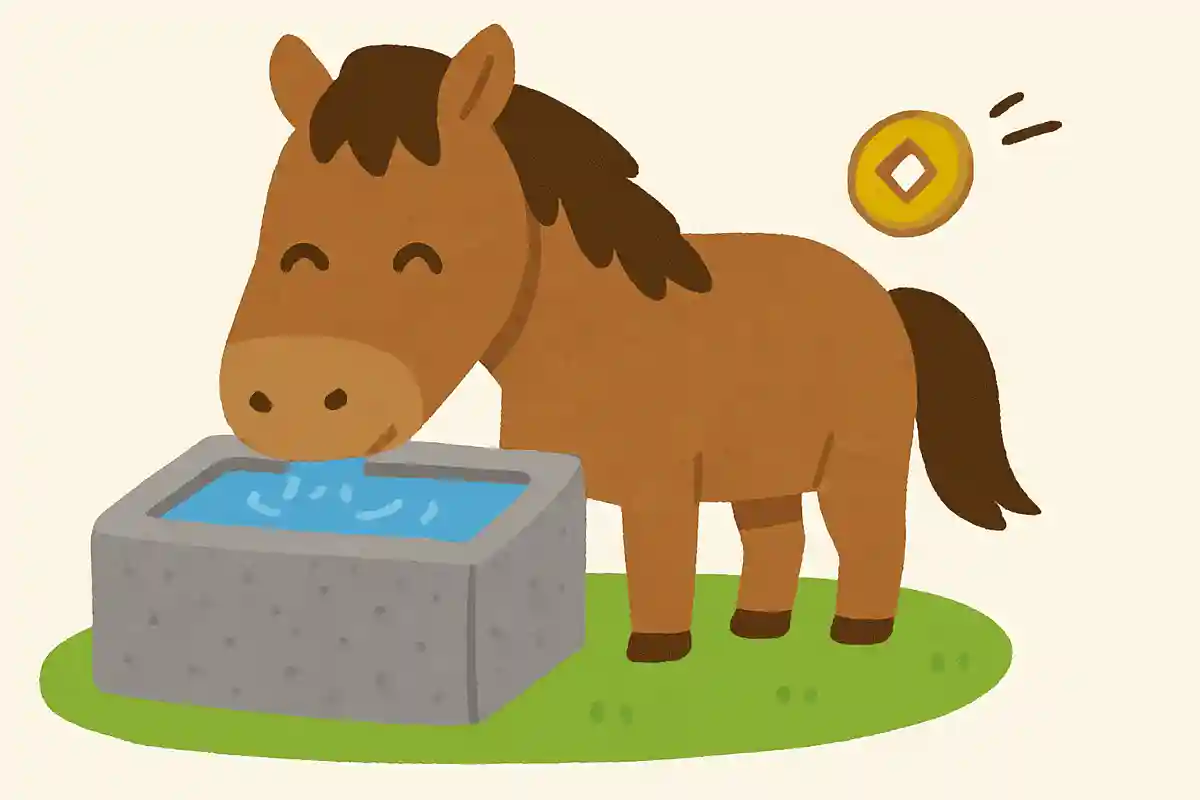
It is a phrase that expresses an attitude of doing even small things with sincerity, and from that, it conveys purity and righteousness in both heart and actions.
There is an episode in which a person throws money into the water each time his horse drinks, as payment, and from his sense of responsibility toward the horse, his sincerity comes through.
The way he conscientiously does kindnesses he is not obligated to do strongly communicates his character.
It’s a word that makes you want to live like the person depicted by this idiom—handling even small matters with sincerity and a sense of responsibility.
Kanchu follows the horse
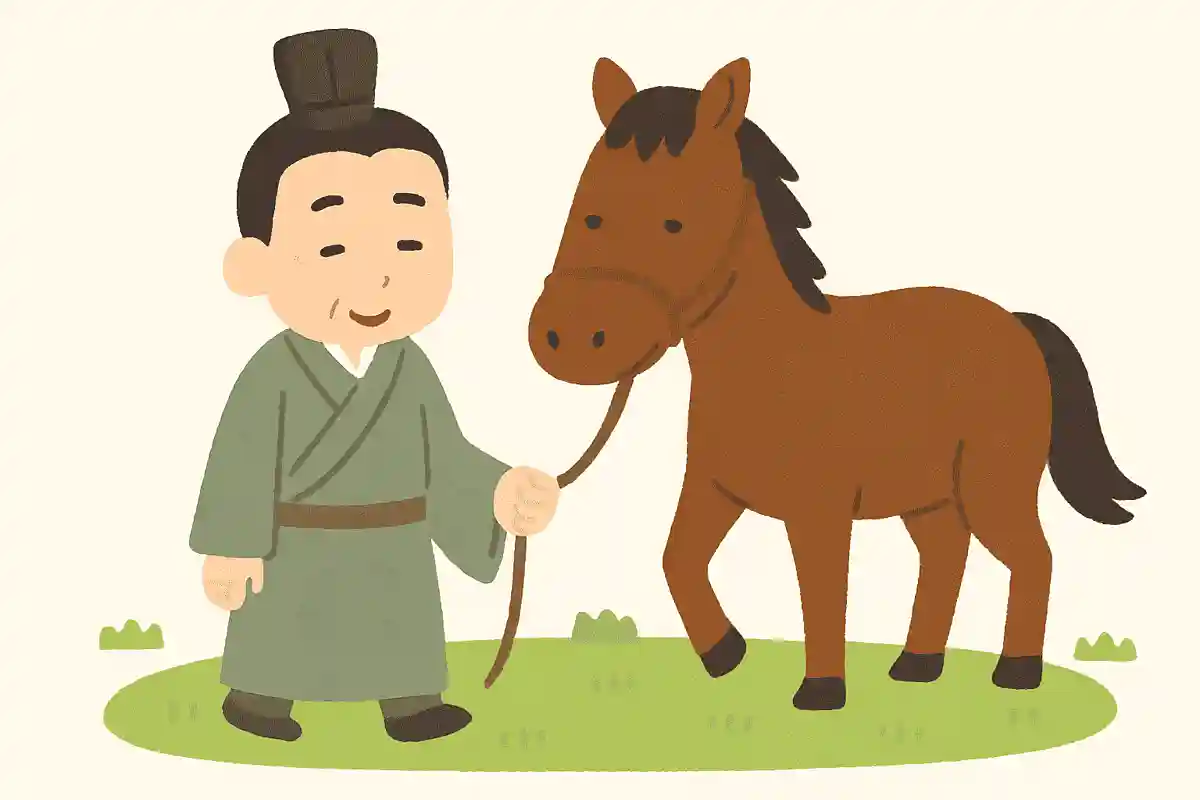
These words express an attitude of respecting the experiences of people from the past and borrowing the wisdom of sages.
The phrase is said to be based on the experience of a man named Guan Zhong, and is told alongside an episode in which he found his way home by following a horse after getting lost.
It teaches that he was saved by the horse’s experience of having traveled many roads, and that following those with experience leads to good outcomes.
It suggests that rather than trying to handle everything on your own, it’s sometimes important to listen to the opinions of those with experience.