

[Impressionism] A Curated Selection of Colorful Piano Masterpieces — Debussy & Ravel

The Impressionists were an artistic movement that emerged in Paris, France, in the late 19th century.
The shift from an era that valued realism—faithfully reproducing what was seen—to one that sought freer modes of expression had a profound impact on the history of classical music.
Among those who left their mark for posterity as representative composers of Impressionism were Claude Debussy and Maurice Ravel.
In this feature, we spotlight these two great composers, along with several 19th-century composers said to have been influenced by Impressionism, and introduce masterpieces that embody Impressionism’s emphasis on light and color.
- Lower difficulty: Not as hard as it sounds!? Debussy’s piano pieces
- [Easier Level] Ravel’s Piano Pieces | A curated selection of easier works you can play smoothly!
- For Advanced Players: Showstopping Classics to Play at a Piano Recital
- Piano Pieces by Ibert: Gem-like Masterworks by a 20th-Century French Composer
- Masterpieces of classical piano that are too beautiful for words. A gathering of delicate tones that cleanse the soul.
- [Contemporary Pieces] A curated selection of classical works that captivate with the piano’s mysterious resonance!
- [Poulenc’s Piano Works] A Curated Selection of Masterpieces by a Composer of Esprit
- [Intermediate Level] A curated selection of piano masterpieces featuring strikingly brilliant melodies!
- Séverac’s Piano Pieces: Masterworks by the Genius Composer Recognized by Debussy
- Chabrier’s Piano Pieces: Gemlike Masterworks Forged by the Esprit of French Music
- [Piano] A Lineup of Masterpieces | Piano Pieces That Evoke Spring
- [Franck’s Piano Works] A curated selection of gem-like masterpieces by the Father of Modern Music
- A gem of a masterpiece by the composer of the piano suite Pictures at an Exhibition by Mussorgsky.
[Impressionism] A Curated Selection of Colorful Piano Masterpieces — Debussy & Ravel — (1–10)
Romance, Op. 24 No. 9Jean Sibelius

Jean Sibelius is a composer who represents Finland.
Active from the late Romantic to the early modern period, his musical works—including seven symphonies—are loved around the world.
Sibelius’s Romance, Op.
24 No.
9, is one of the pieces from his set of piano miniatures Ten Pieces, Op.
24, composed in 1901.
Characterized by its gentle, romantic melody, it is among the most popular of Sibelius’s piano works.
Its beautiful tune is warm and richly resonant, like a Christmas gift.
With the lyrical expressiveness typical of a Nordic composer and a musical sensibility that evokes 19th-century Romanticism, it has captivated many pianists.
It is a soothing masterpiece that you’ll want to listen to on a quiet, long night with someone special.
Video, Episode 1: Reflections of WaterClaude Debussy

The shimmering glints of light reflected on a beautifully wavering water surface… it’s a gorgeous piece that evokes a painterly image.
Among classical piano works themed around water, Claude Debussy’s Reflections in the Water is renowned alongside Franz Liszt’s The Fountains of the Villa d’Este—which directly influenced it—and Maurice Ravel’s Jeux d’eau.
Released as part of the piano collection Images, Book I, the piece vividly depicts a world focused on the very movement of water, rendered exquisitely through the composer’s delicate sensibility.
Since it’s a work by Debussy, known for his free compositional approach that steps outside classical conventions, even those who find rigid classical music daunting should definitely give it a listen!

Piano Sonata No. 2 in G-sharp minor, Op. 19 “Fantasy Sonata”Aleksandr Skryabin

Alexander Scriabin was a leading Russian composer and pianist from the late 19th to the early 20th century.
His music evolved from an initially Romantic style influenced by Chopin to a distinct, impressionistic and mystical idiom.
The Piano Sonata No.
2 in G-sharp minor, Op.
19, commonly known as the “Sonata-Fantasy,” was composed between 1897 and 1898 and is one of the most popular masterpieces among Scriabin’s piano sonatas.
The first movement depicts a quiet tropical shoreline at night, while the second portrays a storm-tossed open sea; the latter, in particular, is highly virtuosic and overwhelms listeners.
As you listen, you can vividly sense how Scriabin himself was captivated by the grandeur of the sea and its shifting colors upon first encountering it.
Sublimating an unforgettable youthful experience through his rich sensibility, this work remains a celebrated masterpiece of the transitional period from Romanticism to modernism, continuing to fascinate many to this day.
[Impressionism] A Curated Selection of Colorful Piano Masterpieces — Debussy & Ravel — (11–20)
Travel Memories, Op. 71 No. 5: “Gate of Tierra”Isaac Albéniz

Isaac Albéniz, a Spanish composer and pianist, is known for works that reflect a unique worldview influenced by Spanish folk music.
Memories of Travel, Op.
71, is a collection of piano pieces composed between 1886 and 1887, and one of its pieces, The Gate of Tierra, is distinctive for incorporating the rhythm of the bolero.
Through this work, Albéniz sought to depict the landscapes of various regions of Spain and their local musical styles.
In particular, The Gate of Tierra musically conveys the atmosphere around the city gate of the same name in Cádiz.
Its tone, infused with passionate spirit and vibrant culture, is an enchanting expression of love for and longing toward Spain.
Immersing yourself in this evocative music is a fine way to experience Albéniz’s profound affection for his homeland.
Gymnopédie No. 1Erik Satie

Erik Satie, the great composer who had a profound influence on Debussy and Ravel.
His Gymnopédie No.
1 is one of his most famous pieces.
What many players find difficult when performing this work is the left-hand leaps.
The tempo is relaxed, but those jumps often trip people up.
Also, the richly colored harmonies make memorization quite challenging.
By working on this piece, you can acquire a variety of techniques that will help you improve your piano playing.

Pavane for a Dead PrincessMaurice Ravel
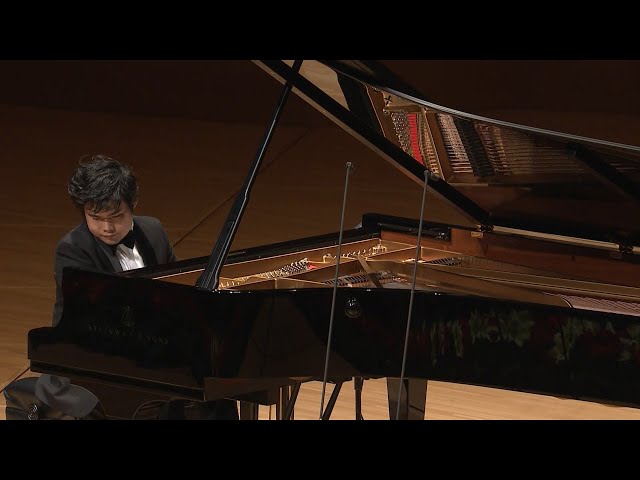
Used in TV commercials and as insert music in films, Maurice Ravel’s Pavane for a Dead Princess is one of the most frequently heard masterpieces among his piano works.
A pavane is a type of courtly dance that spread through courts from the 16th to the 17th century.
Even first-time listeners can comfortably immerse themselves in its world and sense the beauty of Impressionism.
Popular as a recital piece and not especially difficult, it nevertheless requires careful practice to convey its elegance and delicacy.
Aim for a refined atmosphere by playing with a soft, rounded tone free of harsh edges.

Tale, No. 8: The Crystal BasketJacques Ibert

The French composer Jacques Ibert is known for his neoclassical style and left many witty, brilliantly crafted works.
Winning the Prix de Rome in 1919 cemented his status as a composer.
Written around this time, his piano suite Histoires is a colorful collection inspired by travels around Mediterranean and Asian ports.
Among the set, No.
8, “La cage de cristal” (The Crystal Cage), is especially popular; true to its title, it captivates with delicate, dreamlike sonorities that evoke a transparent, fragile beauty.
It stirs our imagination and gently releases cherished memories long kept deep within.
Offering the sensation of traveling through music, this work is highly recommended for those who wish to savor the piano’s wide range of expressive colors.