

[Impressionism] A Curated Selection of Colorful Piano Masterpieces — Debussy & Ravel

The Impressionists were an artistic movement that emerged in Paris, France, in the late 19th century.
The shift from an era that valued realism—faithfully reproducing what was seen—to one that sought freer modes of expression had a profound impact on the history of classical music.
Among those who left their mark for posterity as representative composers of Impressionism were Claude Debussy and Maurice Ravel.
In this feature, we spotlight these two great composers, along with several 19th-century composers said to have been influenced by Impressionism, and introduce masterpieces that embody Impressionism’s emphasis on light and color.
- Lower difficulty: Not as hard as it sounds!? Debussy’s piano pieces
- [Easier Level] Ravel’s Piano Pieces | A curated selection of easier works you can play smoothly!
- For Advanced Players: Showstopping Classics to Play at a Piano Recital
- Piano Pieces by Ibert: Gem-like Masterworks by a 20th-Century French Composer
- Masterpieces of classical piano that are too beautiful for words. A gathering of delicate tones that cleanse the soul.
- [Contemporary Pieces] A curated selection of classical works that captivate with the piano’s mysterious resonance!
- [Poulenc’s Piano Works] A Curated Selection of Masterpieces by a Composer of Esprit
- [Intermediate Level] A curated selection of piano masterpieces featuring strikingly brilliant melodies!
- Séverac’s Piano Pieces: Masterworks by the Genius Composer Recognized by Debussy
- Chabrier’s Piano Pieces: Gemlike Masterworks Forged by the Esprit of French Music
- [Piano] A Lineup of Masterpieces | Piano Pieces That Evoke Spring
- [Franck’s Piano Works] A curated selection of gem-like masterpieces by the Father of Modern Music
- A gem of a masterpiece by the composer of the piano suite Pictures at an Exhibition by Mussorgsky.
[Impressionism] A Curated Selection of Colorful Piano Masterpieces — Debussy & Ravel — (11–20)
Nine Preludes, Op. 1Karol Szymanowski

Karol Szymanowski is one of Poland’s leading early 20th-century composers.
While influenced by figures such as Chopin and Wagner, he forged a distinctive musical language through innovative harmony and the use of polyrhythms.
His Nine Preludes, Op.
1—reflecting the passionate and pioneering musicality of his youth—were recorded by Krystian Zimerman and released in September 2022.
This groundbreaking early work showcases Szymanowski’s musical gifts, captivating listeners with its complex rhythms, chromatic harmonies, and rich textures.
Conveying emotion and imagery purely through music without words, this set of preludes is recommended not only for those familiar with classical music but also for anyone looking to discover the allure of piano repertoire.
Piano Sonata in E-flat minorPaul Dukas

Paul Dukas, born in Paris in 1865, studied at the Paris Conservatory and composed music that bridged the tradition of Franck with Debussy’s innovative style.
His representative work, the Piano Sonata in E-flat minor, was composed and published around 1900 and received a rapturous premiere by Édouard Risler in 1901.
Born of Dukas’s rigorous self-criticism, this sonata comprises four movements that each possess a distinct character while maintaining an overarching unity.
The Beethovenian principle of “from darkness to light” is adopted through a French lens, resulting in a work that greatly broadened the expressive range of piano music.
Although a complex, technically demanding large-scale solo piano piece, it has been enjoying renewed appreciation in recent years thanks to outstanding pianists.
As a late Romantic masterpiece, it is truly a piece that is as thrilling to hear as it is rewarding to play.
Le Tombeau de Couperin, No. 2: FugueMaurice Ravel

Maurice Ravel’s suite Le Tombeau de Couperin was imbued with a sense of remembrance for friends who perished in World War I.
This work, which is the second movement of the suite, was premiered in April 1919 and dedicated to Lieutenant Jean Cruppi.
It is the only fugue Ravel ever composed, with three voices quietly overlapping as if in dialogue.
It seems to speak not only of sorrow, but also of gentle memories of friends now gone.
Within its classical formal beauty, Ravel’s characteristic shimmering sonorities melt together, enveloping the piece in a mysterious sense of weightlessness.
The entire suite was also staged as a ballet.
The key is to let each voice sing its melody with care while maintaining an overall transparency.
It’s a captivating piece through which one can learn both Baroque style and the delicate expression of Impressionism at the same time.
Noble and Sentimental Waltzes: No. 1, Modéré (Moderato), G majorMaurice Ravel
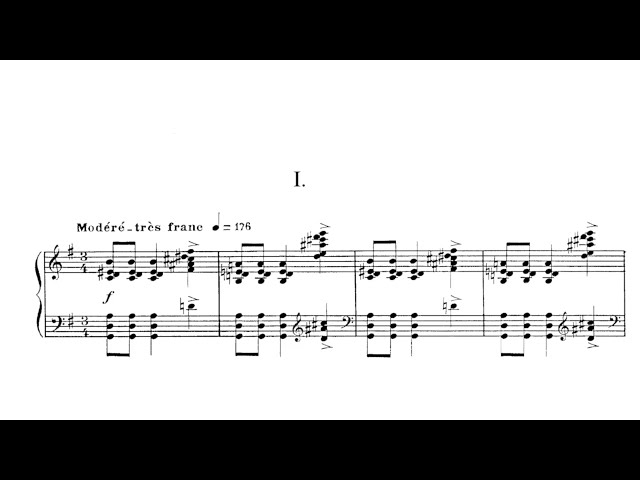
The suite Valses nobles et sentimentales fuses traditional waltz forms with Maurice Ravel’s characteristically modern sonorities.
Its opening piece is graceful yet tinged with melancholy, evoking a curious, elusive mood.
At its premiere in May 1911, the composer’s name was withheld, and the work astonished audiences with its originality.
One can almost picture a glittering ballroom where, amid the dancing, a secret, fleeting thought crosses the heart.
The work is also known in its ballet incarnation as Adélaïde, ou le langage des fleurs.
It’s perfect for those who want to experience the intriguing rhythms and harmonies that overturn conventional images of the waltz.
Aim for a rounded, gentle tone to convey the wistfulness that lies beneath the brilliance.
Grotesque SerenadeMaurice Ravel

Composed around 1893 when Maurice Ravel was about 18, this is a highly distinctive and passionate work.
According to an anecdote, Ravel later added the word “grotesque” to its title; as the name suggests, its rough, provocative sonorities are interwoven with startlingly sweet melodies.
The piece’s appeal lies in its vivid contrast with the emotional central section, making it feel like listening to an awkward yet single-minded declaration of love.
It’s perfect for those who want to experience a bold, youthfully daring side of Ravel that differs from his refined image.
For performers, a key point is to draw a dramatic distinction between the fierce and the sweet elements.
ParadeMaurice Ravel
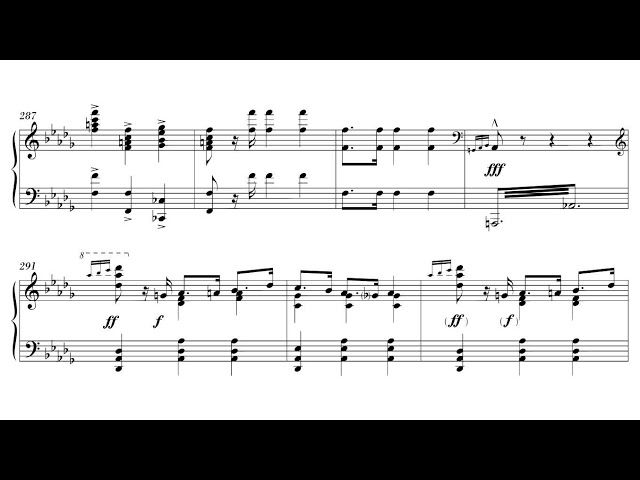
A piece whose powerful, dramatic sound stirs the listener’s heart, as if heralding the beginning of a grand tale.
It is a work by Toshio Horiuchi, who teaches in Hiroshima Prefecture and has composed numerous band pieces.
From the delicate interplay of sounds in the quiet sections to the breathtaking build toward a climax where the full ensemble charges forward as one, the piece offers a deeply immersive experience—like living through the prologue of a legend in music.
Composed in 2006 as a set piece for the All Japan Band Competition, it is featured in the album “Reference Performances of Set Pieces for the All Japan Band Competition 2005‑2008.” Demanding not only individual technique but the expressive power of the entire band, this masterpiece is one you’ll want to perform when you and your ensemble wish to weave a single, sweeping story together.
[Impressionism] A selection of richly colored piano masterpieces — Debussy & Ravel — (21–30)
Suite ‘Miroirs’ No. 2 – Sad BirdsMaurice Ravel

The five-piece suite Miroirs, dedicated to pianist Ricardo Viñes—a fellow artist—includes this work as its second piece, first performed by Viñes in January 1906.
Maurice Ravel based it on the scene of “birds lost in a dark forest on a hot summer day,” drawing listeners into a fantastical world where plaintive birdsong resonates through the silence.
This piece is perfect for those who want to explore a wide palette of timbres with a delicate touch.
It also offers valuable practice in richly evoking imagery by artfully controlling resonance with the pedal, so take your time engaging with Ravel’s painterly music.