

![[Heisei Retro] Hit Japanese songs that defined the 1990s. Recommended J-POP classics.](https://i.ytimg.com/vi/gj5Nu6feFTQ/sddefault.jpg)

When you think of the Japanese music scene of the ’90s, what kind of sounds come to mind? It was an era when million-selling hits kept emerging and CD sales marked a golden age for the music industry.
Hit songs poured from TV and radio into the streets, and everyone was humming the same tunes.
From guitar rock to dance music, from the Shibuya-kei movement to the Being-kei style, a wide variety of genres coexisted, each shining with its own unique brilliance in the ’90s.
In this article, we’ll introduce a selection of hit songs that colored that rich musical scene.
For those who lived through the era, they’ll feel nostalgic; for first-time listeners, they’ll sound fresh.
Please take your time and enjoy.
- Classic and hit songs by nostalgic Japanese bands from the 1990s
- Iconic ballads of 90s J-pop: nostalgic mega-hits and fan favorites
- Hits that resonate across generations! Popular 1990s songs on TikTok
- Classic and hit J-pop songs from the nostalgic ’90s
- Ranking of Popular Songs by Japanese Male Singers from the 1990s [2026]
- [Hit Songs of 1999] A roundup of timeless tracks that dominated the charts!
- A collection of nostalgic hits from the Heisei era: Let’s look back at iconic songs from the 1990s and 2000s.
- 1990s J-Pop to listen to in summer: classic and hit summer songs
- Anime songs that were hits in the 1990s. Recommended masterpieces and popular tracks.
- Tear-jerking J-pop from the ’90s. Hit songs and real tearjerkers.
- [Hit Songs of 1996] Spotlight on the iconic tracks and popular tunes that colored the Heisei era!
- Hit Japanese songs that represent 1997. Recommended masterpieces.
- [90s Music] Shibuya-kei Classics: Recommended Popular Songs
[Heisei Retro] Hit Japanese songs representing the 1990s. Recommended J-POP classics (1–10)
Nameless PoemMr.Children
This song topped the annual ranking in 1996.
Mr.
Children rose to prominence at a tremendous pace in the ’90s and expanded their popularity.
You can’t talk about Japanese rock without their presence.
It’s a classic that sold over 2.3 million copies.
DEPARTURESglobe

The number two spot in the 1996 annual rankings goes to globe, led by Tetsuya Komuro.
With a powerful female vocalist and a blend of dance music elements and ballads, there was no way they wouldn’t sell.
With 2.27 million copies sold, it became one of globe’s signature songs.
Love Story Comes SuddenlyOda Kazumasa

After disbanding Off Course, Kazumasa Oda released this massive hit in 1991 as a solo artist.
It’s a classic love song that has continued to be covered by many artists, including Kyogo Kawaguchi, The Twelve Girls Band, and BENI.
It was used as the theme song for the prime-time Monday 9 p.m.
drama “Tokyo Love Story” and became a social phenomenon.
The guitar’s distinctive intro phrase is so catchy you can’t help but want to hum it!
Tomorrow never knowsMr.Children

The moment the intro starts, the atmosphere of the ’90s comes rushing back—Mr.Children’s sixth single, released in November 1994, is exactly that kind of song.
Built around the universal theme that no one knows what tomorrow will bring, it portrays someone who, despite carrying regret and pain, chooses to follow their heart and move forward.
Rather than winning or losing, the lyrics emphasize the importance of continually facing yourself, gently giving listeners a push on the back.
The song was used as the theme for the Fuji TV drama “Wakamono no Subete” and became a massive hit, selling a total of about 2.766 million copies.
It also won the Grand Prix Single Award at the Japan Gold Disc Awards.
It’s a classic you’ll want to hear when you’re at a crossroads in life or feeling a vague sense of anxiety.
TRUE LOVEFujii Fumiya

Released in November 1993, this was Fumiya Fuji’s second solo single, which drew huge attention as the theme song for Fuji TV’s Monday 9 p.m.
drama Asunaro Hakusho.
Marking his first step as a new kind of artist after the breakup of The Checkers, this work is a heartfelt ballad written and composed by Fuji himself.
Centered on acoustic guitar, its unadorned sound strips away excess to let the warmth of his voice come through directly.
The lyrics, quietly addressing a departing lover, are suffused with the immaturity of youth and deep regret, giving the song a universality that resonates with each listener’s own memories.
Selling over two million copies and winning a Best 5 Singles Award at the Japan Gold Disc Awards, it has become established as a classic—so much so that it is included in high school music textbooks.
It’s a song you’ll want to play softly when you’re looking back on memories with someone dear.
innocent worldMr.Children

In 1994, Mr.
Children finally took the top spot on the annual singles chart.
They had been popular before, but I believe this was their first time finishing first for the year.
The single sold 1.81 million copies, edging out second place by a narrow margin, but they won it brilliantly.
Incidentally, the second best-selling single of 1994 was Kōmi Hirose’s “Romance no Kamisama,” which shows just how fierce the competition was.
SAY YESCHAGE and ASKA
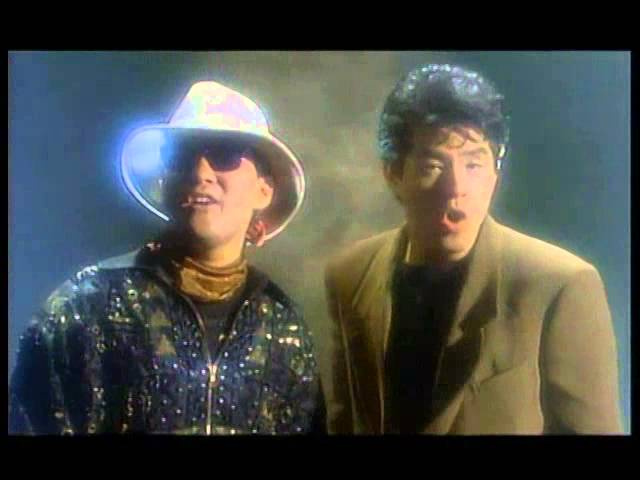
One of the most iconic hit songs of the early 1990s, and one of the most famous in CHAGE and ASKA’s discography, is “SAY YES.” The song ranked second on the 1991 singles chart and sold 2.5 million copies.
It is undeniably one of their signature tracks and a classic of the 1990s.