

Stand out with your junior high school independent research! A collection of fun experiment and craft ideas


To all middle schoolers who want to wow teachers and friends with a “That’s awesome!” in your independent research project! There are tons of experiments in science and crafts that lead to surprising discoveries—even with simple materials.
Make a train run with copper wire and a battery, pop a balloon with an orange peel…
The real charm is getting to witness strange phenomena you’d never notice in everyday life with your own eyes.
Here, we’ll introduce fun experiments and crafts that can spark ideas for your project.
Whether you love science or not, you’re sure to find discoveries that make you go, “Aha!”
- Recommended for middle school students! A collection of quick science project ideas you can do in a short time.
- [I don't want to be like everyone else!] Recommended independent research topics for high school students
- [Middle School Students] Easy One-Day Science Projects and Crafts Ideas
- Simple and cute summer project crafts! A collection of ideas for girls that will make you want to create
- Recommended for high school students! A collection of easy one-day science project ideas
- For upper-grade boys! Simple yet awesome craft project [Don’t call it lazy]
- Stand out with your junior high school independent research! A collection of fun experiment and craft ideas
- Recommended for elementary school students' independent research! Experiment and observation ideas using everyday materials
- Recommended Independent Research Projects for 5th Graders [Elementary School Students]
- Adults will be hooked! A collection of craft ideas using toilet paper rolls
- [For Elementary School Students] Collection of Science-Related Games and Quizzes
- Amazing discoveries with everyday materials! Fun summer vacation independent research ideas
- [For Upper Elementary Students] Simple but Awesome! A Collection of Summer Vacation Craft Ideas
Stand out with your junior high school independent research! A collection of fun experiment and craft ideas (71–80)
Make gum using flour

You can easily make gum yourself using things you have at home.
Let’s try making gum with bread flour.
In this experiment, we’ll explore gluten.
Prepare 50 g of bread flour, a bowl, a measuring cup, a scale, and 20 cc of water.
The gum you make can actually be eaten, but it doesn’t have any flavor, so you might want to mix in a sweetener or fruit juice.
Ways to keep cool
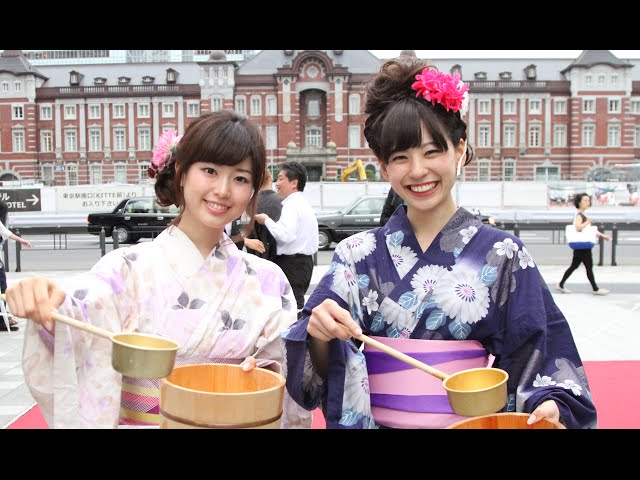
In the days before air conditioners, people got through the hot summer by using various clever methods such as sprinkling water on the ground and hanging reed screens.
Ask your grandpa, grandma, or elderly neighbors to learn their tips for staying cool in summer.
Also, look into the scientific reasons why these methods help lower the temperature.
Urban legends investigation at school

Every school has its own urban legends—like Hanako of the Toilet or statues that start walking around at night—and they’re always a lively topic of conversation.
How about researching them? It could make for a slightly different kind of independent study from everyone else’s.
Origin of the national flag
It is widely known that the number of stars on the American flag, commonly called the Stars and Stripes, represents the number of states.
Of course, the United States is not unique in this respect; the national flags that countries around the world raise as symbols of their nations each have their own origins.
Many of these are deeply connected to historical events.
For those interested in history, it is a highly intriguing topic.
Abbreviation research

When you casually watch the news, you often see terms abbreviated into a few letters—like WHO (World Health Organization) and IOC (International Olympic Committee).
Let’s look into a variety of abbreviations, from the familiar to the less well-known.
Crystal making

These are crystals that cannot be seen without a microscope, but by growing them larger, they can become visible to the naked eye.
Try growing crystals from familiar substances like sugar or table salt.
Crystals are very beautiful, so you might be surprised by how moving the experience can be.
Research ways to keep vegetables fresh

I think many people lay vegetables down in the crisper drawer.
But did you know that storing them upright can actually help keep them fresher? In general, vegetables last longer when stored in the same orientation as when they were grown.
So as a science project, why not research different methods for preserving vegetable freshness and compare which one keeps them fresh the longest? There are many other ways to maintain freshness as well, such as wrapping them in newspaper and placing them in a sealable bag to prevent drying out, or storing them at a low temperature!
