

Stand out with your junior high school independent research! A collection of fun experiment and craft ideas


To all middle schoolers who want to wow teachers and friends with a “That’s awesome!” in your independent research project! There are tons of experiments in science and crafts that lead to surprising discoveries—even with simple materials.
Make a train run with copper wire and a battery, pop a balloon with an orange peel…
The real charm is getting to witness strange phenomena you’d never notice in everyday life with your own eyes.
Here, we’ll introduce fun experiments and crafts that can spark ideas for your project.
Whether you love science or not, you’re sure to find discoveries that make you go, “Aha!”
- Recommended for middle school students! A collection of quick science project ideas you can do in a short time.
- [I don't want to be like everyone else!] Recommended independent research topics for high school students
- [Middle School Students] Easy One-Day Science Projects and Crafts Ideas
- Simple and cute summer project crafts! A collection of ideas for girls that will make you want to create
- Recommended for high school students! A collection of easy one-day science project ideas
- For upper-grade boys! Simple yet awesome craft project [Don’t call it lazy]
- Stand out with your junior high school independent research! A collection of fun experiment and craft ideas
- Recommended for elementary school students' independent research! Experiment and observation ideas using everyday materials
- Recommended Independent Research Projects for 5th Graders [Elementary School Students]
- Adults will be hooked! A collection of craft ideas using toilet paper rolls
- [For Elementary School Students] Collection of Science-Related Games and Quizzes
- Amazing discoveries with everyday materials! Fun summer vacation independent research ideas
- [For Upper Elementary Students] Simple but Awesome! A Collection of Summer Vacation Craft Ideas
Stand Out in Your Middle School Independent Research! A Collection of Fun Experiment and Craft Ideas (1–10)
Black hole research

Due to their nature, black holes have limits when it comes to observation, and most of what we say about them is discussed in theoretical terms.
While the topic is extremely difficult for middle school students to tackle, it is also one that greatly stimulates academic curiosity.
There are many curiosity-sparking terms such as “redshift” and “event horizon,” and by looking into what those terms mean, you may come to better understand black holes.
Observation of vegetable DNA
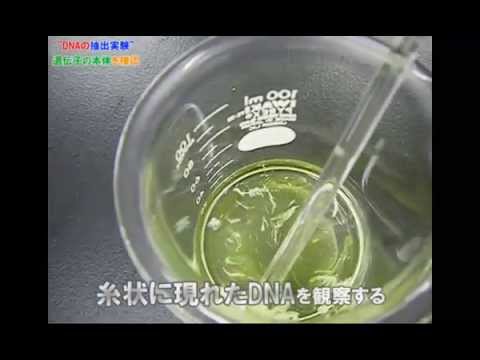
How about extracting and observing the DNA contained in vegetables? You might wonder, “Is DNA really that easy to observe?” but if you follow the steps, you’ll find it’s surprisingly simple.
All the necessary materials are easy to find in everyday life, so it should be approachable.
Let’s not only document the process step by step until we observe the DNA, but also research and summarize in a report what role each material plays.

Let’s try making a cloud.

You can make clouds with a plastic bottle! It only needs a few materials and is surprisingly easy to do! You’ll quickly understand what clouds really are, won’t you? I think it’s a perfect research topic for junior high school students learning about the three states of matter—liquid, solid, and gas—for their independent study!
Stand Out in Your Junior High School Independent Research! A Collection of Fun Experiment and Craft Ideas (11–20)
Which color gets the hottest?

This is an experiment where you place colored water outside on a sunny day to see which color gets the hottest.
The key point is how easy it is: just color the water, leave it out, and measure the temperature changes.
The more results you collect, the more it looks like you put effort into the experiment, so it might be better to try many different colors.
As long as you make sure the conditions are the same, you can incorporate this experiment into everyday life.
Learning how color affects temperature can also be useful when choosing summer outfits—highly recommended.

storm glass

Do you know what a storm glass is? It was originally a tool used for weather forecasting: chemicals are dissolved in alcohol inside a sealed glass container.
The way crystals appear was used to help predict the weather, but storm glasses are now popular as interior decor because they look cute and stylish.
And if you can gather the materials, you can make a storm glass yourself, making it perfect for a science project.
If you also compile a report on what kinds of crystals appear under which weather conditions—and why—that would be perfect!
reverse-yolk egg

Have you heard of a “reverse-yolk egg”? It’s a quirky kind of hard-boiled egg where the outside is yellow and the inside is white! To make it, you put a raw egg in a stocking and spin it around, then boil it just like a regular hard-boiled egg.
Let’s look into the structure of an egg and consider why this method causes the yolk and white to switch places.
Also, this reverse-yolk egg surprisingly has a long history, so researching that and writing up a report could make for an interesting independent study project.
Paper chromatography

Paper chromatography is a method of separating substances using paper.
There are various approaches, but it’s perfect for a simple science project because you can easily try it with just a coffee filter and water-based markers.
The procedure is to mark the coffee filter with a water-based marker, then place the filter in water.
The filter will gradually draw up the water, and the ink from the marker will separate.
For example, black marker ink is made by mixing multiple colors, and with paper chromatography you can separate those mixed inks.
Try different colors, and see whether you can separate substances other than water-based markers as well.