

[Showa Era] A roundup of nostalgic folk song classics and popular tracks you’ll want to sing at karaoke

What kind of image do you have of the music genre known as “folk songs”? Perhaps many of you picture Showa-era singers with an acoustic guitar in hand, singing lyrics like private diaries of everyday life—and at times delivering political messages.
In Japan, folk songs became a booming trend from the 1960s to the 1970s, and countless classic tracks that made music history were born as the style evolved.
In this article, we’ve curated a wide selection of nostalgic Japanese folk song classics that you’ll definitely want to try singing at karaoke.
Whether you experienced them in real time or you’re a younger listener who loves Showa-era music, be sure to check them out!
- [Japanese Music] A Collection of Heart-Touching Hit Folk Songs from the 1970s
- A classic Japanese folk song passed down through generations of acoustic performances
- A collection of nostalgic hits from the ’70s to 2000s that are perfect for livening up karaoke
- Timeless classics only! Showa-era hit songs perfect for acoustic sing-alongs
- When you can’t decide what to sing at karaoke: Easy-to-sing classic hits from the Showa era
- Evokes the charm of the good old days. Showa-era inspirational songs that are still loved today.
- [2026] Songs I Want to Try at Karaoke! A Roundup of Popular Showa-Era Kayōkyoku
- [Songs from the Showa Era] Introducing classic tracks that are easy to sing at karaoke.
- A lineup of classic hits! Karaoke songs recommended for the yutori generation
- Easy-to-sing youth songs for karaoke: recommended classics and popular hits
- [For People in Their 50s] Ranking of Easy-to-Sing Karaoke Songs [2026]
- Karaoke songs everyone can sing: Japanese tracks that are easy to enjoy with a group.
- Must-see for men: Songs that look cool if you can sing them at karaoke—numbers that women can’t help but be captivated by.
[Showa] A roundup of nostalgic folk song classics and popular tracks you’ll want to sing at karaoke (21–30)
A long nightMatsuyama Chiharu

A smash hit released in 1981.
One of Chiharu Matsuyama’s signature songs, this classic Showa-era ballad straightforwardly conveys the “ache of a man’s heart.” The overall vocal range spans D3 to D5, and it’s a song most people can handle if they sing the talk-like phrasing in the verses and release fully in the chorus for contrast.
However, since the chorus jumps up into higher notes, be careful not to strain your throat.
Like Matsuyama himself, keeping your eyebrows raised while singing makes the high notes much easier to hit—highly recommended! When you project your voice, don’t hesitate—use instant power and send it far.

Graduation Photohaifaisetto

It was released on February 5, 1975, at the same time as the album Hi-Fi Set.
It is Hi-Fi Set’s debut song.
The piece is sung with a gentle sense of sadness and nostalgia for someone loved during student days.
It has become a classic graduation song.
[Showa Era] A collection of nostalgic folk song masterpieces and popular karaoke picks (31–40)
I saw a grasshopper in Katsushika.nagira kenichi

Released on August 10, 1974.
It’s more like Kenichi Nagira’s spoken narration than a song.
Interweaving scenes of Katsushika, he quietly talks about his circumstances and feelings at the time; the singing style makes you chuckle, yet it’s a nostalgic tune.
Into the DreamInoue Yosui

Though Yosui Inoue has many classic songs, if you’re singing folk songs together at karaoke, Yume no Naka e is perfect.
Later, in 1989, Yuki Saito also covered it, and even quite recently the song has been used in commercials, so even if people don’t know the lyrics, I think younger listeners are at least somewhat familiar with the melody.
bridehashida norihiko to kuraimakkusu

It was a hit song that even took the No.
1 spot on the Oricon chart for two consecutive weeks at the time.
The tempo is good and it has a lively, upbeat feel, but it’s actually about what you might call an elopement.
The lead vocalist, Mie Fujisawa, sings in a surprisingly low key, making it an easy song to sing.
They also appeared on the NHK Kouhaku Uta Gassen with this song; up to then, female vocalists were on the Red Team, but for some reason they appeared with the White Team.
No one anymore.Arisu
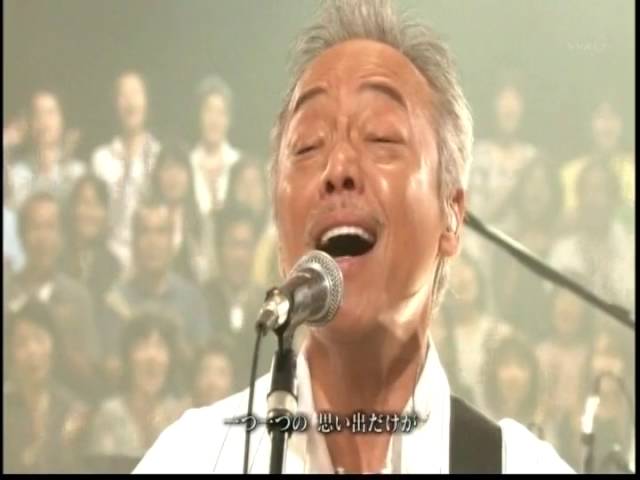
Released in 1975, this song is a cover of a track originally released in 1969 by a group called Woody Woo.
Back when Alice was still just starting out, they performed in small concert halls.
It’s an energetic number that kicks off right from the chorus.
DepartureMatsuyama Chiharu

It was released on January 25, 1977.
This is Chiharu Matsuyama’s debut single.
It’s the song he performed in the regional qualifiers of the National Folk Music Festival.
This song gave Chiharu Matsuyama his big break.
Since it uses quite a high vocal range, it’s a good idea to lower the key when singing it at karaoke.