

[Showa Era] A roundup of nostalgic folk song classics and popular tracks you’ll want to sing at karaoke

What kind of image do you have of the music genre known as “folk songs”? Perhaps many of you picture Showa-era singers with an acoustic guitar in hand, singing lyrics like private diaries of everyday life—and at times delivering political messages.
In Japan, folk songs became a booming trend from the 1960s to the 1970s, and countless classic tracks that made music history were born as the style evolved.
In this article, we’ve curated a wide selection of nostalgic Japanese folk song classics that you’ll definitely want to try singing at karaoke.
Whether you experienced them in real time or you’re a younger listener who loves Showa-era music, be sure to check them out!
- [Japanese Music] A Collection of Heart-Touching Hit Folk Songs from the 1970s
- A classic Japanese folk song passed down through generations of acoustic performances
- A collection of nostalgic hits from the ’70s to 2000s that are perfect for livening up karaoke
- Timeless classics only! Showa-era hit songs perfect for acoustic sing-alongs
- When you can’t decide what to sing at karaoke: Easy-to-sing classic hits from the Showa era
- Evokes the charm of the good old days. Showa-era inspirational songs that are still loved today.
- [2026] Songs I Want to Try at Karaoke! A Roundup of Popular Showa-Era Kayōkyoku
- [Songs from the Showa Era] Introducing classic tracks that are easy to sing at karaoke.
- A lineup of classic hits! Karaoke songs recommended for the yutori generation
- Easy-to-sing youth songs for karaoke: recommended classics and popular hits
- [For People in Their 50s] Ranking of Easy-to-Sing Karaoke Songs [2026]
- Karaoke songs everyone can sing: Japanese tracks that are easy to enjoy with a group.
- Must-see for men: Songs that look cool if you can sing them at karaoke—numbers that women can’t help but be captivated by.
[Showa Era] A Collection of Beloved Nostalgic Folk Song Classics for Karaoke: Popular Picks (41–50)
Travel Lodgeyoshida takurou

It was released on July 1, 1972.
This is Takuro Yoshida’s fourth single.
The lyrics evoke scenes from a journey, shaping the mood of the song.
Yoshida’s almost spit-out vocal delivery is also compelling.
At karaoke, try singing in a brusque, Yoshida-style manner to liven things up.
memory pillowKosaka Kyoko

She had a major breakthrough as a singer-songwriter with this song.
It’s also popular for karaoke because the intro isn’t difficult.
Sung from a woman’s perspective, it’s a heartbreak song about not being able to forget a boyfriend’s gentle gestures—something many women can relate to deeply.
The chorus is memorable and really showcases the vocals, so it’s a great pick for female singers.
Ladybug Sambacherisshu

Released in 1973, the husband-and-wife duo Cherish’s song is known for its unique lyrics featuring red, blue, and yellow ladybugs.
Inspired by the real blue ladybugs found in Oceania, the track garnered a flood of requests after being aired on ABC Radio and was released as a single.
It went on to sell over a million copies, becoming Cherish’s biggest hit.
Originally included on the album “Spring Romance,” its seemingly magical, uplifting effect made it a popular wedding celebration song as well.
It’s a surefire crowd-pleaser at karaoke, guaranteed to get everyone excited.
Song of Departure – In Search of Lost TimeKamijō Tsunehiko & Rokumonsen
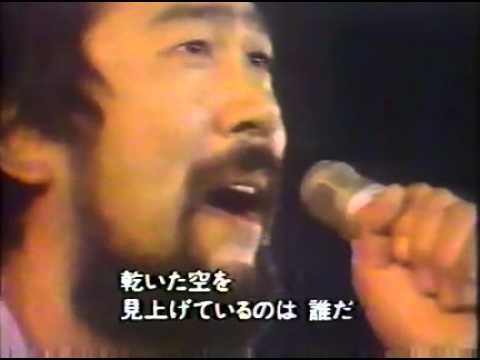
In the preliminaries to decide the entrants for the World Song Festival, the folk group Rokumonsen and Tsunehiko Kamijo were also nominated.
Hitoshi Komuro of Rokumonsen had planned to write songs for both, but managed to complete only one.
As a result, Kamijo took on lead vocals, and the song went on to win the Grand Prix.
It also won the top prize at the World Song Festival, was released as a record, and became a hit.
Beginning quietly and gradually building in intensity, it’s a magnificent song that conveys a sense of grandeur.
SACHIKObanba hirofumi

When you’re alive, if you start counting your misfortunes, there’s really no end to them.
I immediately felt a connection with the first lyrics.
Even if you dislike the name Sachiko, the idea that there’s someone—regardless of whether they’re a man or a woman—who will stay by your side through any hardship makes this a comforting song.
Winter LightningArisu

It was released on October 5, 1977.
When you think of Alice, this is the song that comes to mind.
Opening with Alice’s raspy voice and sung with full-on masculinity, this classic is perfect for blowing off steam at karaoke and belting out at the top of your lungs.
The key isn’t surprisingly high, so go all out and sing it in the original key.
I’m falling in love with you againbiriibanban

The duo who produced hits with beautiful harmonies during the heyday of folk—such as “Shiroi Buranko” and “Sayonara Suru Tame ni,” released in 2007—continued to deliver beloved songs even into the 2000s, when Showa-era folk music still found a receptive audience.
When sung by Billy BanBan, it’s folk, but there’s also a version covered by Fuyumi Sakamoto for a commercial.
That rendition leans more toward J-pop than enka.
With this song, Fuyumi Sakamoto made it into the Top Ten.