

[Daycare/Preschool] Let’s Make Handmade Hinamatsuri Costumes! An Idea Collection You’ll Want to Copy


As Hinamatsuri approaches, many people may be getting costumes ready for events at daycare and preschools.
Even if you look for ready-made outfits, you might not find a design you like or you may be concerned about the price.
In such cases, handmade costumes are a great option.
In this article, we’ve gathered ideas for handmade costumes perfect for Hinamatsuri.
You’ll find a variety of approaches, including pieces you can easily make without patterns and ones that make use of colored plastic bags.
Create a one-of-a-kind outfit tailored to your child’s body shape and taste!
- Easy! Costume ideas made with colored plastic bags
- [Hinamatsuri] Handmade Costume Ideas: Perfect for First Festival and Girls’ Day Celebrations!
- [Childcare] Perfect for Hinamatsuri! Hanging Hina doll craft ideas you can make with kids
- Childcare: Recommended for Girls’ Day! Handmade Hina Doll Ideas
- [For Preschoolers & Kids] Game, Play, and Craft Ideas to Enjoy on Hinamatsuri (Girls’ Day)
- [Childcare] Wall decoration ideas to make for Hinamatsuri (Girls’ Day)
- [Childcare] Recommended crafts and activities for March, such as Hina Matsuri (Doll’s Festival) and cherry blossoms
- [Childcare] Fun Craft Ideas for Hinamatsuri (Girls' Day)
- For three-year-olds: A collection of craft ideas featuring spring events and creatures that you’ll want to make with your three-year-old
- [Childcare] Fun for Hinamatsuri! Performance ideas perfect for the event
- [Childcare] A Collection of Origami Ideas for Hinamatsuri: Let’s Make Them with Kids!
- [Childcare] Sports day costume ideas: easy-to-make outfits
- [Childcare] Enjoy Setsubun! A collection of handmade ideas you can decorate with and play with
[Nursery] Let’s handcraft Hina Matsuri costumes! A collection of copy-worthy ideas (1–10)
Hakama-style baby bib with a waist tie

The hakama-style bib with a waist tie brings an authentic look that really elevates outfits for special occasions.
The adjustable tie makes it easy to fit snugly to your baby’s body, which is a big plus.
It’s not only adorable in appearance but also thoughtfully practical.
By layering cotton flannel inside, it effectively absorbs drool while staying durable.
It also stands up well to washing, making it great for repeated use.
It’s beginner-friendly too, with flexible material options—such as using batting as a substitute.
This Japanese-style bib is versatile, perfect for everything from ceremonies to gifts.

Baby kimono (ages 0–3)

Here’s an idea for a baby kimono made with cotton fabric that’s easy even for beginners.
You’ll cut four types of pieces from the fabric: the body, sleeves, collar, and sash.
Once the pieces are ready, start by sewing the body panels together.
Next, sew the sleeves with a gentle curve from the bottom and attach them to the body.
Fold the collar in half, sew one side to the body, insert some batting, then sew it in place while sandwiching the neckline of the body.
Finally, attach the sash at the collar area, and you’re done! There are also tasks like finishing the raw edges, but the overall process is very simple.
Even if this is your first time making a kimono, teachers are encouraged to give it a try!

Handmade baby hakama (ages 0–2)

Why not try making a baby kimono to pair with a hakama? First, cut out the pieces for the bodice, sleeves, and collar from your fabrics.
Round off the corners of the sleeve pieces.
The collar looks cute if the front and back use different fabrics, so cut two types of fabric with about a 1 cm difference in width.
After sewing the bodice together, fold the collar fabric in half and press it firmly with an iron.
Sew the two collar pieces together, and fold the sleeve fabric in half and sew it as well.
Once both the collar and sleeves are attached to the bodice, just add hook-and-loop fasteners to the overlapping front, and you’re done! Try it on with your favorite hakama!
[Daycare] Let's make handmade Hina Matsuri costumes! An idea collection you'll want to copy (11–20)
[Color Poly] Yukata Dress
![[Color Poly] Yukata Dress](https://i.ytimg.com/vi/Hc5WJZYzQlM/sddefault.jpg)
Here’s an idea for making a yukata-style dress using white and pink plastic bags.
Use white for the sleeves, and layer white and pink for the bodice and skirt.
Cut the bodice in a vest-like shape, attach the sleeves, then turn it inside out.
Make the collar with vinyl tape, and add frills to the sleeves.
For the skirt, form a tube and insert elastic at the waist.
It’s already cute like this, but it’ll look even nicer if you decorate it with tape-made embellishments like cherry blossoms.
Try designing and decorating it in your own style!
[Authentic] How to Make a Faux Hakama
![[Authentic] How to Make a Faux Hakama](https://i.ytimg.com/vi/iJjLbQTwaOc/sddefault.jpg)
How about making matching hakama for Hinamatsuri? First, prepare two pieces of fabric cut in the shape of hakama, and two long tubes of fabric each for the waist tape and for the ribbons.
Be sure to fuse interfacing to the fabric for the waist tape.
Next, create pleats in the center of the hakama pieces and press them with an iron.
Place the two pieces right sides together and sew them, then attach the waist tape.
Sew hook-and-loop fasteners to both ends of the waist tape, and finally make ribbons with the remaining fabric and attach them to the hakama to finish! I introduced the version for girls, but there’s also a boys’ version, so be sure to check that out too!
[Construction Paper] Hina Doll Headpiece
![[Construction Paper] Hina Doll Headpiece](https://i.ytimg.com/vi/XUzEW6pHVYQ/sddefault.jpg)
Here’s a hat idea that lets you enjoy feeling like the Empress doll and the Emperor doll.
First, attach black construction paper sheets together side by side.
Next, draw a line about 10 cm up from the bottom, and then mark points every 10 cm along that line.
Using those marks, draw upward-pointing triangles with a 10 cm base all the way across from end to end.
Round the tips of the triangles slightly.
Cut out the spaces between the triangles with scissors, roll the paper into a tube, then gather the triangular parts toward the center and staple them in place.
Finally, make decorations—such as the “eiya” or “higaku” ornaments—using the same black construction paper and attach them.
Use gold origami or similar materials for the decorations to give it a gorgeous finish.
two-piece kimono
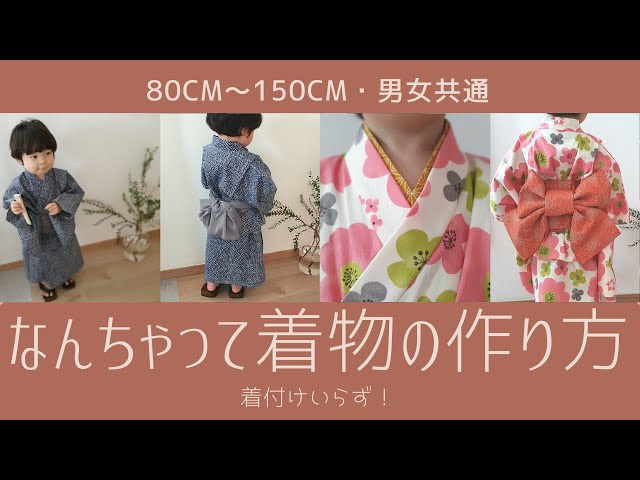
Have you ever worried about how to use the bathroom when wearing a kimono? This kimono is a two-piece, with separate top and bottom, making it easy to put on and take off so you can enjoy wearing it with peace of mind.
Once you choose your preferred fabric, make the pattern, pin the fabric with pins, and sew both sides with a sewing machine.
When sewing, it’s easier if you press the folds with an iron as you go.
Finally, insert elastic into the waist and you’re done! Since it can be worn right away without worrying about traditional dressing, it’s also recommended for those who aren’t confident in kimono dressing.
