

Quiz about Kinkaku-ji: tidbits to help you understand the Golden Pavilion

Kyoto, also known as the City of a Thousand Years, has a long history and has produced various World Heritage sites over the course of that history.
Kinkaku-ji (the Golden Pavilion) is one of Kyoto’s most iconic World Heritage sites.
With its striking appearance, it’s a popular destination not only in Japan but also among visitors from overseas.
In this article, we’ll introduce various fun facts about Kinkaku-ji in the form of a quiz.
By learning more deeply about the history embedded in the building, you may find yourself more focused when viewing Kinkaku-ji during sightseeing—and enjoy it even more.
- Fun facts quiz about Kiyomizu-dera: a three-choice quiz to learn its history and appeal
- Trivia quiz about Ginkaku-ji: three multiple-choice questions to learn about Kyoto’s history
- Let’s take on the challenge! A multiple-choice history quiz for elementary school students. Review your history lessons.
- [For Elementary School Students] Challenge! Kyoto Local Quiz
- A quiz about the Great Buddha of Nara: fun facts to deepen your understanding of Japan’s iconic Great Buddha.
- [World Heritage] 3-choice quiz to deepen your trivia about Nijo Castle
- [For Kids] November Trivia Quiz & Fun Facts: Let’s Learn While Having Fun!
- [Easy] Quiz for Middle School Students
- What kind of place is Byodoin Phoenix Hall? A quiz to learn about a Japanese architectural masterpiece admired worldwide.
- Trivia quiz about Sanjusangendo: a collection of questions to deepen your knowledge
- [Trivia] A quiz of fun facts about Horyu-ji. Multiple-choice questions (three options) about this historic structure.
- Aim for a perfect score! A three-choice common knowledge quiz that deepens your understanding
- [Trivia] Quiz about Fushimi Inari Taisha
Quiz about Kinkaku-ji: Trivia to understand Kinkaku-ji (11–20)
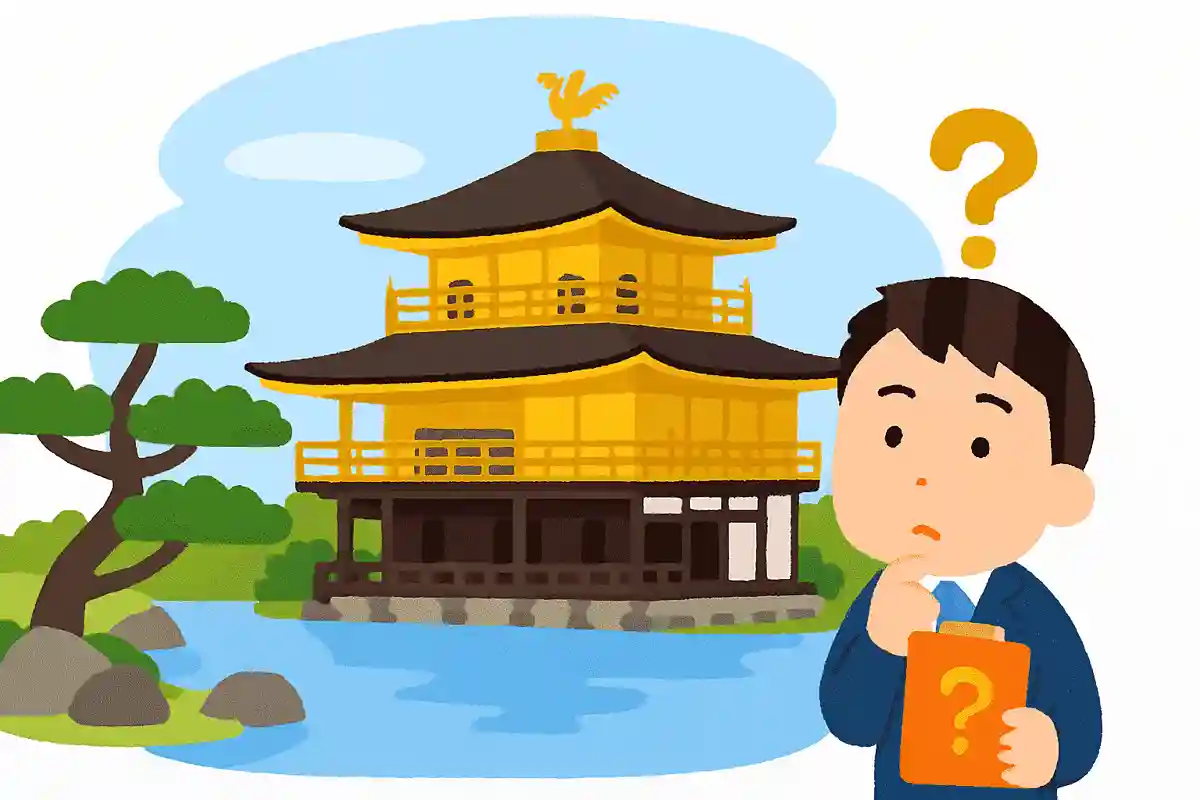
How much is it said to have cost for the “Great Showa Restoration” carried out from 1986 to 1987?
- about 300 million yen
- approximately 550 million yen
- Approximately 740 million yen
See the answer
Approximately 740 million yen
The major restoration of Kinkaku-ji in the Showa era was carried out from 1986 to 1987, and the cost of the work is said to have been about 740 million yen. In addition to renewing the temple’s roof, more than 20,000 sheets of gold leaf were used on the exterior walls of the Golden Pavilion. By reapplying the gold leaf, Kinkaku-ji regained an even more radiant appearance, captivating many people.

In conclusion
Among Kyoto’s many sightseeing spots, Kinkaku-ji (the Golden Pavilion) is especially famous. We’ve introduced some fun facts about it in the form of a quiz. From basic knowledge about the temple to the reasons it was built and various anecdotes, these questions will deepen your understanding of Kinkaku-ji. While the dazzling golden pavilion tends to draw the eye, there is also a wealth of meaning in the surrounding features, so we recommend paying attention to those as well. Why not broaden your knowledge and make your visit to Kinkaku-ji even more enjoyable?