


Kyoto, also known as the City of a Thousand Years, has a long history and has produced various World Heritage sites over the course of that history.
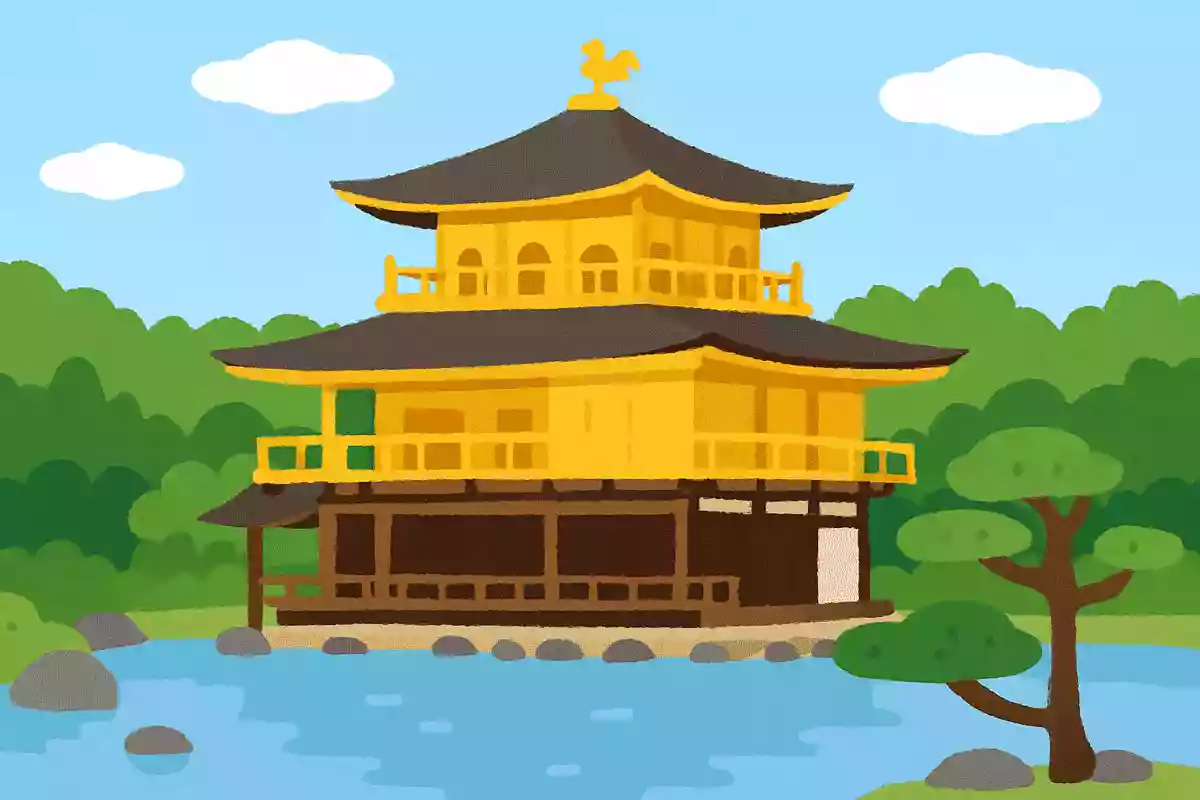
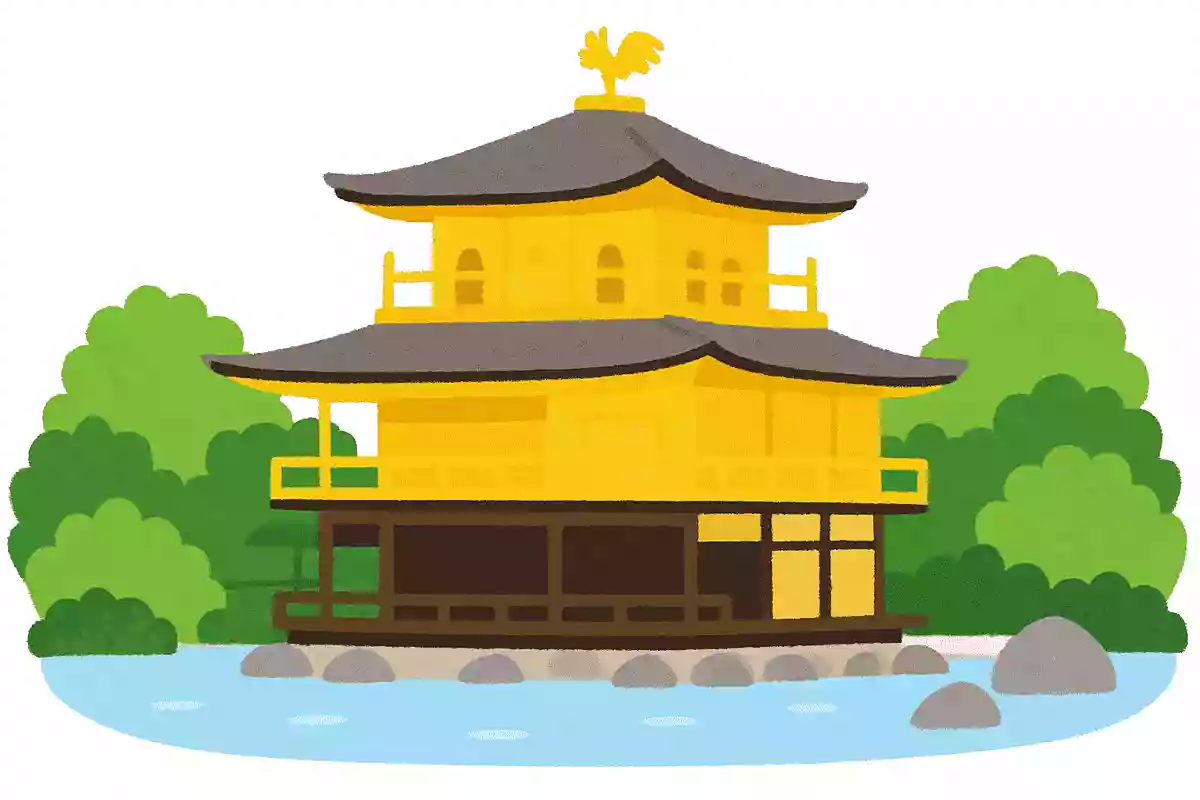
Kinkaku-ji (the Golden Pavilion) is one of Kyoto’s most iconic World Heritage sites.
With its striking appearance, it’s a popular destination not only in Japan but also among visitors from overseas.
In this article, we’ll introduce various fun facts about Kinkaku-ji in the form of a quiz.
By learning more deeply about the history embedded in the building, you may find yourself more focused when viewing Kinkaku-ji during sightseeing—and enjoy it even more.
- Fun facts quiz about Kiyomizu-dera: a three-choice quiz to learn its history and appeal
- Trivia quiz about Ginkaku-ji: three multiple-choice questions to learn about Kyoto’s history
- Let’s take on the challenge! A multiple-choice history quiz for elementary school students. Review your history lessons.
- [For Elementary School Students] Challenge! Kyoto Local Quiz
- A quiz about the Great Buddha of Nara: fun facts to deepen your understanding of Japan’s iconic Great Buddha.
- [World Heritage] 3-choice quiz to deepen your trivia about Nijo Castle
- [For Kids] November Trivia Quiz & Fun Facts: Let’s Learn While Having Fun!
- [Easy] Quiz for Middle School Students
- What kind of place is Byodoin Phoenix Hall? A quiz to learn about a Japanese architectural masterpiece admired worldwide.
- Trivia quiz about Sanjusangendo: a collection of questions to deepen your knowledge
- [Trivia] A quiz of fun facts about Horyu-ji. Multiple-choice questions (three options) about this historic structure.
- Aim for a perfect score! A three-choice common knowledge quiz that deepens your understanding
- [Trivia] Quiz about Fushimi Inari Taisha
Quiz related to Kinkaku-ji. Trivia to understand Kinkaku-ji (1–10)
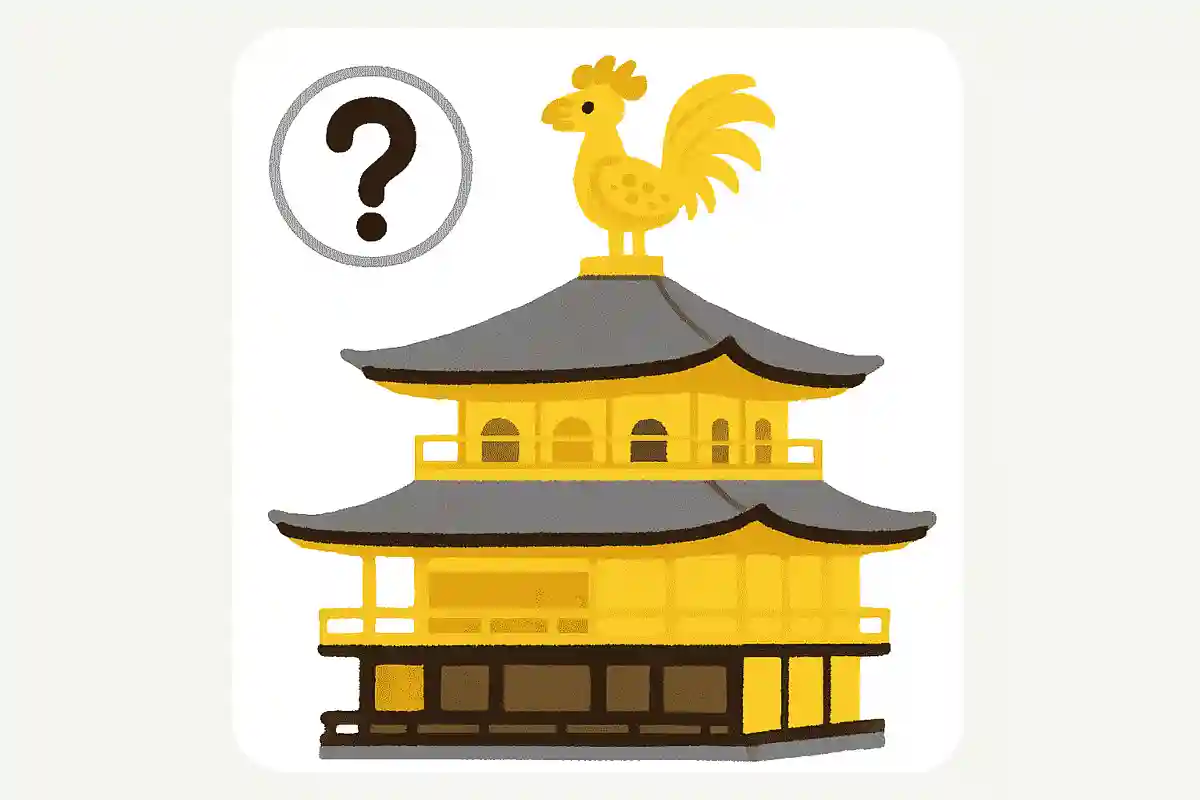
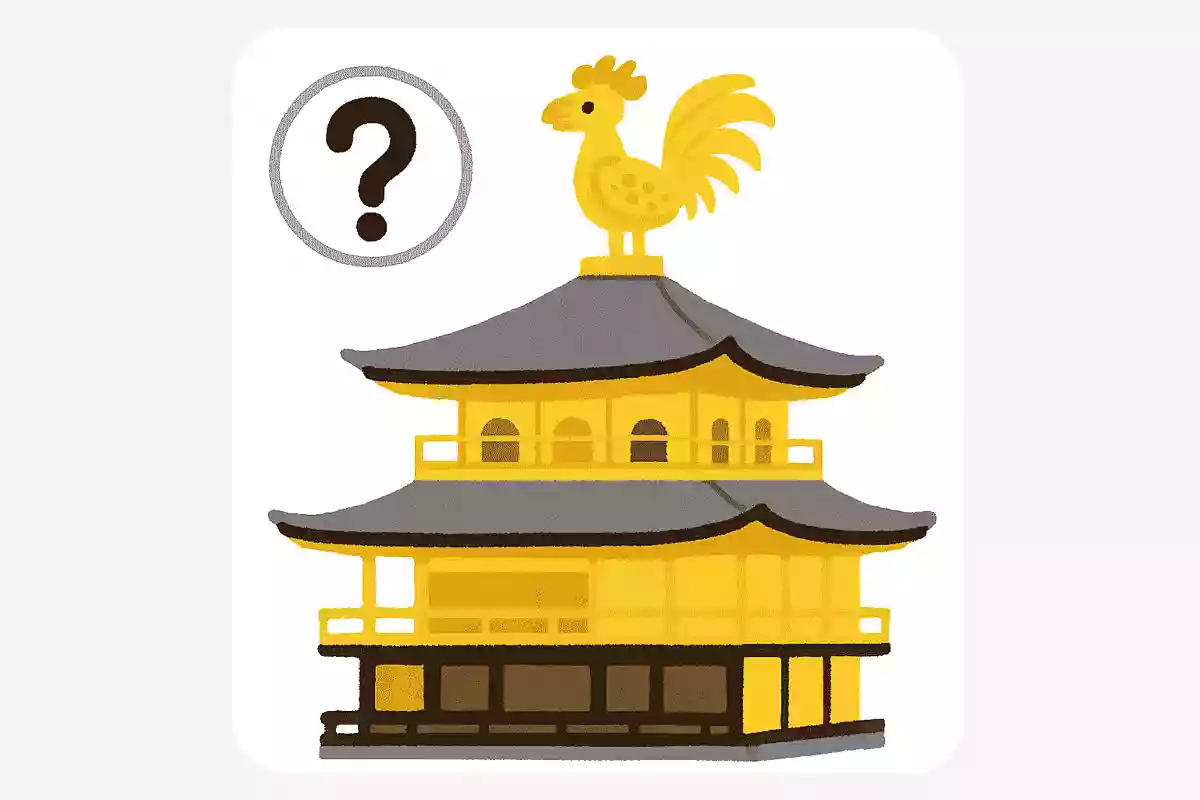
What is the imaginary creature placed on the roof?
- phoenix
- dragon
- lion
See the answer
phoenix
On the roof of Kinkaku-ji in Kyoto, there is a phoenix, a mythical creature. The phoenix is a legendary bird from China and is a symbol of peace and prosperity. The phoenix installed on the roof of the Golden Pavilion serves as an ornament that further enhances the beauty and splendor of Kinkaku-ji, and it is also considered an important symbol in Buddhist architecture.

In what year was Kinkaku-ji registered as a UNESCO World Heritage Site as one of the Historic Monuments of Ancient Kyoto?
- 1987
- 1994
- the year 2001
See the answer
1994
Kinkaku-ji was inscribed as a UNESCO World Heritage site in 1994 as part of the “Historic Monuments of Ancient Kyoto.” This includes 17 temples and shrines in Kyoto, and Kinkaku-ji is recognized among them as a cultural property of global value. It’s also worth noting that, although it is listed as a World Heritage site, it is not designated a National Treasure due to its destruction by fire.
What is the name of the pond in front of Kinkaku?

- Kyōko Pond
- Lake Biwa
- Stainless Pool
See the answer
Kyōko Pond
In front of Kinkaku-ji lies a pond called Kyōko-chi, named because the pavilion’s beautiful figure is reflected on its surface. It is also said to be modeled after the Seven Treasures Pond of the Pure Land, making it one of the features that strongly conveys the Buddhist elements of Kinkaku-ji.
Kinkaku-ji was destroyed by arson in 1950; in what year was it rebuilt?
- 1950
- the year 1955
- 1958
See the answer
the year 1955
Kinkaku-ji was destroyed by arson in 1950, set by a student who was a novice monk at the temple. After about five years of reconstruction, it was restored in 1955. The rebuilt Kinkaku-ji faithfully reproduces its pre-fire appearance and has continued to be cherished as one of Kyoto’s most iconic tourist attractions.
How many stories tall is Kinkaku-ji?

- single-story
- two-story
- three-story
See the answer
three-story
Kinkaku-ji is a three-story building. The first floor, known as the “Shinden,” is used for the temple’s official ceremonies. The second floor, called the “Chōondō,” is built in the Zen style and features a design reminiscent of the shinden-zukuri residential style used by samurai and court nobles. The third and top floor, known as the “Kukkyōchō,” incorporates esoteric Buddhist elements and enshrines Amida Nyorai (Amitabha). In this way, Kinkaku-ji features distinct architectural styles on each floor, reflecting diverse cultural influences.
Who built Kinkaku-ji?

- Ashikaga Yoshimitsu
- Ashikaga Yoshimasa
- Toyotomi Hideyoshi
See the answer
Ashikaga Yoshimitsu
Rokuon-ji, known as Kinkaku-ji (the Golden Pavilion), was built as a villa by Ashikaga Yoshimitsu, a shogun of the Muromachi period. In 1397, Yoshimitsu received the site and constructed his villa there, which was then called names such as Kitayama-dono. The formal name, Rokuon-ji, was adopted after Yoshimitsu’s death, deriving from his posthumous Buddhist name, Rokuon-in-den.
What is the reason why Kinkaku-ji has a golden appearance?

- Appeal to authority or power
- For artistic reasons
- as a religious symbol
See the answer
Appeal to authority or power
The golden appearance—one of Kinkaku-ji’s greatest attractions—was adopted as part of a strategy by the ruler of the time to showcase his authority and power. Yoshimitsu harbored ambitions to strengthen his influence over the imperial court, and this flamboyant Golden Pavilion served as a symbol that displayed his power.