

Irresistibly tempting to try! Have fun practicing pronunciation with Korean tongue twisters

With the growing interest in Korean culture, such as K-dramas and K-pop, many people are learning Korean.
In fact, just like the Japanese tongue twister “Nama mugi, nama gome, nama tamago” (raw wheat, raw rice, raw eggs), Korean also has tongue twisters that are great for pronunciation practice! In this article, we’ll introduce Korean tongue twisters that are easy to try—not only for those learning Korean, but also for anyone who wants to have fun playing with tongue twisters.
They’re perfect both for practicing pronunciation and as a playful word game.
Let’s challenge ourselves with Korean tongue twisters together!
- Tongue Twisters So Fun and Cute You’ll Want to Say Them Out Loud!
- Chinese tongue twisters: A collection of rao kou ling helpful for learning Chinese
- Challenging tongue twisters: Introducing high-difficulty phrases and sentences!
- Perfect for pronunciation practice! A collection of English tongue twisters.
- [Diction Training] A Collection of Tongue Twisters to Improve Articulation
- [Recreation] Challenge! A roundup of tongue twisters recommended for elementary school students
- Get hyped! Tongue twisters that sound cool if you can say them—wordplay that makes you want to take on the challenge
- Tongue twisters that will make you laugh out loud! Super funny
- Take on the world’s hardest tongue twisters! A roundup of ultra-tough prompts that’ll tie your tongue
- A collection of long tongue twisters. Also recommended for practicing announcements and narration.
- Short Korean quotes that resonate with the heart: words that can change your life.
- Bursting into laughter! A roundup of Hakata dialect tongue twisters
- Kenta Otani’s original tongue twisters: a collection that’ll have you tripping over words and bursting into laughter
Makes you want to try it! Fun pronunciation practice with Korean tongue twisters (1–10)
Is it malttuggi in Cho-gi? Is it malmel malttuggi or malmonmel malttuggi?
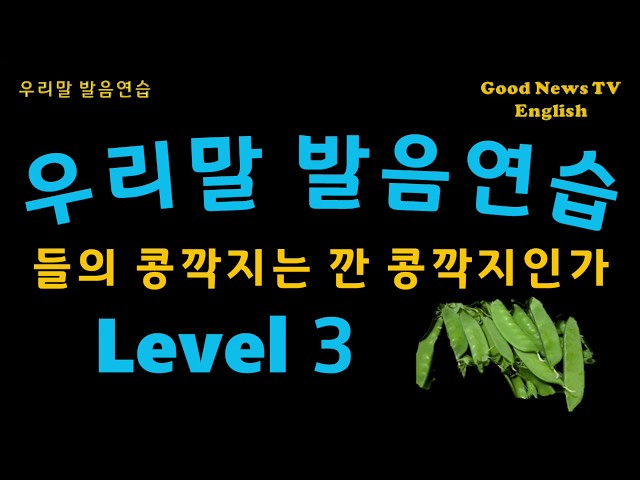
The chain of sounds is so exquisite that your tongue can’t keep up after just one listen.
The content poses a slightly curious question—“Is that stake one you can tie a horse to, or one you can’t?”—and saying it out loud naturally demands focus.
Every slip of the tongue sparks laughter, so it feels more like a game than studying.
More than simple pronunciation practice, it lets you feel the rhythm of the sounds and trains your tongue to move deftly—packed with elements that let you learn while playing.
It’s a perfect tongue twister both as a way to get used to the sounds of Korean and to enjoy taking on the challenge with friends.

Ganjang gonjang gonjangjang is jang, gonjangjang is go; doenjang gonjang gonjangjang is gan, gonjangjang is da.
It’s humorous in both meaning and rhythm, making for a very enjoyable pronunciation practice from all angles.
The gist is: “The soy sauce factory’s manager is Director Chang, and the miso factory’s manager is Director Kang,” a playful idea that’s amusing because it mixes food names with personal names in a way you don’t see in Japanese.
When you say it out loud, your tongue tends to get twisted, so it’s perfect for practicing pronunciation and rhythm.
It also gets lively when you try it with friends, so you can enjoy it not only as Korean study but also as wordplay.
I felt it’s a tongue twister that adds a bit of laughter to everyday life while helping you get used to the sounds of Korean.
Cheolsu bookshelf iron bookshelf

It might be a tongue twister that’s easier to read if you say it in rhythm.
At first glance, some people might feel it’s difficult because the words seem unfamiliar, but if you try reading it with a steady beat and tempo, you may be surprised at how doable it is! In Japanese, it apparently means “Cheolsu’s desk is an iron desk.” Try visualizing it and pronouncing it as if you’re singing along to a rhythm.
The key is the consonant sounds, but since it’s a short tongue twister, many people will probably nail it on the first try! It’s an easy tongue twister you can tackle in spare moments.
Makes You Want to Try It! Fun Pronunciation Practice with Korean Tongue Twisters (11–20)
Negaglin Killinglimun Mocklin Killinglimigo Negaglin Killinglimun Chalgling Killinglimida
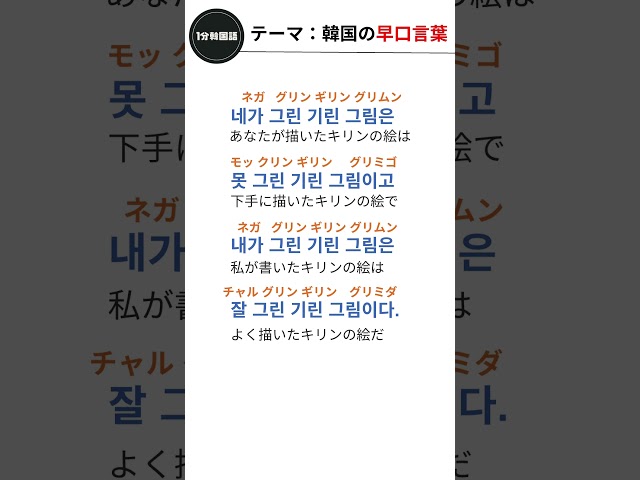
It’s a slightly tricky Korean tongue twister that makes your tongue twist just by saying it out loud.
In Japanese, it means “The giraffe picture I drew is good; yours is bad,” and the comparison of good and bad cleverly turns into a rhythmic pattern of sounds.
If you practice it aloud, you’ll naturally notice differences in Korean pronunciation and accent.
Taking turns saying it with friends lets you memorize the sounds while having a laugh, which is another plus.
I found it to be a slightly mysterious but fun tongue twister that works not only for pronunciation practice, but also as a playful way to enjoy the sound and rhythm of the language.
Chapsaltteok Seolleung Chob Chapsaltteok

A short and easy challenge! This is a Japanese tongue twister meaning “30 plates of glutinous rice mochi, glutinous rice mochi.” If you can nail the repeated words, you’ll pick it up quickly.
It helps to set your own word breaks and rhythm when you practice.
As tongue twisters go, it’s short and probably low difficulty.
Try competing with friends or family to see who can say it the fastest, and whose speed is the best—it’ll boost motivation.
Give it a try!
Chogijo twintori negatwil twintoringa nega antwil twintoringa

The pronunciation is tough! This is a tongue twister in Japanese meaning, “Is that vaulting box over there the one I will jump over, or the one I won’t?” Since sounds like ‘twin’ or ‘twil’ don’t really exist in Japanese, many people stumble there.
It might be easier to master if you experiment with intonation and decide where to place the stress before you try.
Once you can say it smoothly at speed, show it off to your friends and family!
Peach blossom, apricot blossom, baby azalea blossom
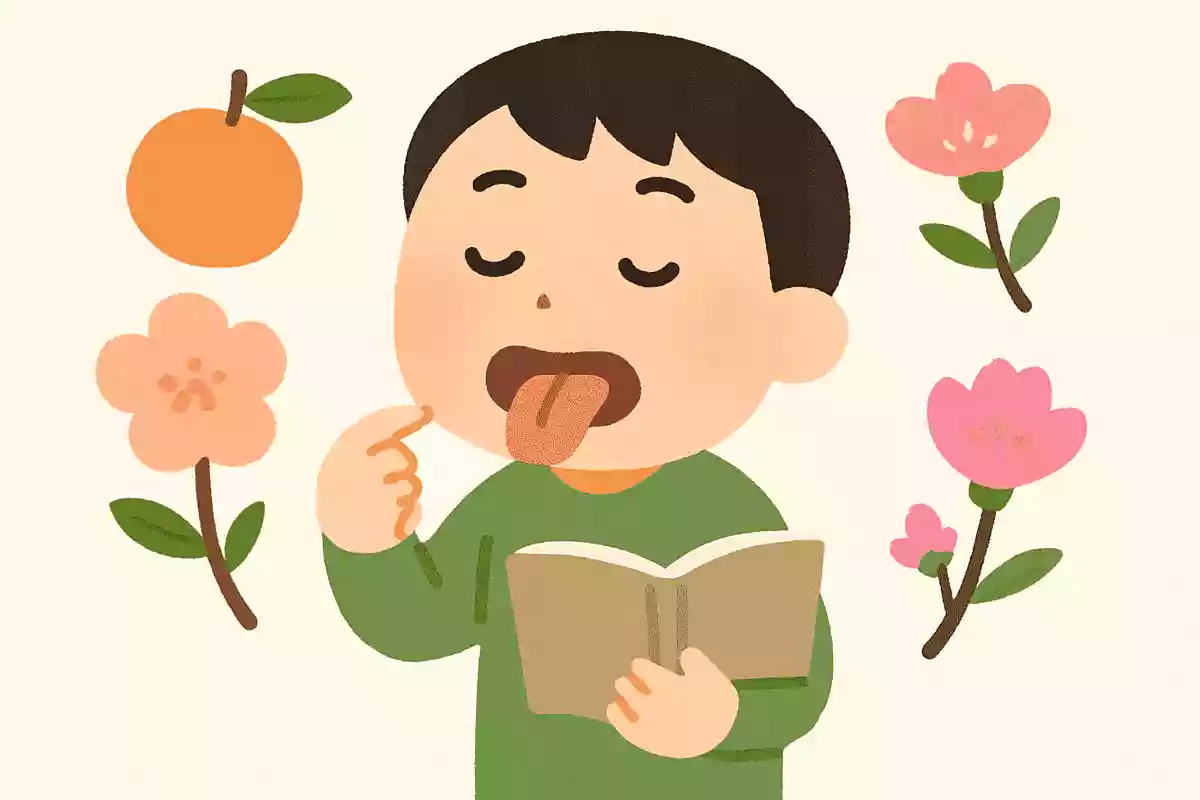
Let’s have fun and give it a try while emphasizing the sokuon (geminate consonants)! It’s a beautiful tongue twister about flowers that means “peach blossoms, apricot blossoms, and azaleas” in Japanese.
If you practice while paying attention to the sokuon that marks word boundaries, you might master it faster than you expect.
The key is not to overthink it and to pronounce it without tension! Since these are names of flowers you can actually see in Japan, using the tongue twister as a starting point to look up what other flower names are called in Korean could also be a great way to learn.