

Irresistibly tempting to try! Have fun practicing pronunciation with Korean tongue twisters

With the growing interest in Korean culture, such as K-dramas and K-pop, many people are learning Korean.
In fact, just like the Japanese tongue twister “Nama mugi, nama gome, nama tamago” (raw wheat, raw rice, raw eggs), Korean also has tongue twisters that are great for pronunciation practice! In this article, we’ll introduce Korean tongue twisters that are easy to try—not only for those learning Korean, but also for anyone who wants to have fun playing with tongue twisters.
They’re perfect both for practicing pronunciation and as a playful word game.
Let’s challenge ourselves with Korean tongue twisters together!
- Tongue Twisters So Fun and Cute You’ll Want to Say Them Out Loud!
- Chinese tongue twisters: A collection of rao kou ling helpful for learning Chinese
- Challenging tongue twisters: Introducing high-difficulty phrases and sentences!
- Perfect for pronunciation practice! A collection of English tongue twisters.
- [Diction Training] A Collection of Tongue Twisters to Improve Articulation
- [Recreation] Challenge! A roundup of tongue twisters recommended for elementary school students
- Get hyped! Tongue twisters that sound cool if you can say them—wordplay that makes you want to take on the challenge
- Tongue twisters that will make you laugh out loud! Super funny
- Take on the world’s hardest tongue twisters! A roundup of ultra-tough prompts that’ll tie your tongue
- A collection of long tongue twisters. Also recommended for practicing announcements and narration.
- Short Korean quotes that resonate with the heart: words that can change your life.
- Bursting into laughter! A roundup of Hakata dialect tongue twisters
- Kenta Otani’s original tongue twisters: a collection that’ll have you tripping over words and bursting into laughter
Makes You Want to Try It! Fun Pronunciation Practice with Korean Tongue Twisters (11–20)
They considered it a tuition fee for education and used the high tuition fee grants.
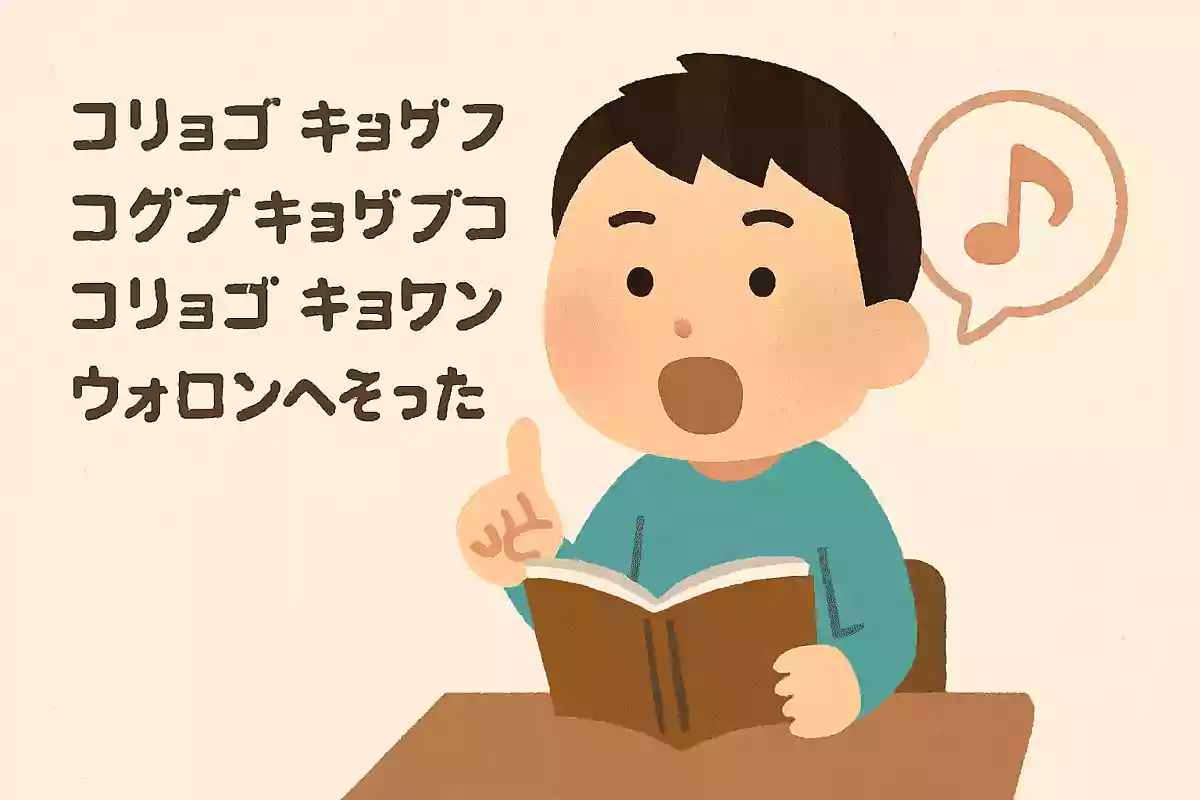
Voiced sounds and contracted sounds are the key! This is a tongue twister in Japanese meaning “The Koryo High School uniform is a luxury uniform, and Koryo High School’s uniform uses high-end fabric.” Even if you’re confused by unfamiliar pronunciations or words, practicing slowly while understanding each word’s meaning will help you say it smoothly.
Whether you’ve always been interested in Korean or you’re encountering it for the first time, try it while comparing it with the Japanese translation.
As you learn more words, your interest in the country is likely to deepen too!
In conclusion
Korean tongue twisters have a different kind of charm from Japanese—they’re so fun that just trying them can bring a smile to your face. Let them be your gateway to Korean, and keep practicing to master the pronunciation. It would be wonderful to challenge yourself with family and friends, enjoy wordplay together, and steadily learn Korean along the way!