


With the growing interest in Korean culture, such as K-dramas and K-pop, many people are learning Korean.
In fact, just like the Japanese tongue twister “Nama mugi, nama gome, nama tamago” (raw wheat, raw rice, raw eggs), Korean also has tongue twisters that are great for pronunciation practice! In this article, we’ll introduce Korean tongue twisters that are easy to try—not only for those learning Korean, but also for anyone who wants to have fun playing with tongue twisters.
They’re perfect both for practicing pronunciation and as a playful word game.
Let’s challenge ourselves with Korean tongue twisters together!
- Tongue Twisters So Fun and Cute You’ll Want to Say Them Out Loud!
- Chinese tongue twisters: A collection of rao kou ling helpful for learning Chinese
- Challenging tongue twisters: Introducing high-difficulty phrases and sentences!
- Perfect for pronunciation practice! A collection of English tongue twisters.
- [Diction Training] A Collection of Tongue Twisters to Improve Articulation
- [Recreation] Challenge! A roundup of tongue twisters recommended for elementary school students
- Get hyped! Tongue twisters that sound cool if you can say them—wordplay that makes you want to take on the challenge
- Tongue twisters that will make you laugh out loud! Super funny
- Take on the world’s hardest tongue twisters! A roundup of ultra-tough prompts that’ll tie your tongue
- A collection of long tongue twisters. Also recommended for practicing announcements and narration.
- Short Korean quotes that resonate with the heart: words that can change your life.
- Bursting into laughter! A roundup of Hakata dialect tongue twisters
- Kenta Otani’s original tongue twisters: a collection that’ll have you tripping over words and bursting into laughter
Makes you want to try it! Fun pronunciation practice with Korean tongue twisters (1–10)
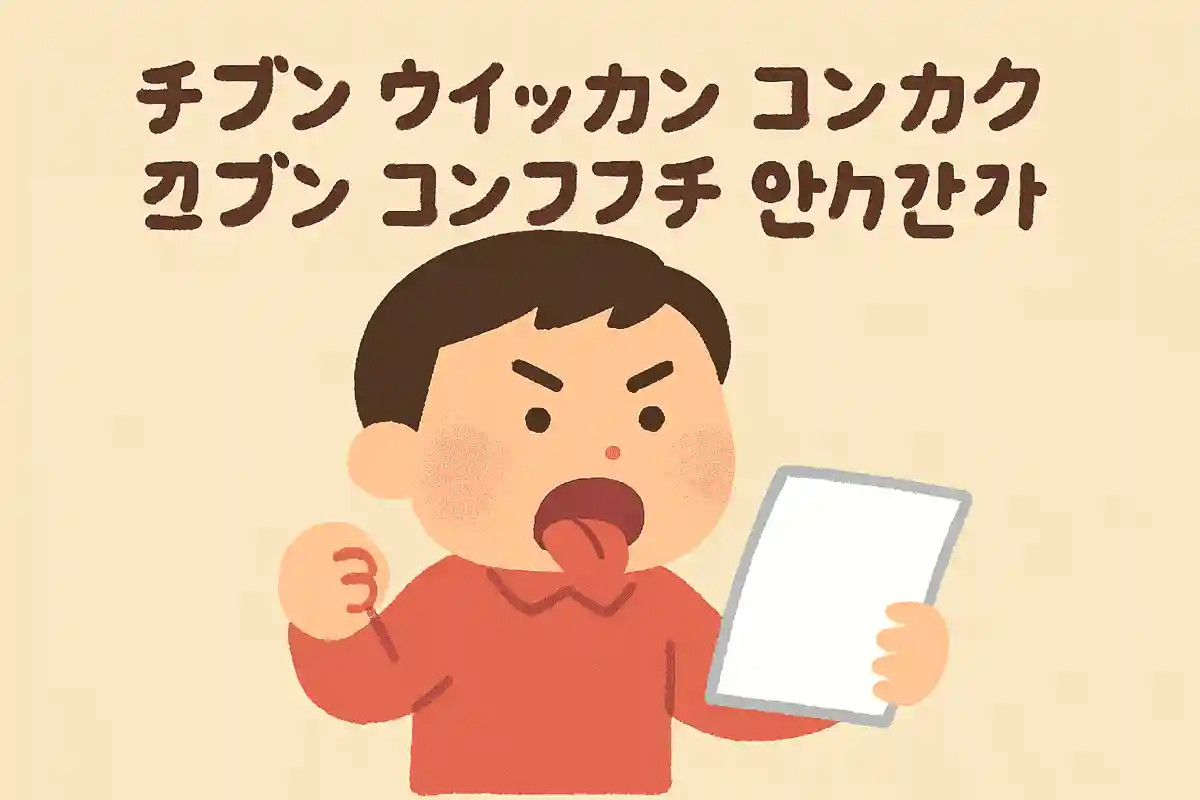
Is the sharp angle at the top a positive acute angle or a negative acute angle?
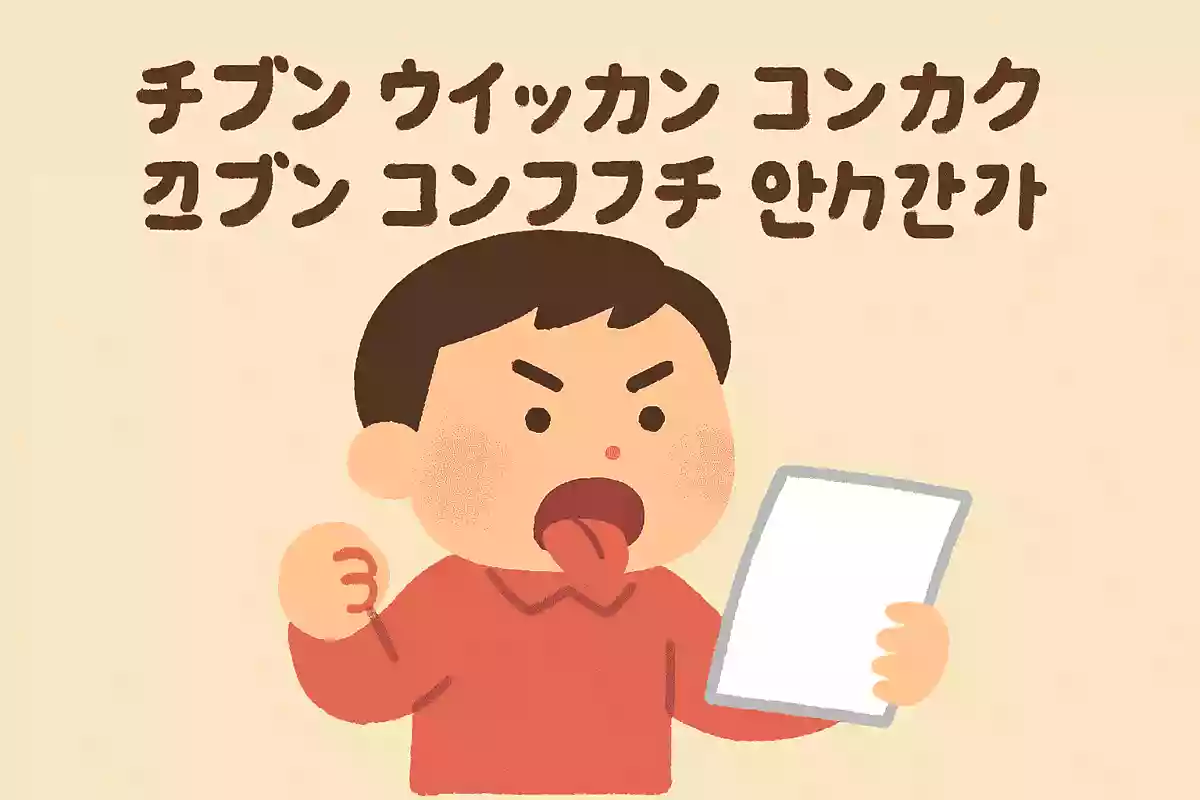
It would be amazing to nail it in one go! It seems like a high-difficulty tongue twister packed with geminate consonants.
I’m told it means: “Are the pods spread out on the roof pods from shelled beans, or pods from beans that haven’t been shelled?” Since it includes many sounds that don’t exist in Japanese, it feels like you might stumble even when reading it slowly.
It might help to practice reading it smoothly at a slow pace first, then gradually speed up to get closer to success.
Competing to see who can say it the fastest would probably be a lot of fun too!
Is the police station chief a fake chief or a real chief?

In Japanese, it means “Is the police agency’s iron grating a single grating or a double grating?” Even though the content is serious, the difficulty of saying it makes it fun.
When you practice it out loud, similar sounds occur in succession, so your tongue tends to get twisted, making it perfect for pronunciation and rhythm training.
If you take turns saying it with a friend, you can compete to see who can say it faster and more accurately, so you can get used to Korean sounds while laughing.
It’s a bit difficult, but I thought it was a fun tongue twister that’s worth the challenge.

Shinin Chanson Kasue Shinchuun Chanson Show

There’s a Japanese tongue twister with the same meaning, right? Some of you may have tried the tongue twister “Shinjin shanson kashu shinshun shanson shō.” This tongue twister is the Korean version, and when translated into Japanese it means “A New Year chanson show by a rookie chanson singer.” The key point is that in Japanese it’s “shinshun,” while in Korean it becomes “sinchun”! It might be fun to try both the Japanese and Korean versions at a drinking party or during a group activity.
Seoul Special City Dukkeo District Office and District Head Ho Gwa, Division Chief Ho Gwajang
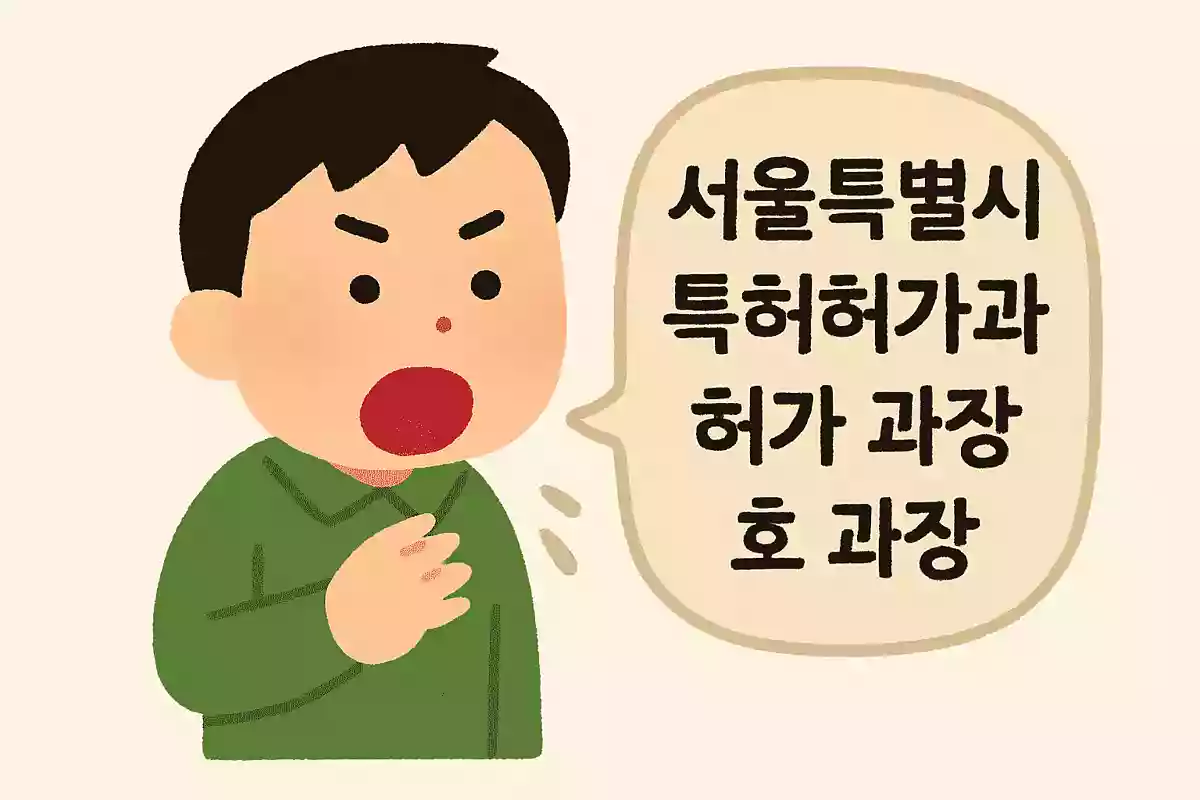
Tongue twisters with lots of small kana, like sokuon and yōon, are inevitably hard to pronounce smoothly.
It seems this one means “Seoul Metropolitan City Patent Permission Section, Permission Section Chief, Section Chief Ho” in Japanese translation.
It’s similar to Japan’s “Tokyo Patent Approval Bureau,” isn’t it? If you managed to say it smoothly on the first try, you might be good at Korean pronunciation.
Why not take the opportunity to actively study languages? It could also be fun to try saying it three times in a row!
Tandanang tan tanggungkwa tandanang an tan tanggun, an tandanang tan tanggungkwa an tandanang an tan tanggun
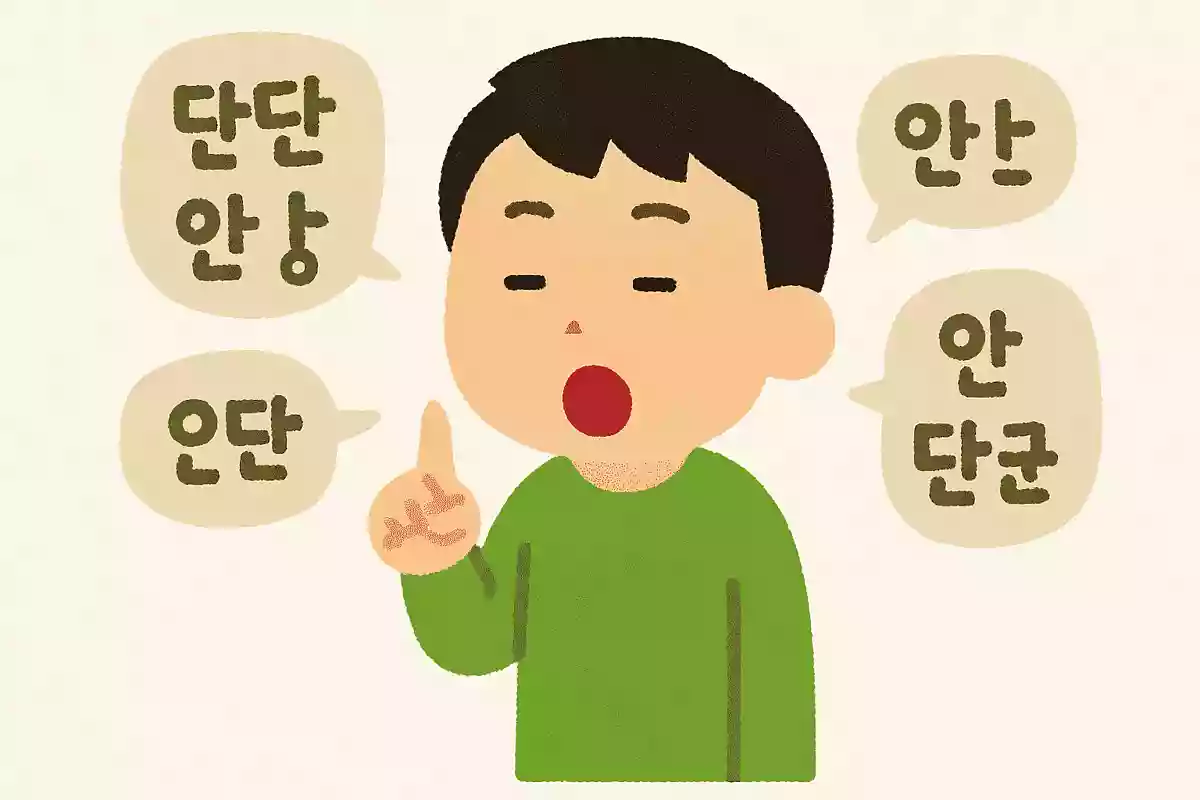
Even though pronunciations like “tan,” “nan,” and “an” sound similar, a mistake can make your meaning unclear, so be careful! In Japanese, it apparently means “hard and sweet carrots, hard and not-sweet carrots, not-hard and sweet carrots, and not-hard and not-sweet carrots.” Even if a tongue twister isn’t in Japanese, once you know the meaning, you can probably memorize it by breaking it up by sense.
If you like Korea, I definitely recommend giving it a try.
The bowl over there is as clean as a whistle, and the mouth here is as empty as can be.
It’s a tongue twister characterized by the frequent use of semi-voiced sounds.
On top of that, it contains many geminate consonants, so it may be difficult to read even if you’re not saying it quickly.
I’m told it means, in Japanese, “That person over there is Dr.
Park, Doctor of Law, and this person here is Dr.
Baek, Doctor of Law.” It’s also unique that names like “Park” and “Baek,” which aren’t used very often in everyday life in Japan, make an appearance.
Once you master this tongue twister, you’ll probably want to show off to your friends and family.
Hanyang Yangjangjeom next to Hanyeong Yangjangjeom Hanyeong Yangjangjeom next to Hanyang Yangjangjeom

It might be a tongue twister that confuses many people because of the repeated, similar-sounding words.
In Japanese, it means: “Next to Hanyang Dress Shop is Hanyan Dress Shop; next to Hanyan Dress Shop is Hanyang Dress Shop.” The key is to start by reading it out loud slowly.
Once you get used to it, try speeding up—you might be able to say it smoothly.
It can also help to picture the scene from the Japanese translation.
Give it a try!