

[Local Songs] Recommended tracks packed with Japan’s nationwide classics and hometown pride

Across Japan, there are many “local songs” created around themes like regional climate and traditions, long-standing customs, hometown pride, and specialty foods.
However, few people are likely familiar with songs from places far from their own living area or hometown.
Some might even have spent years in a region without knowing its local songs at all.
In this article, we’ll introduce some highly impactful, must-hear local songs from across Japan that we hope many of you will get to know.
If it’s a place you’ve visited, try listening while picturing the local scenery.
If it’s somewhere you’ve never been, let the song help you imagine the land and the lives of the people who live there.
- A roundup of regional enka songs: classic hits that feature places from all across Japan in their lyrics.
- [Song of Osaka] A selection of passionate, warm-hearted Osaka tunes
- [2026] Masterpieces that sing of Hokkaido: the heart of a beloved homeland passed down in song
- Introducing famous songs about Shizuoka: Local anthems and popular tracks [2026]
- [Songs of Saitama] A Wealth of Humor-Filled Classics! Local Anthems Packed with Love for Saitama
- Songs related to Mie Prefecture. Beloved local tunes of Mie that continue to be cherished.
- [Hometown Songs] A curated selection of popular Japanese tracks that fill your heart with nostalgia
- [Kyoto Songs] Masterpieces that sing about Kyoto — songs themed on the ancient capital. The enduring heart of our hometown passed down in song.
- A famous song about Fukuoka. The heart of the hometown passed down through song.
- A classic song that celebrates Niigata. The enduring spirit of our hometown passed down through song.
- Songs about Tokyo: A collection of popular J‑Pop classics [2026]
- Masterpieces that sing of love. Recommended popular songs.
- [Songs of Kagoshima] The heart of our hometown carried on in song | A curated selection of classic tracks that embody Kagoshima
[Local Songs] Must-Listen Tracks Filled with Hometown Love from All Over Japan (21–30)
Yanagase BluesMikawa Ken’ichi

It used to just feel like a song for a lively nightlife district, but when I listened closely, I realized it’s actually a sad song.
There are many breakup songs, but Mikawa’s dry voice and matter-of-fact delivery make the sadness even more poignant.
It was the first time I felt sadness from Mikawa.
I realized it’s not just bluntness…
Star SandKoyanagi Rumiko
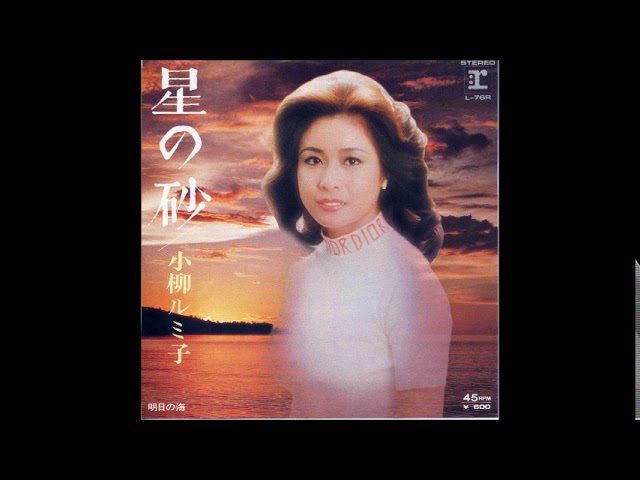
This song was reportedly turned into a record after Rumiko liked a version sung by someone else on a show where celebrities write and compose music.
Because she’s so attached to it, I think she sings it dramatically and with great care.
It conjures up the blue sea of Ishigaki Island.
I want to walk on the sand and touch the legends.
The Bride of SetoKoyanagi Rumiko

Set in the islands of the Seto Inland Sea, this 1972 release portrays a young woman’s wedding journey.
It is one of the signature songs by Rumiko Koyanagi, who debuted with “Watashi no Jokamachi” in 1970 and won the Best New Artist Award at the 13th Japan Record Awards.
The song delicately captures the complex emotions of a bride heading toward her beloved—an intermingling of resolve and anxiety.
Widely embraced by audiences, it also won the 3rd Japan Kayō Awards.
Why not listen to it while picturing the beautiful scenery of the Seto Inland Sea, celebrating the start of a new chapter in life?
Tsugaru Love WomanNiinuma Kenji

Above all, the realism of the continuously falling snow is astounding.
You can see the character of snowbound Tsugaru, and the sorrow of a woman in love that shows through the snow makes it feel all the more so.
I don’t think anyone but Niinuma could fully sing a song about such unending snow.
I consider it a masterpiece.
It’s been a song I can’t forget since the first time I heard it.
Dotonbori SentimentTendō Yoshimi

It’s a song so perfect that if Yoshimi-chan doesn’t sing it, who will? It’s steeped in Osaka through and through, and, just like the title says, I felt it was full of human warmth.
Yes, it’s a song that truly carries that spirited attitude.
I think it’s a track that makes it clear why Yoshimi-chan, the most quintessential Osaka girl, is loved by everyone.
I want to accompany you.Katte ni Kankō Kyōkai

This song, created by the “meddlesome” duo Miura Jun and Anzai Hajime as part of their Unofficial Tourism Association for Okayama Prefecture, expresses the desire to “be your companions,” likening themselves to the three retainers from the Momotaro legend.
The lyrics are brimming with playful spirit, sprinkling in puns and proper nouns like the white-walled townscape of Kurashiki’s Bikan Historical Quarter, the sunset at Mount Washuzan, Sesshū, and Yuko Arimori—like a tourism brochure reimagined in a pop style.
If you’re from Okayama, or planning a trip there, listening to it is sure to heighten your travel mood.
Yokosuka StoryYamaguchi Momoe

I always think Momoe-chan captures the world of the Uzaki–Aki duo very well.
And although I’ve never been to Yokosuka, this also makes me feel it’s a city that suits Momoe-chan perfectly.
Even though she was young (at the time), the cool way she sings is really great.