

For elementary school kids! Fun riddles recommended for lower grades

Lively, curious lower-grade elementary school children.
They love learning new things and playing with friends.
Their thinking is still flexible, and they’re great at coming up with fun ideas.
Here, we’ll introduce riddles for elementary school kids that lower graders can enjoy.
Riddles help develop thinking skills and let you enjoy wordplay.
Have a wonderful time using your heads together with friends and family as you enjoy all kinds of fun riddles featuring familiar things!
- Recommended for lower grades! A fun, educational quiz for elementary school students
- Recommended riddles for elementary school students. A collection of kid-friendly riddles.
- For elementary school kids! Fun and amusing riddles everyone can enjoy together
- Fun trick riddles you can enjoy in elementary school!
- Riddles for Upper Elementary Kids: A Fun Collection That Adults Can Enjoy Too
- For elementary school kids! Fun riddles recommended for the middle grades
- Easy Riddles for Elementary School Students
- [For Elementary School Students] Recommended Riddle Collection
- Fun Quiz Collection Guaranteed to Stump and Delight Elementary School Kids
- Fun quizzes for elementary school kids: a collection of questions everyone can enjoy together
- [Easy] Riddles to Enjoy with Kids: Make Time to Think Together as a Family!
- [Playable from lower grades] Japanese language games and activities
- [For Lower Elementary Students] Play Right Away! Learn with Fun True-or-False Quizzes
For Elementary School Kids! Fun Riddles Recommended for Lower Grades (11–20)
Piece of cake!? Riddles for first graders

If you’re enjoying riddles with your family, we recommend including ones that first graders can solve easily.
When you do riddles with a large group, you often end up chatting with the people around you, right? Through riddles, there are moments where you share what you’re thinking or say your answers out loud—opportunities to express each other’s thoughts and feelings.
Riddles are a great chance to increase this kind of communication.
Even in households where you’re busy and don’t have much time to talk with your children, why not try simple riddles for first graders as an easy way to connect?

Why are there sneakers whose laces never come undone no matter how much you run around?
@igosso.youtube♪ Original Song – Igossou [YouTube] – Igossou [YouTube]
Sneaker laces sometimes come undone while you’re wearing them, right? You can just retie them when they come loose, but if your hands are full, you end up walking with untied laces—your shoes feel like they’re about to slip off, and you might even trip over the laces.
A lot of people probably have those quietly annoying memories.
Here’s a quiz about lace-up sneakers! Sneakers whose laces never come undone no matter how much you run around… sounds like a dream product, doesn’t it? But in fact, kids are already wearing this dream-like item.
You might figure out the answer just by looking at your own sneakers!

Turn a kitten upside down and it’s still a kitten. What do you get if you turn a puppy upside down?
@igosso.youtube♪ Original Song – Igossou [YouTube] – Igossou [YouTube]
Let’s try a quiz about animals.
If you turn a kitten upside down, it’s still a kitten; if you turn a puppy upside down, it becomes… what? You’ll probably think, “Kitten is ‘koneko’… sure, even read backwards it’s still ‘koneko,’” and then tackle the question.
But if you follow that line of thinking, a puppy is ‘koinu,’ which can’t be read the other way around, and you’ll get stuck.
That’s when you should remember it’s a trick question.
That very line of thinking is the trick.
If you simply state the fact as it is, that’s the correct answer.
What gets hotter as it gets colder?
@igosso.youtube You're a genius if you get it!TranslationTrick quizIgossou
♪ Original Song – Igossou [YouTube] – Igossou [YouTube]
This puzzle is tricky because there are many possible answers.
Things that get hotter as it gets colder… You might be thinking of hand warmers or clothing, but the correct answer is something else.
First, try picturing a winter scene.
List a few things you associate with it, and think about “getting hot” as the keyword.
Also pay close attention to the fact that it’s written in hiragana! The answer is something everyone knows, and you’re likely to see it at least once in summer.
Here’s a hint: it’s something that melts in heat.
What vehicle do you pedal and pedal but end up going back and forth in the same place?

When you row a boat or pedal a bicycle, you move forward, right? But the answer to this riddle seems to be something that goes back and forth in the same place no matter how much you push.
The key to solving it is to focus on “going back and forth.” If you’re an elementary school student, that phrase might make something click.
Here’s a hint: the park.
Think back to your time playing at the park—there was a fun piece of playground equipment that goes back and forth! That’s right, the answer is a swing.
Did you get it right?
What do you hold while eating rice?
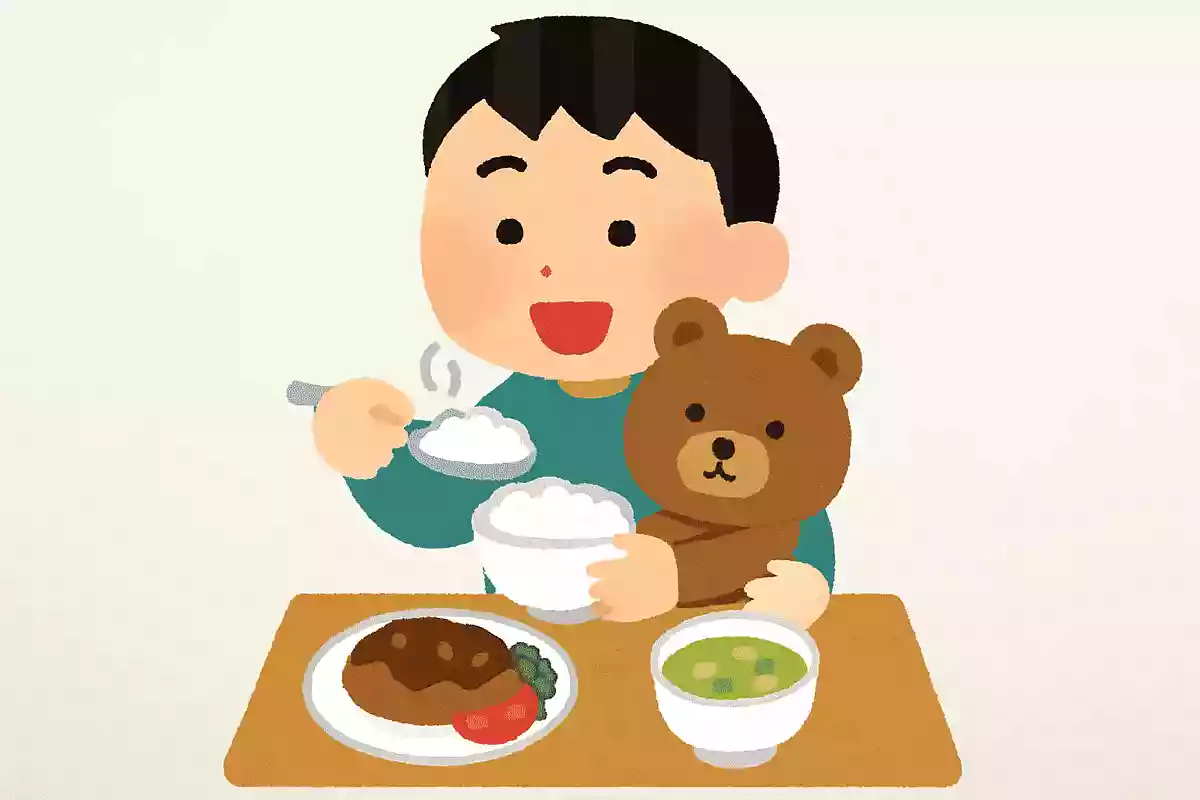
Something you “hold” while eating… A busy mother might hold her child while eating something safe even if it’s dropped, but normally you don’t hold anything in your arms during a meal, right? So no matter how much you think about what you could hold while eating, you won’t reach the answer.
The key to solving this riddle is to recall what you always do during a meal, and to try expressing “dakko” (to hold/hug) with a different word.
The correct answer is “ita” (board)! Because you say “ita, dakimasu”—a pun on “Itadakimasu.”
For Elementary School Kids! Fun Riddles Recommended for Lower Grades (21–30)
What bug is in the center of the world?
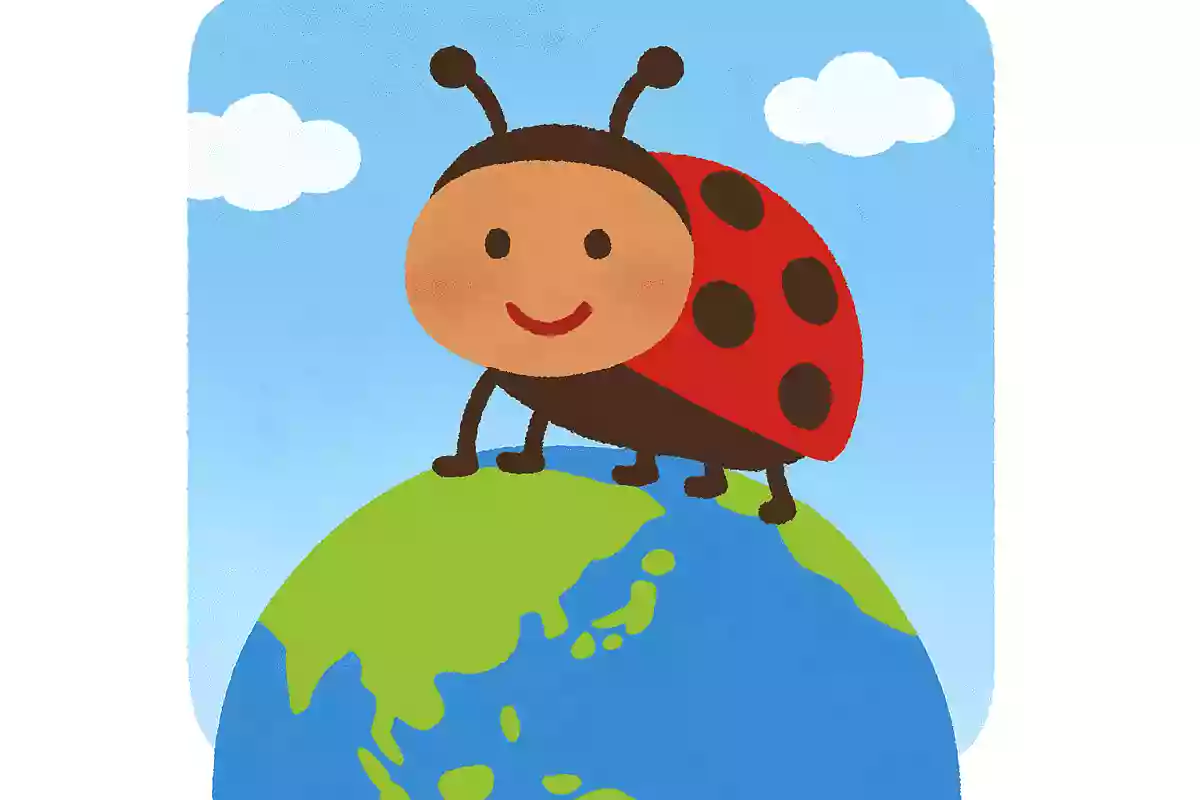
What insect is in the middle of the world? You might be tempted to wonder, “Where is the center of the world?” but this is a riddle you can solve with a flash of insight—no geography knowledge needed.
The key point is that “sekai” (world) is intentionally written in hiragana as せかい.
It could have been written in kanji, which makes this suspicious.
By the way, the correct answer is “a mosquito” (ka).
It’s that blood-sucking pest we all hate in summer.
Why? Because the middle letter of せかい (se-kai) is か (ka)!