


Lively, curious lower-grade elementary school children.
They love learning new things and playing with friends.
Their thinking is still flexible, and they’re great at coming up with fun ideas.
Here, we’ll introduce riddles for elementary school kids that lower graders can enjoy.
Riddles help develop thinking skills and let you enjoy wordplay.
Have a wonderful time using your heads together with friends and family as you enjoy all kinds of fun riddles featuring familiar things!
- Recommended for lower grades! A fun, educational quiz for elementary school students
- Recommended riddles for elementary school students. A collection of kid-friendly riddles.
- For elementary school kids! Fun and amusing riddles everyone can enjoy together
- Fun trick riddles you can enjoy in elementary school!
- Riddles for Upper Elementary Kids: A Fun Collection That Adults Can Enjoy Too
- For elementary school kids! Fun riddles recommended for the middle grades
- Easy Riddles for Elementary School Students
- [For Elementary School Students] Recommended Riddle Collection
- Fun Quiz Collection Guaranteed to Stump and Delight Elementary School Kids
- Fun quizzes for elementary school kids: a collection of questions everyone can enjoy together
- [Easy] Riddles to Enjoy with Kids: Make Time to Think Together as a Family!
- [Playable from lower grades] Japanese language games and activities
- [For Lower Elementary Students] Play Right Away! Learn with Fun True-or-False Quizzes
For Elementary Schoolers! Fun Riddles Recommended for Lower Grades (1–10)
A riddle that’s too easy

I think lower-grade elementary school children learn a lot through their classes and daily life.
By using the knowledge and wisdom they’ve gained, there are riddles they can solve easily depending on the problem.
When their answer is correct, children can also feel a sense of accomplishment that “the answer I came up with was right.” Even for simple riddles, you need the vocabulary to understand the words and use them appropriately.
It’s said that by learning the various words and expressions that appear in riddles, you can expect an improvement in vocabulary.
Simple riddles might be perfect as training to build vocabulary.

Riddles Quiz for Lower Grades
Children learn much of their vocabulary from everyday life.
It’s surprisingly rare for them to go to school and be explicitly taught the things themselves, like “the animal that goes ‘woof-woof’ is a dog” or “the blade you use when cooking is called a kitchen knife.” Children absorb the words they feel they need from daily life and start using them on their own.
So in a sense, being able to understand puns could be considered a kind of “advanced skill” in a child’s world.
For example: “What kind of bump appears when you’re happy?” Of course, the answer is “a lump” (a wordplay in Japanese).
Children realize that they don’t actually get a physical bump from being happy, and that this is a form of wordplay.
This may sound a bit theoretical, but if a child shows interest, it might be a good idea to give them lots of riddles.
A riddle mainly written in hiragana

Once children start going to elementary school, their range of activities broadens compared to before, and all sorts of things begin to catch their eye.
They learn that a café is a place to drink coffee, that you can even buy a gravestone at a stone shop—things they didn’t understand before suddenly start to make sense, and I’m sure everything they see becomes fascinating and intriguing.
Learning words is just as much fun, so why not try some Hiragana riddles? They’re not only enjoyable but also help with Japanese language study—truly killing two birds with one stone.
Grown-ups, please join in the thinking, too!
A riddle perfect for summer

There are many things that remind us of summer, like summer vacation, fireworks festivals, and summer fairs.
Kids probably get excited just thinking about all the fun that summer brings.
With that in mind, here are some riddles perfect for the season.
The riddles either include summer-related items in the questions or have summer-themed answers.
Even though the theme is summer, they’re still riddles—so some won’t be straightforward to solve.
Try shifting your perspective and thinking hard to find the answers.
Interesting riddle

Riddles are characterized by questions and answers with a clever twist.
Through riddles, you tackle problems with a twist, and the answers often have an element of surprise.
Solving such riddles is said to foster creativity.
Creativity is the ability to use flexible, free-thinking to generate ideas and devise solutions to problems.
Because of this, creativity becomes an important skill for working in the future.
If the riddles have interesting questions or answers, children might be able to enjoy working on them while enhancing their creativity.
Animal riddles

I’ve heard that more families are getting pets because they believe it helps children grow into kind individuals and is good for their emotional development.
How about your home? In mine, pets weren’t allowed in our apartment building, so we couldn’t keep any animals—unfortunately.
Many children are fascinated by animals.
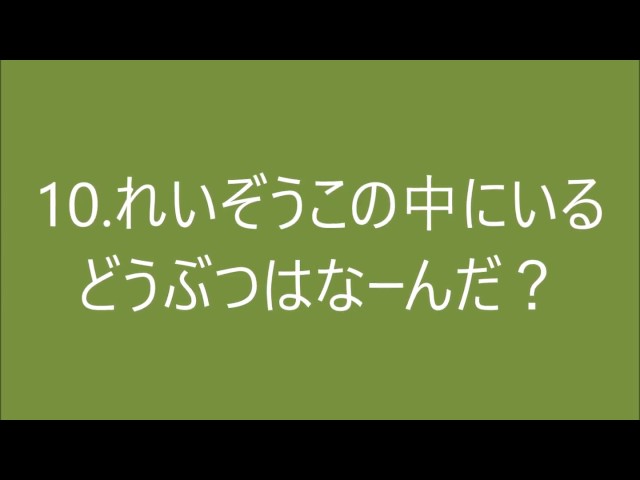
So let’s enjoy some “animal riddles.” Have fun with a wide range, from wordplay riddles like “Two bumps on the lid—what is it?” to more educational ones like “Pigeon, whale, turtle—which one is not born from an egg?”
Christmas riddles

At Christmas, we throw parties, feast on special dishes, and receive presents.
When December arrives, many children look forward to Christmas.
So here are some Christmas riddles that are perfect for holiday events.
These questions focus on things you often see during the Christmas season and items related to Christmas.
Riddles have a twist in the wording.
Encourage children to think from various perspectives and work through them by exploring different ideas.
They’re sure to liven up any Christmas event.