

How many can you solve? Test your spring knowledge with a trivia quiz about March!


When it comes to March, it’s packed with all sorts of occasions and events like Hinamatsuri (Girls’ Day), White Day, and graduation ceremonies, isn’t it?That said, there are probably quite a few things about them that we think we know but actually don’t.How much do you know about the hina dolls displayed for Hinamatsuri, the country where White Day originated, and customs surrounding graduation ceremonies?In this article, we’ll present plenty of trivia about March in a quiz format.We cover a wide range of seasonal trivia that will make you exclaim, “So that’s how it is!”—you’re sure to discover something new.Be sure to give it a try with your family and friends!
- Recommended in March! A collection of surprising, little-known trivia that elementary school students will want to share
- Spring Event Quiz for Seniors to Enjoy in March
- [Trivia] Challenge! Spring General Knowledge Quiz
- [3-Choice Quiz] Cherry Blossom Trivia You'll Want to Share with Someone
- [For Seniors] Fun and Lively! Recommended Quiz Questions
- February trivia quiz: three-choice questions on seasonal fun facts like Setsubun and Valentine’s Day
- [Challenging and Fun!] Quizzes & Riddles for Adults
- Aim for a perfect score! A three-choice common knowledge quiz that deepens your understanding
- [For General Audience] Little-Known Trivia and Fun Facts About Hay Fever
- [For Elementary School Students] Trivia About April
- February trivia quizzes that elementary school kids will love. Get excited with fun facts about commemorative days.
- Shall we delve into the season of new beginnings? April Trivia Quiz!
- [For Kids] December Trivia Quiz & Fun Facts! Learn about seasonal events and traditions!
How many can you solve? Test your spring knowledge with a trivia quiz about March! (1–10)
Which country is the origin of White Day?
- America
- Japan
- France
See the answer
Japan
White Day originated in the 1970s when a Japanese confectionery company proposed it as part of a promotional campaign. The custom of men who received chocolate on Valentine’s Day giving white-colored sweets or gifts in return on March 14, one month later, is unique to Japan and later spread to other countries.

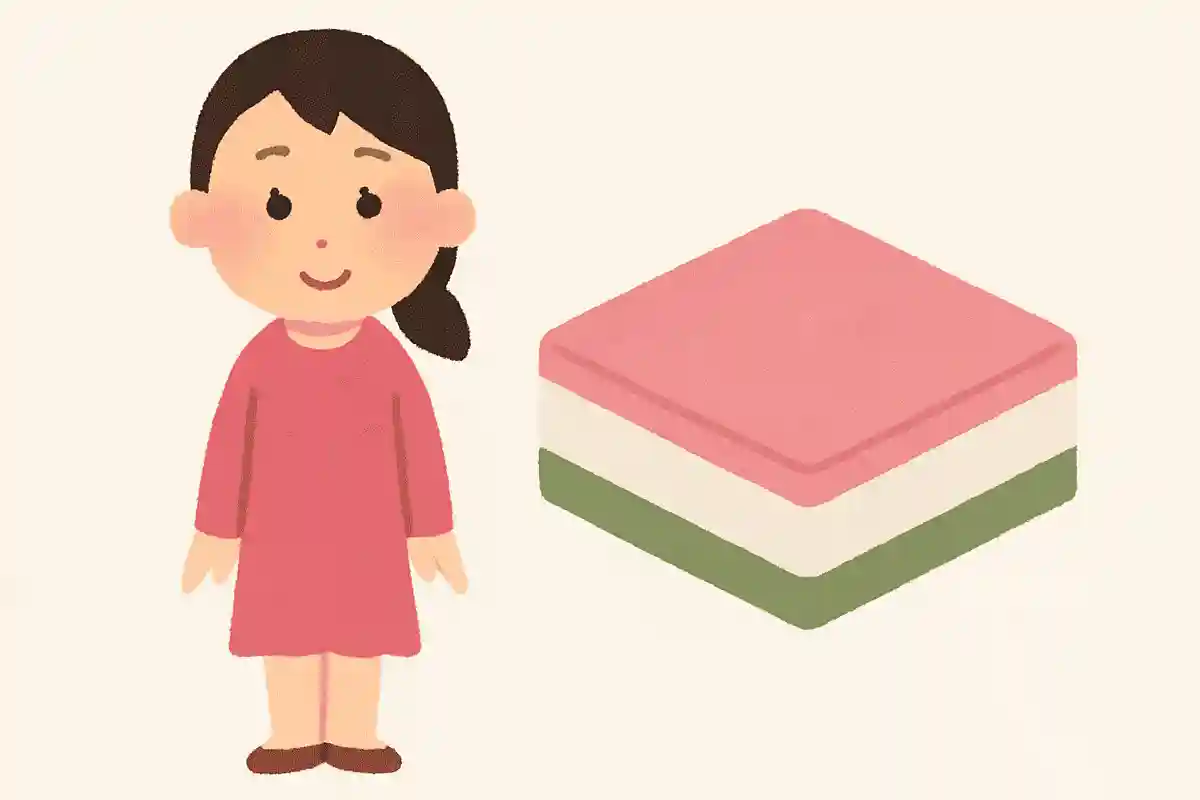
What part of the human body does the shape of hishimochi represent?
- lung
- heart
- stomach
See the answer
heart
There are various theories about the origin of the shape of hishi-mochi, and one of them says it represents a “heart.” The reasons for this also vary, which is surprising, isn’t it? By the way, the pink in hishi-mochi is said to ward off evil, white signifies purity, and green represents health.

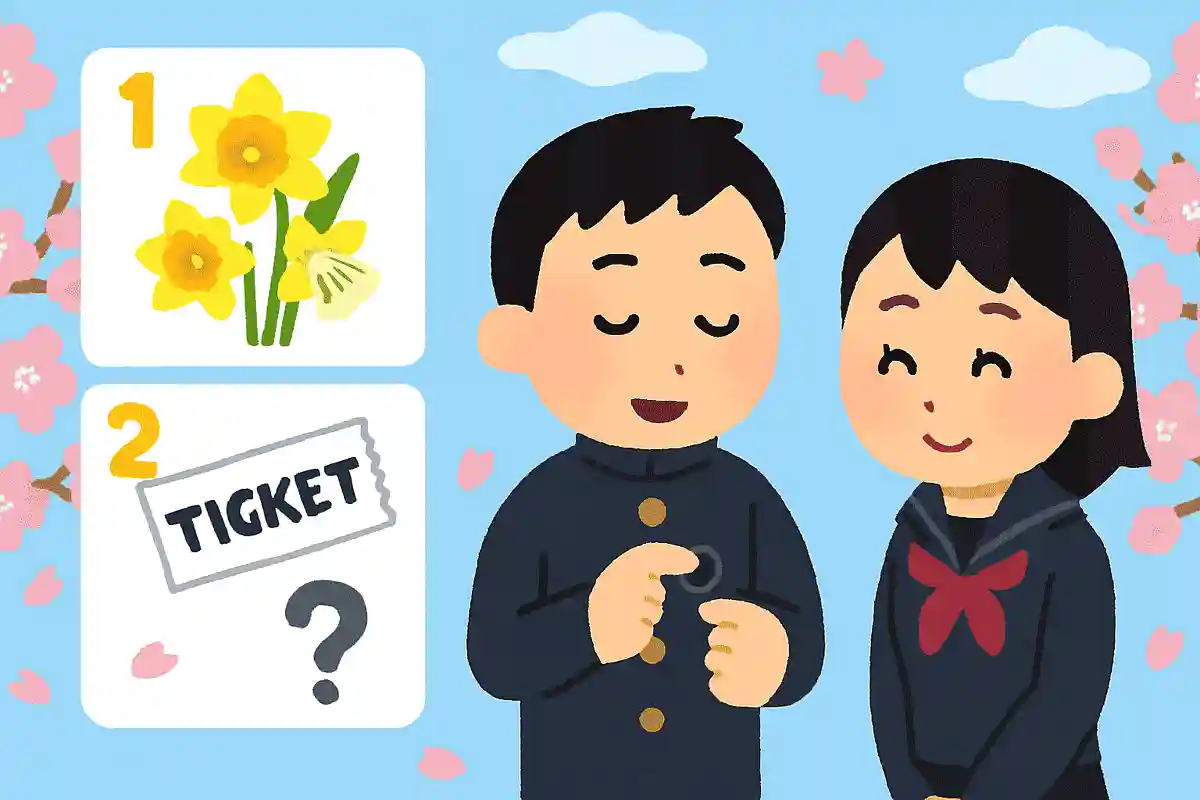
Why is it that people give the second button of their school uniform to the person they have feelings for at the graduation ceremony?
- Because it's the button closest to the heart.
- Because it’s the button we use the most when adjusting our uniform.
- Because it’s a custom passed down by soldiers during World War II.
See the answer
Because it's the button closest to the heart.
The custom of giving away the second button at graduation stems from the idea that the second button on a school uniform jacket (gakuran) sits closest to the heart. By giving the part closest to one’s heart—symbolically, “giving one’s heart”—students present it to someone they have feelings for. Considered a romantic confession, this practice has spread within Japanese student culture.
How many can you solve? Test your spring knowledge with a trivia quiz about March! (11–20)
What kind of meaning does the holiday of the Vernal Equinox Day have?
- A day to praise nature and cherish living beings
- A day to celebrate the beginning of a new year
- Day to mourn the victims of war
See the answer
A day to praise nature and cherish living beings
The Vernal Equinox Day is one of Japan’s national holidays, founded on the principle of “praising nature and cherishing all living things.” It is set around the time of the vernal equinox, when day and night are nearly equal in length. In celebration, it is regarded as a day to give thanks for nature’s bounty and to renew our commitment to valuing the lives of all living beings.
Which of the 24 solar terms signifies the time when living creatures begin to awaken?

- rainwater
- Insects Awaken
- vernal equinox
See the answer
Insects Awaken
The correct answer was “Keichitsu.” Keichitsu falls around March 5th according to the fixed solar term method. “Kei” means “to open,” and “chitsu” refers to insects hibernating in the earth, expressing the feeling of spring when the ground warms and living creatures begin to be active.
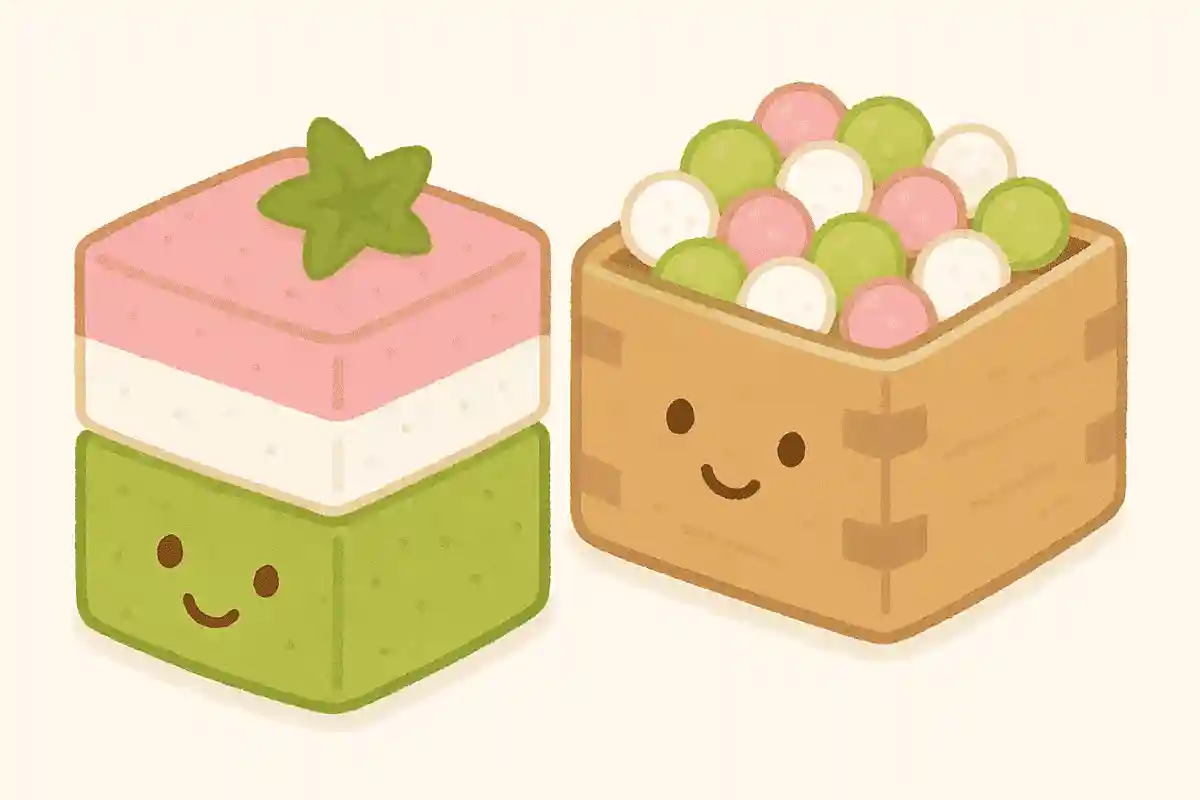
What sweets are typically eaten on Hinamatsuri (the Doll’s Festival)?
- chimaki (a Japanese sticky rice dumpling wrapped in bamboo leaves; in Chinese contexts, often called zongzi)
- kashiwa mochi (oak leaf-wrapped rice cake)
- Hina-arare (colorful rice crackers for Hinamatsuri)
See the answer
Hina-arare (colorful rice crackers for Hinamatsuri)
A representative sweet eaten during Hinamatsuri is hina-arare. These are colorful rice crackers in white, pink, and green, and they come in various shapes and flavors. The colors evoke the image of the Peach Festival, and they are enjoyed as a treat that brings a sense of spring.
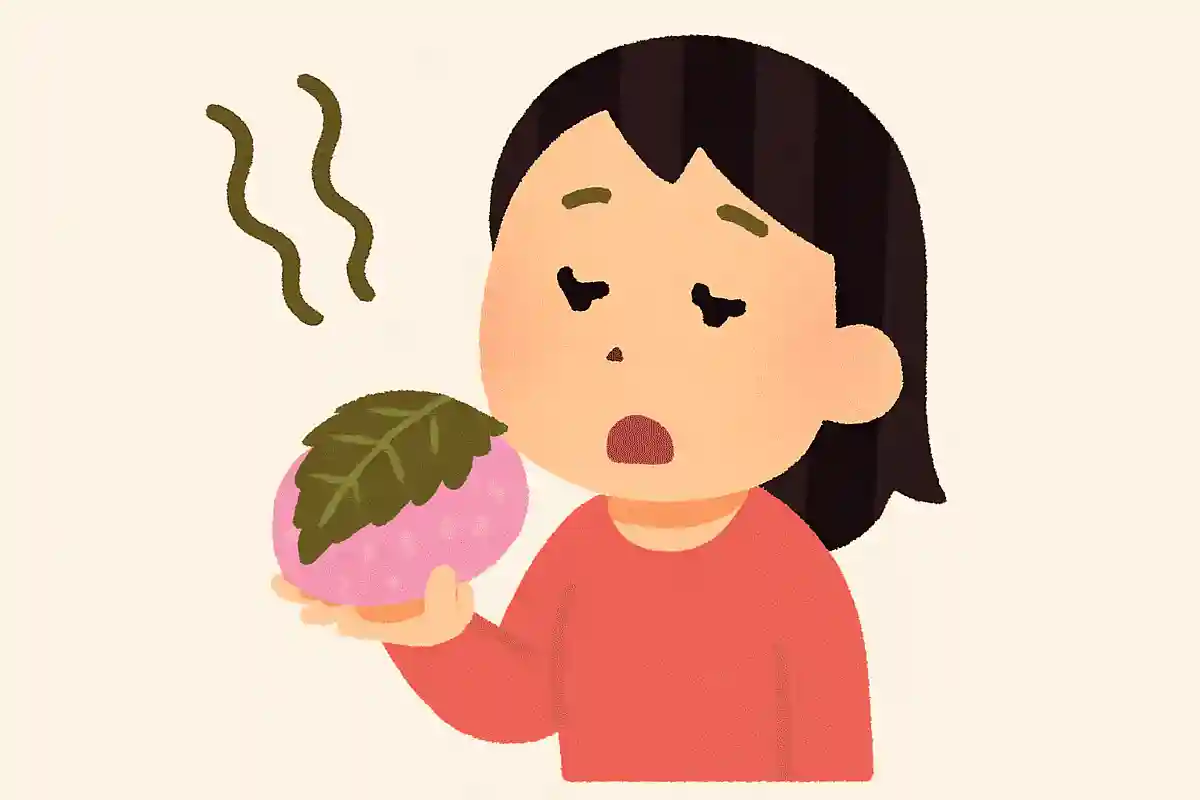
What does the leaf wrapped around sakuramochi taste like?
- sweet
- slightly bitter
- salty
See the answer
salty
The cherry leaves used for sakuramochi are often lightly salted, so the leaves themselves have a briny taste. This salty flavor enhances the sweetness of the sakuramochi, allowing you to enjoy its distinctive taste.