

Okinawan folk songs, children’s songs, and nursery rhymes: the heart of our hometown passed down through song.

Doesn’t Okinawan music have a unique vibe that many people love?
In Okinawa, a distinct culture has been nurtured over a long period of time.
As a result, the unique resonance of the Ryukyuan scale combined with lyrics in the Okinawan dialect gives the music a charm unlike any other.
In this article, we’ll introduce plenty of folk songs and children’s songs that have been passed down from adults to children for generations in Okinawan music.
Listen to the songs we’re about to share, and carry on the spirit of Okinawa in song yourself.
- Nursery rhymes perfect for April: A collection of classic spring songs that capture the season
- [Ryukyuan Music] Folk and Classical Music of the Ryukyu Islands
- [Traditional Performing Arts of Okinawa] A special feature on classic Eisa songs that make you want to dance
- A classic song in the Okinawan dialect, Uchinaaguchi
- Ranking of Popular Folk Songs
- Fukuoka’s folk songs and children’s rhymes: History and sentiments conveyed by the nostalgic melodies of home
- Recommended children's songs and hand play songs for October! Music time in childcare that feels like autumn.
- Children’s Songs You Can Sing in August: Summer-Friendly Kids’ Songs and Fingerplay Rhymes
- [Sea Nursery Rhymes] Fun children's songs themed around the sea
- [Parenting] Parent-child bonding! Hand-play songs and traditional nursery rhymes collection
- Nostalgic Children’s Songs, Folk Songs, and Nursery Rhymes: The Heart of Japan Passed Down Through Song
- [Folk and Children's Songs of Hokkaido] Songs of Hokkaido that continue to be loved across generations
- Nursery rhymes I want to sing in July: fun summer songs
Okinawan folk songs, children's songs, and nursery rhymes: the heart of our hometown passed down in song (1–10)
Ittaa anmaa maa kaiga

A traditional Okinawan children’s song and lullaby that older siblings would sing to their younger brothers or sisters; in the past, it’s said that the older children would sing it while putting infants to sleep or soothing them.
Its gentle melody is perfect for a relaxed lullaby, but there’s also a version covered by MONGOL800 arranged as an intense hardcore number, so it might be fun to compare the two.

Festival of Celebrationotome tsubaki

This is a song by an unknown composer.
Since it does not appear among classical pieces, it is thought not to be that old.
Iwai-bushi has a melody similar to “Funakuya-bushi” (Funakuyabushi), a folk song from Yaeyama.
However, its content is the complete opposite: it frankly sings of people’s feelings—resentment and sorrow.
Perhaps, even while declaring it a joyful, celebratory song, it actually contains the people’s wish for this painful world to become a better place.
sensory clauseNakasone Hajime

It’s striking how the verses flow along like everyday speech, carried by the brisk rhythms of Okinawan folk music! Some explain “sensuru” as meaning “mayfly,” but the origin of this Sensuru-bushi is said to be unknown.
This Sensuru-bushi evolves as it incorporates and adapts to local dialects from different regions.
The way it’s sung—peppered with humor to draw laughter—is truly a traditional art.
It really makes you feel that music, at its core, was meant to be enjoyed by people in just this way.

Okinawan folk songs, children's songs, and nursery rhymes: The heart of our homeland passed down through song (11–20)
Naa-minaa-mi wanwacha-kuri

This song is a children’s folk tune from mainland Okinawa that depicts kids playing with the waves by the seaside.
The title “Naminami Wanwachakuri” is said to mean “Waves, tickle me.” There’s also a way to play while singing: two people pair up with a cloth, and at a point in the song they turn to face the opposite direction, similar to the game ‘Nabe-nabe Soko-nuke.’
Fūyubemā

This song is an Okinawan hand-play song.
You face the child, have them spread their hands, and while singing, point to each finger one by one—from the thumb to the index finger, middle finger, and little finger.
When you reach the little finger, raise both hands toward yourself, align them left and right, and shake them from the wrists to the rhythm that goes “joro-joro-joro.” It’s a fun song even for adults who don’t know the Okinawan dialect, as it helps them learn it.
Kunigami JintōyōKadekaru Rinshō
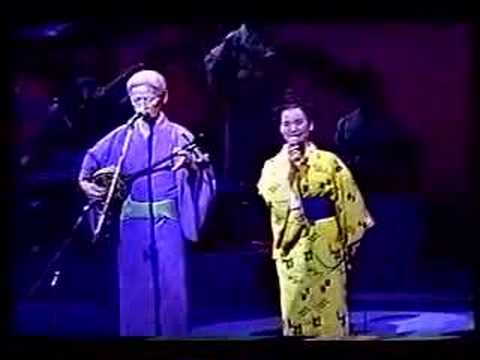
This is a duet-style song between a man and a woman set in the nature-rich region of Yanbaru.
At the time, Kunigami was deep in the mountains, so life must have been difficult.
The song carries a message that no matter how harsh the environment or how poor the living conditions, everyone should help one another and cherish their mindset and appearance.
HarikyamakUema Ayano

The dance name “Harikuyamaku” is an Okinawan folk song that everyone sings while dancing kachāshī.
By the way, kachāshī is a dance where you raise both hands and sway your body to a relatively fast tempo—many of you may have experienced it.
This video features vocals by Ayano Uema.