

Okinawan folk songs, children’s songs, and nursery rhymes: the heart of our hometown passed down through song.

Doesn’t Okinawan music have a unique vibe that many people love?
In Okinawa, a distinct culture has been nurtured over a long period of time.
As a result, the unique resonance of the Ryukyuan scale combined with lyrics in the Okinawan dialect gives the music a charm unlike any other.
In this article, we’ll introduce plenty of folk songs and children’s songs that have been passed down from adults to children for generations in Okinawan music.
Listen to the songs we’re about to share, and carry on the spirit of Okinawa in song yourself.
- Nursery rhymes perfect for April: A collection of classic spring songs that capture the season
- [Ryukyuan Music] Folk and Classical Music of the Ryukyu Islands
- [Traditional Performing Arts of Okinawa] A special feature on classic Eisa songs that make you want to dance
- A classic song in the Okinawan dialect, Uchinaaguchi
- Ranking of Popular Folk Songs
- Fukuoka’s folk songs and children’s rhymes: History and sentiments conveyed by the nostalgic melodies of home
- Recommended children's songs and hand play songs for October! Music time in childcare that feels like autumn.
- Children’s Songs You Can Sing in August: Summer-Friendly Kids’ Songs and Fingerplay Rhymes
- [Sea Nursery Rhymes] Fun children's songs themed around the sea
- [Parenting] Parent-child bonding! Hand-play songs and traditional nursery rhymes collection
- Nostalgic Children’s Songs, Folk Songs, and Nursery Rhymes: The Heart of Japan Passed Down Through Song
- [Folk and Children's Songs of Hokkaido] Songs of Hokkaido that continue to be loved across generations
- Nursery rhymes I want to sing in July: fun summer songs
Okinawan folk songs, children's songs, and nursery rhymes: the heart of our homeland passed down through song (21–30)
Futami Love StoryKazumi Tamaki, Takeshi Yamauchi
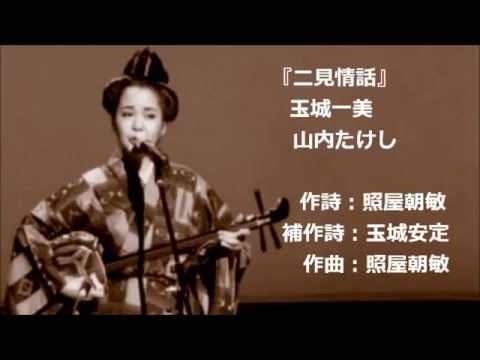
It is said to have been composed by Teruya Chōbin, who had taken refuge in northern Okinawa during the Battle of Okinawa, in praise of the nature and warmth of the people of Futami who cared for him.
The song features a Yamato-style melody, which is rare in Okinawan folk music.
A monument with the lyrics has been erected at the Futami Community Center in Futami, Nago City, and the piece is also well known as a staple enjoyed as a male-female call-and-response in folk music taverns.
Tinsagu Flowers

This is a song full of warm teachings that has long been passed down from parents to children in Okinawa.
Like dyeing your nails with the blossoms of the balsam flower, it gently teaches you to let your parents’ lessons soak into your heart.
Some may relate to the idea that a parent’s words are like countless stars and like the North Star that lights the course of one’s life.
The song became widely loved after it was broadcast on NHK’s “Minna no Uta” in 1966, and in recent years it was also featured in the drama “Chimudondon.” In March 2012, it was chosen by a prefectural referendum as the musical symbol of the prefecture.
Okinawan folk songs, children’s songs, and nursery rhymes: The enduring heart of our homeland (31–40)
Surti East-sai

This Okinawan folk song has a calm atmosphere, as if contemplating various thoughts while facing east.
The title, combining the call-response phrase “sūri” and the character for the direction east—read here as “agari”—is also striking.
It depicts feelings being entrusted to a butterfly flying toward the east, evoking a sense of poignancy.
When used in Eisa performances, you could convey the song’s content more clearly by emphasizing the rhythm to highlight its gentle mood and incorporating choreography that expresses the east.

Tenyo-bushi

There are many traditional Okinawan music pieces used in dances like Eisa, as well as in celebrations and festivals.
“Tenyo-bushi” is also a traditional song that has long been sung, played, and loved by people of all ages.
The lyrics vary slightly by region, which reflects the unique character of each area.
Okinawan folk music features a range of melodic styles, tempos, and themes.
“Tenyo-bushi” is a classic Eisa number performed during the summer Obon season in July and August, when people eagerly await the visit of their ancestors and pray for their families’ health and prosperity.
It has long been danced as a Bon Odori to the light, lively sound of the sanshin.

Asadoya Yunta

Asadoya Yunta is a traditional Okinawan folk song passed down since ancient times.
It’s pronounced “Asadoya Yunta” and originates from Taketomi Island in the Yaeyama Islands of Okinawa Prefecture.
A yunta is a type of work song sung during tasks like rice planting, characterized by men and women calling out powerfully while working.
The lyrics depict the exchange between Asadoya Kumaya, a peerless beauty from the Ryukyu Kingdom era, and an official who fell in love with her at first sight.
Since its release in 1934, it has enjoyed popularity as a representative song of Okinawa and continues to be covered by many artists today.
Tinsagu FlowersNatsukawa Rimi

This is a famous song covered by Rimi Natsukawa, originally a traditional didactic song from Okinawa.
It sings about cherishing and engraving in one’s heart the words received from one’s parents, overlaying that sentiment with the image of dyeing one’s nails with balsam flower petals.
Rimi Natsukawa’s crystal-clear, endlessly pure voice and the simple tones of the sanshin cleanse the heart—this is a tender, deeply moving piece filled with compassion.
The song was included on the album “Okinawa Uta ~Feeling the Ryukyu Breeze~,” released in November 2009, and was also selected as a beloved song of the people of Okinawa Prefecture.
It’s said to be familiar as the station melody for the Yui Rail as well.
The love and wisdom passed down across generations warms the heart before you know it.
Noboru JahanaKina Shoukichi

Shōkichi Kina was strongly influenced by one of Okinawa’s great figures.
After reading the biography of Sho Jahana, Shōkichi was deeply moved by this predecessor who fought against authority for the sake of Okinawa.
Jahana safeguarded Okinawan identity, kept Okinawa in his thoughts until his death, and left achievements in the Freedom and People’s Rights Movement, agricultural policy, and overseas emigration.
This is a song about Sho Jahana.