

Quiz on things whose names differ between the past and now. Differences between old terms and modern terms.

When you compare old words with modern ones, there are times when they refer to the same thing but are called completely different names, making you think, “Huh? What is that?” and get confused.
In this article, we’ll present items whose names have changed from the past to the present in a quiz format.
As you imagine how familiar items and various terms that were commonly used in the past are carried on today under new names, give it a try.
Once you learn that this word used to be that word, you’ll find yourself wanting to tell someone about it!
- Let's take on a four-choice quiz that everyone can enjoy together!
- [For Seniors] Nostalgic quizzes that bring back memories! Showa-era entertainment and sports questions
- Abbreviation quiz: things you might not actually know? From everyday terms to youth slang
- [Can you understand what they're saying?] Quiz on dialects from various regions
- [Killing Time] A Collection of Fun Trivia Quizzes You'll Want to Share with Someone
- [General] Surprisingly unknown? Test your geography skills with a three-choice quiz on Japan’s prefectures
- [For Kids] Today’s Quiz Roundup. Let’s play quizzes about today! [April 2026]
- How many can you read? A quiz on difficult kanji for foods
- [For Seniors] Lively two-choice trivia quiz. Handy to know and tidbits you'll want to share with others
- Kansai dialect quiz roundup: origins and example sentences included!
- A quiz of fun trivia: bite-sized knowledge that leads to new insights.
- [For Seniors] Surprisingly Unknown! General Knowledge Quiz
- [Funny] Mean! 10-times Quiz/Question Collection
Quiz on Things with Different Names Then and Now: Differences Between Old and Modern Terms (1–10)
What is “Itameshi” called nowadays?

See the answer
Italian cuisine
“Ita-meshi” is read as “itameshi,” and some of you might picture “fried rice” (itame-ta meshi), i.e., chāhan. But the correct meaning is Italian cuisine. It’s a term that became popular during Japan’s bubble era and referred to dishes like pasta and pizza. Italian food itself spread and became trendy around that time, and nowadays it’s widely established in Japan; people rarely abbreviate it, and generally say “Itaria ryōri” or “Italian.”

What is “merikenko” called nowadays?

See the answer
flour
Meriken-ko is synonymous with wheat flour. As terms like “hakurikiko” (cake flour) and “chūrikiko” (all-purpose flour) became more common, the word fell out of use. By the way, it’s said that “meriken” came from a mishearing of “American.”

What is a “chokki” called nowadays?

See the answer
Best
A chōkki is a sleeveless garment worn under outerwear; it’s synonymous with a vest. Its origin is said to be either from the Japanese term meaning “directly worn” (chokugi) or from the Portuguese word for jacket, “jaqueta.” It’s interesting to consider how the term became established.
Quiz on things with different names then and now: Differences between old and modern terms (11–20)
What is “tokkuri” called nowadays?

See the answer
turtleneck
“Tokkuri” got its name because its shape resembles a sake flask called “tokkuri.” On the other hand, “turtleneck” is named because it resembles a turtle stretching its neck out from its shell. Both names are metaphors based on shape.
What is “hakuboku” called nowadays?

See the answer
chalk
The reading of 白墨 is “hakuboku.” It’s made by kneading calcined gypsum with water and letting it harden. Incidentally, most chalk used today falls into two types: those that use calcined gypsum and those that use calcium carbonate. In other words, strictly speaking, not all of them are the same.
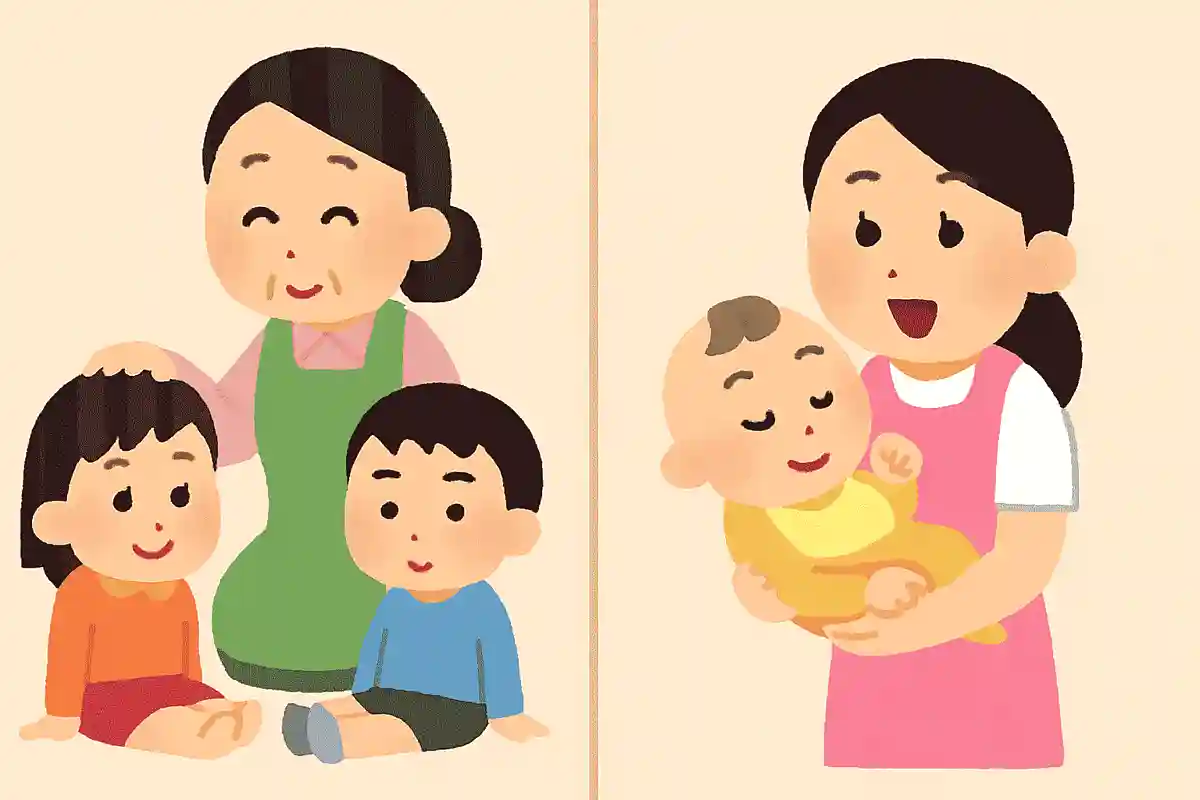
What is “保母さん” called nowadays?
See the answer
nursery teacher
In the past, women were called hobo and men hofo, but even so, hobo was used as the official qualification title. For that reason, it’s said that even men would write hobo on documents when listing their occupation or qualification. The use of the character for “mother” (母) is believed to reflect that most practitioners at the time were women. However, with the 1999 amendment to the Child Welfare Act following the revision of the Equal Employment Opportunity Act, the title was standardized to hoikushi to be gender-neutral.
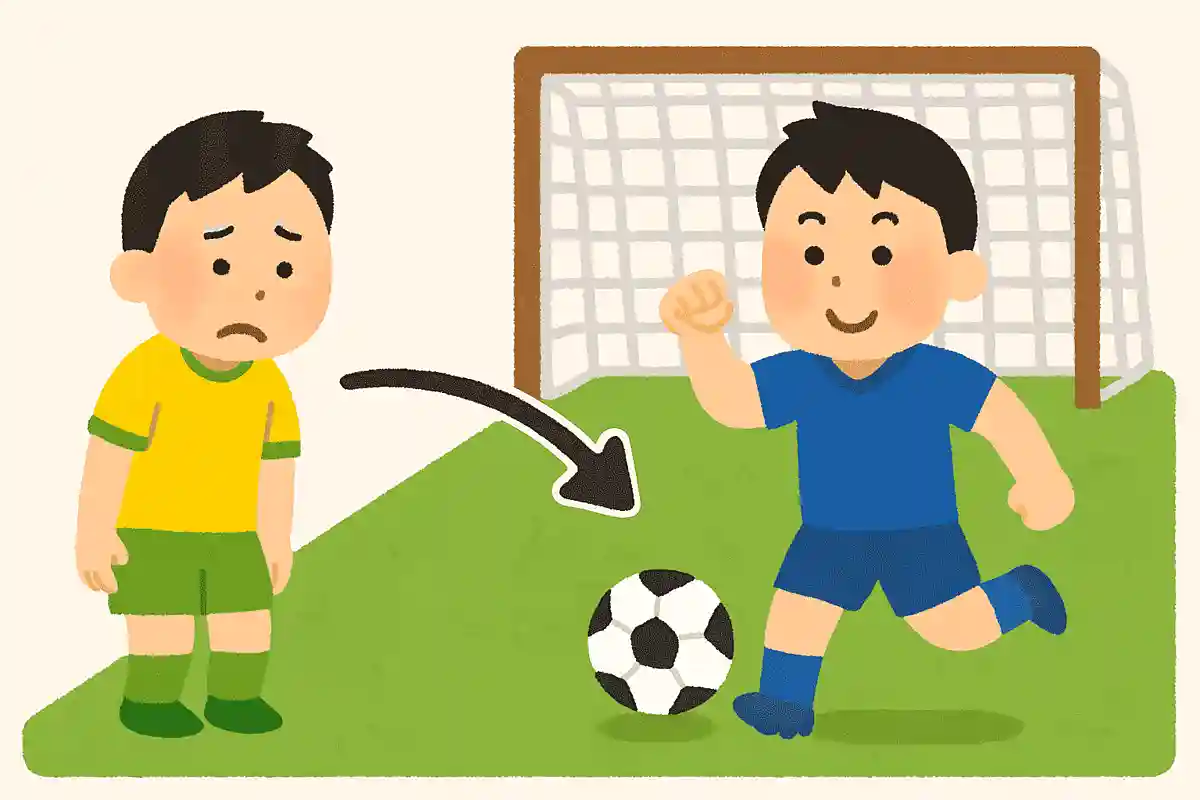
What is the term now used for what used to be called an “own goal” in soccer?
See the answer
Own goal
An own goal refers to accidentally putting the ball into one’s own team’s net in soccer. Because it adds to the opposing team’s score, it used to be called a “suicide goal” in the past. However, in 1994, after the Japan Football Association designated the term “own goal,” the name was changed and has remained in use to this day. “Own” is spelled O-W-N and means “one’s own” or “done by oneself.”