


For those with a deep appreciation for the piano, there often comes a time—once a certain level of knowledge and technique has been acquired—when they gravitate toward listening to more challenging pieces.
Among the many genres, classical and jazz piano in particular feature numerous highly demanding works that have long stood as formidable obstacles for many performers.
This time, we’ve picked out some especially difficult piano pieces.
From jazz piano that emphasizes rapid runs, to classical works with extreme leaps in the scale, and even contemporary classical pieces that combine both traits, we’ve selected from a wide range of styles—so be sure to check them out.
- [For Advanced Players] A Curated Selection of Classical Masterpieces to Tackle at Piano Recitals
- [Highest Difficulty] A selection of challenging pieces crafted by Liszt, the magician of the piano
- Cool jazz piano: from classic favorites to hidden gems.
- [2026] Jazz piano masterpieces: from standards to recent favorites
- [Ultra-Advanced] Even challenging for advanced players! A curated selection of highly difficult piano pieces
- Difficult Piano Pieces | Even Pros Can't Play Them!? Classical Works Requiring Virtuosic Technique
- [Intermediate Level] Cool Piano Pieces You Can Play [Great for Recitals Too]
- [Masterpieces of the Waltz] A comprehensive introduction to classic works written for the piano!
- For Advanced Players: Showstopping Classics to Play at a Piano Recital
- It’s so cool if you can play these on the piano! A selection of irresistibly charming masterpieces.
- [Intermediate] Recommended Piano Duets | A Curated Selection of Cool and Dazzling Pieces
- [Advanced] A Comprehensive Introduction to the Difficult Piano Pieces of Chopin, the Poet of the Piano!
- Piano Masterpieces: Music you’ll want to listen to and play—beloved classic works
Challenging Piano Pieces | From Classical to Jazz Piano (1–10)
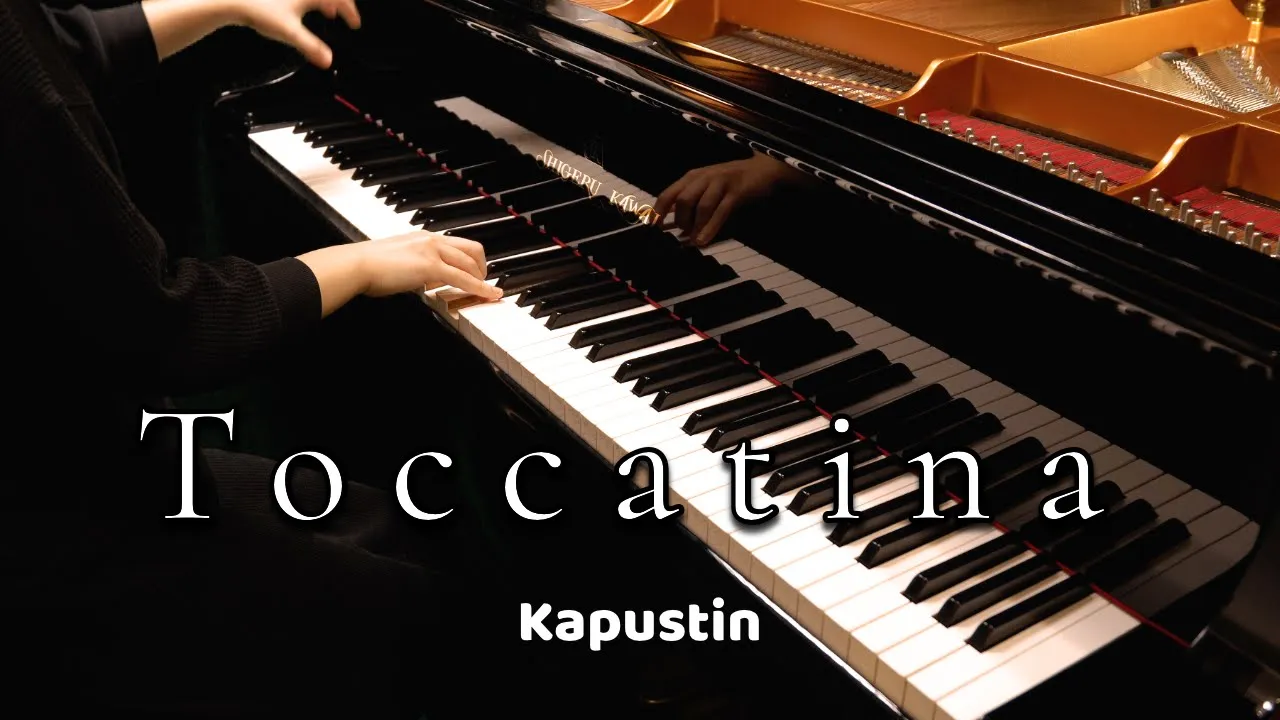
ToccatinaNikorai Kapūsuchin

Nikolai Kapustin is a great composer representing Ukraine.
His tricky, modernist musical style is captivating and has earned him very high praise from hardcore classical music enthusiasts around the world.
When it comes to his masterpieces, many people probably think of Toccattina.
This piece blends modern music with avant-garde jazz and is so demanding that even pianists trained in Vienna cannot take it lightly.

RailwaySharuru=Varantan Arukan

Charles-Valentin Alkan, a composer who epitomizes French Romanticism.
Among his many masterpieces, the piece known for being particularly difficult is Le chemin de fer (The Railroad).
This work demands both extraordinary finger stamina and agility, and from beginning to end it features dizzying leaps across the keyboard.
Hand-crossing is a given; in short, it’s a straightforwardly difficult piece to perform.
Although fewer pianists tackle it compared to his other works, I encourage you to compare performances by various pianists.
Transcendental Études No. 5 “Feux follets” (Will-o’-the-Wisps)Furantsu Risuto

Transcendental Etude No.
5, “Feux Follets.” It’s no exaggeration to call this piece a challenge from Franz Liszt across the ages, and it is a work in which finger agility is of paramount importance.
For those whose fingers naturally move quickly, “Mazeppa” might actually feel more difficult, but that doesn’t mean this piece requires no stamina or finger endurance at all.
It would be accurate to say that every element is demanded at a high level, with a particular focus on digital agility.
Among all works, this is a classical piece of especially high difficulty.
IslameyMirii Barakiefu

The group of nationalist Russian composers known as The Mighty Five.
You could think of them as something like a band today, and they were wildly popular in Russia at the time.
Mily Balakirev is known as the organizer of The Mighty Five, and nowadays he’s mostly judged in terms of his personality.
But he was a composer, too.
He left behind pieces of daunting difficulty that could be seen as a challenge to modern performers.
One of these is Islamey.
The leaps on the keyboard are tremendous, and even among advanced players, only those with real command can avoid wrong notes—an exceptionally difficult work.
Turkish MarchVorufuganggu Amadeusu Mōtsaruto

Wolfgang Amadeus Mozart’s famous piece, “Turkish March.” It’s beloved across a wide range of ages, from adults to children.
I think everyone has heard it at least once.
Because it’s so familiar, we tend to forget that it’s actually a technically demanding work that tests the performer’s skill.
While it’s not particularly artistic in the sense of requiring special expressive depth, if the fingers aren’t supple and agile, the performance can feel awkward.
That very requirement is both what makes the piece difficult and part of its appeal.
Mephisto WaltzFurantsu Risuto

Franz Liszt was a composer who also achieved success as a pianist.
He is a towering figure in the piano repertoire and left behind many technically demanding pieces.
Among his works, the Mephisto Waltz is often cited as an unusual piano piece.
While it is basically tonal in the conventional sense, its introduction is particularly unique, and if you stumble in the repeated-chord passages, the performance quality drops sharply—making it a distinctively challenging work.
Be sure to give it a listen.
Grand Cadenza of Piano Concerto No. 3Serugei Rafumaninofu

Sergei Rachmaninoff, a great composer who represents modern music.
The Moscow school style he developed under the influence of Tchaikovsky is overwhelming, and he left behind numerous masterpieces.
Among them, the “Grand Cadenza from Piano Concerto No.
3” is renowned for its extraordinary difficulty, said to be on another level even within Rachmaninoff’s oeuvre.
It would not be an exaggeration to call it the most difficult work among piano concertos: the leaps across the keyboard are ferocious, it demands great endurance, and its difficulty is such that even professionals tend to avoid performing it.