

[For Advanced Players] A Curated Selection of Classical Masterpieces to Tackle at Piano Recitals


As you become an advanced pianist, you’ll likely have more opportunities to tackle challenging pieces that feature rapid passages and intense position shifts.
Beyond technique, you may also encounter works with complex historical backgrounds or pieces that are difficult to grasp musically, which can cause you to stumble at times.
Playing pieces with these elements is a great chance for piano learners to take a major step forward!
This time, we’ve selected works that are known to be suited for advanced players from the perspectives of technique, expression, and interpretation alike.
If you’re looking to use a recital as a springboard to further expand your potential, please read on to the end.
- For Advanced Players: Showstopping Classics to Play at a Piano Recital
- [Advanced] Super cool if you can play it! Selection of famous piano pieces
- [For Adults] Recommended for Piano Recitals! A Curated Selection of Impressively Sounding Masterpieces
- [Intermediate Level] Cool Piano Pieces You Can Play [Great for Recitals Too]
- Piano Masterpieces: Surprisingly Easy Despite Sounding Difficult!? A Curated Selection Perfect for Recitals
- It’s so cool if you can play these on the piano! A selection of irresistibly charming masterpieces.
- [For Intermediate Players] Challenge Yourself! Recommended Masterpieces That Shine at Piano Recitals
- [Piano Recital] Perfect Pieces for Middle Schoolers! A Curated Selection of Impressive, Audience-Pleasing Works
- [Intermediate Level] A curated selection of piano masterpieces featuring strikingly brilliant melodies!
- Masterpieces of classical piano that are too beautiful for words. A gathering of delicate tones that cleanse the soul.
- [Advanced] Piano Duet Works | Exquisite Masterpieces to Savor the Rich, Weighty Sonorities of Four Hands
- [Classical Music] All pieces under 3 minutes! A collection of short and cool piano pieces
- Beginner to Intermediate: Chopin pieces with relatively low difficulty. Recommended works by Chopin.
[For Advanced Players] A Curated Selection of Classical Masterpieces to Tackle at Piano Recitals (21–30)
WaldsteinLudwig van Beethoven

Ludwig van Beethoven, known both as the culmination of the Classical era and a forerunner of the Romantic era.
Completed in 1804, this work stands as a representative piece from his middle period, positioned at the outset of his heroic decade.
Dedicated to Count Ferdinand von Waldstein, Beethoven’s friend and patron, the three-movement sonata demands a high level of both technical and musical prowess.
With a first movement that opens in a strong rhythm and a bright C-major theme, a second movement of contemplative character, and a lively, invigorating finale in the third movement, each section has its own distinct personality.
It is a highly recommended piece for pianists with solid technique and expressive capability.
Hungarian Rhapsody No. 2 in C-sharp minor, S.244Franz Liszt

Franz Liszt, the wizard of the piano, composed a total of 19 Hungarian Rhapsodies.
Among them, No.
2 is particularly well-known, and orchestral arrangements by Liszt himself and by Franz Doppler are frequently performed.
The piece is also notorious for its difficulty, with the cadenza near the end serving as a prime showcase for a pianist’s prowess.
Some pianists insert their own cadenzas to make the performance even more dazzling.
Even playing it strictly as written is demanding, but if you’re aiming for a performance brimming with originality, why not give it a try?

From the song cycle ‘Winterreise’: ‘Linden Tree’ S.561 R.246Schubert=Liszt

Franz Schubert’s song cycle Winterreise, composed based on poems by the German poet Wilhelm Müller.
The fifth song in this collection, Lindenbaum, renowned as a masterpiece of the German Lied, continues to captivate many with its sweet, enchanting melody—so beautiful, Schubert scholars have praised it as “almost unsingable.” Even when transformed into a grand piano work by the “wizard of the piano,” Franz Liszt, the original’s delicate beauty remains intact.
Although it demands advanced technique, don’t focus solely on virtuosity; listen to the original and let your imagination expand so you can convey the gentle world Schubert created.
Allegro for Concert in C-sharp majorEnrique Granados

A virtuoso masterpiece by Enrique Granados, who also left a brilliant legacy as one of Spain’s great pianists.
Characterized by dazzling chords and arpeggios and a brilliant Liszt-inspired style, this captivating work was composed between 1903 and 1904.
Built on sonata form, it is a demanding piece that requires advanced technique and expressive depth throughout.
By taking on the challenge, you can fully experience the allure of Spanish music.
It’s a perfect choice for those who want to savor the piano’s full appeal or aim to elevate their technique.
Kreisleriana, Op. 16 No. 7Robert Schumann

This piece is marked by its intensely passionate and dramatic expression.
Its rapid tempo combined with the key of C minor grips the listener from the start.
Though it lasts only about two minutes and thirty seconds, it distills Robert Schumann’s inner turmoil and passion.
The repeated arpeggios with fierce accents heighten the tension, and the contrast with the fugal middle section is striking.
Composed in 1838, it dates from a period when Schumann was suffering under opposition to his marriage to Clara Wieck.
It fully showcases the Romantic era’s hallmark richness of emotional expression, and it is a work that tests both pianistic technique and interpretive depth.
A masterpiece recommended for anyone seeking the profound emotional impact of classical music.
Rondo Capriccioso, Op. 14, U 67, E majorFelix Mendelssohn
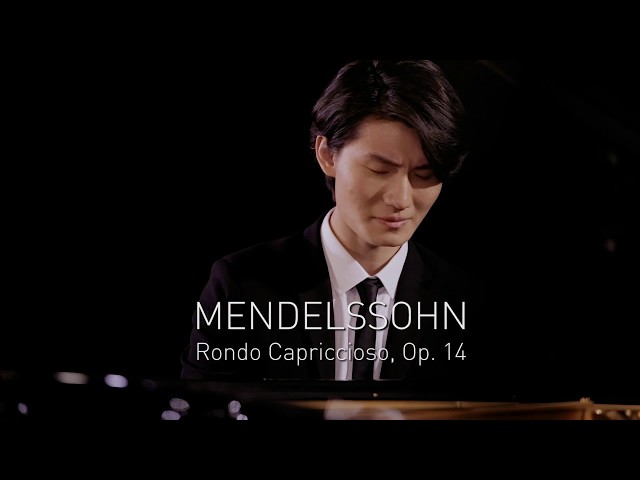
Among Felix Mendelssohn’s piano works, one of the most beloved pieces is Rondo Capriccioso in E major, Op.
14 (U 67).
It is said to be an expansion of his Etude in E major—written for his first love—to which he later added the gentle introductory section.
While not the most technically demanding at the highest level, it calls for delicate touch and a wide expressive range.
Perform it with abundant nuance—romantically and passionately.
Impromptu No. 4 in C-sharp minor, posthumous, Op. 66 “Fantaisie-Impromptu”Frederic Chopin

Among Frédéric Chopin’s four impromptus—he being a quintessential composer of the Romantic era—this is the first to have been written and is today one of the most widely known.
Many listeners can recognize the piece the moment the opening octave sounds.
Because the left hand divides each beat into six parts and the right hand into eight, it may be difficult at first to get the feel for playing both hands together.
With practice, however, you’ll naturally learn to align the downbeats.
Composed in 1834, this is one of the works Chopin did not publish during his lifetime.
Keep practicing patiently!