

[For Advanced Players] A Curated Selection of Classical Masterpieces to Tackle at Piano Recitals


As you become an advanced pianist, you’ll likely have more opportunities to tackle challenging pieces that feature rapid passages and intense position shifts.
Beyond technique, you may also encounter works with complex historical backgrounds or pieces that are difficult to grasp musically, which can cause you to stumble at times.
Playing pieces with these elements is a great chance for piano learners to take a major step forward!
This time, we’ve selected works that are known to be suited for advanced players from the perspectives of technique, expression, and interpretation alike.
If you’re looking to use a recital as a springboard to further expand your potential, please read on to the end.
- For Advanced Players: Showstopping Classics to Play at a Piano Recital
- [Advanced] Super cool if you can play it! Selection of famous piano pieces
- [For Adults] Recommended for Piano Recitals! A Curated Selection of Impressively Sounding Masterpieces
- [Intermediate Level] Cool Piano Pieces You Can Play [Great for Recitals Too]
- Piano Masterpieces: Surprisingly Easy Despite Sounding Difficult!? A Curated Selection Perfect for Recitals
- It’s so cool if you can play these on the piano! A selection of irresistibly charming masterpieces.
- [For Intermediate Players] Challenge Yourself! Recommended Masterpieces That Shine at Piano Recitals
- [Piano Recital] Perfect Pieces for Middle Schoolers! A Curated Selection of Impressive, Audience-Pleasing Works
- [Intermediate Level] A curated selection of piano masterpieces featuring strikingly brilliant melodies!
- Masterpieces of classical piano that are too beautiful for words. A gathering of delicate tones that cleanse the soul.
- [Advanced] Piano Duet Works | Exquisite Masterpieces to Savor the Rich, Weighty Sonorities of Four Hands
- [Classical Music] All pieces under 3 minutes! A collection of short and cool piano pieces
- Beginner to Intermediate: Chopin pieces with relatively low difficulty. Recommended works by Chopin.
[For Advanced Players] A Curated Selection of Classic Masterpieces to Challenge at Your Piano Recital (41–50)
Pictorial Études ‘Pictures at an Exhibition’ Op. 33 No. 1 in F minorSergei Rachmaninov

Etudes-Tableaux is a collection of 18 solo piano pieces in two volumes.
Composed in 1911, Op.
33 is known as a set of etudes requiring transcendental technique, though No.
1 is considered relatively less difficult.
It contains phrases reminiscent of Chopin’s Etude Op.
25 No.
4, and Sergei Rachmaninoff himself jokingly remarked that he composed it while listening to Chopin.
It’s quite a challenging piece, but let’s enjoy practicing it while comparing it with Chopin’s work.

[For Advanced Players] Carefully Selected Classical Masterpieces to Tackle at Piano Recitals (51–60)
Legend S.175 No. 2 “St. Francis of Paola Walking on the Waves”Franz Liszt

Even when we speak broadly of “difficult pieces,” there are many kinds.
Some, like Mazeppa, are difficult in a single, concentrated way, while others, like Toccata, are challenging because they incorporate every conceivable technique.
The piece introduced here, Legend S.175 No.
2 “St.
Francis of Paola Walking on the Waves,” belongs to the latter category.
Liszt’s distinctive fingering is clearly reflected in this work as well, and it also demands a fair amount of stamina.
Because there are so many techniques one must cover, it can feel more difficult than one might judge from a typical piece.

Piano Sonata No. 18, K. 576Wolfgang Amadeus Mozart

The last piano sonata completed by Wolfgang Amadeus Mozart.
Composed in 1789 for a Prussian princess, this work was not published during Mozart’s lifetime and first appeared in 1805.
Marked by contrapuntal passages that demand advanced technique, it is considered one of the most difficult among Mozart’s piano sonatas.
Performing it at a recital will surely boost your confidence! Don’t be afraid—give it a try!
Fantasy Pieces: Prelude in C-sharp minor, Op. 3 No. 2 “The Bell”Sergei Rakhmaninov
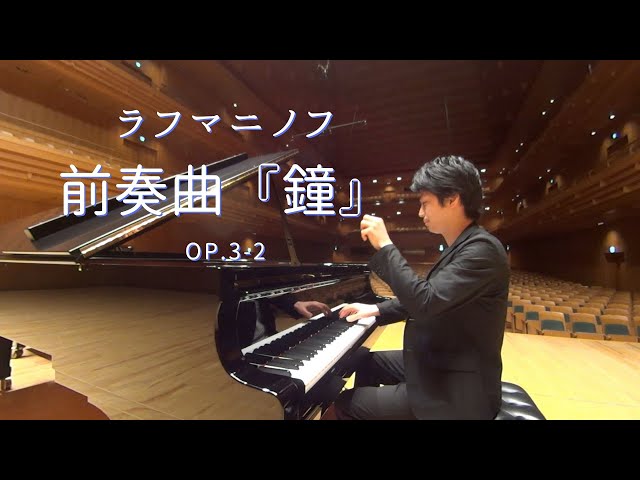
Sergei Rachmaninoff, a Russian composer who was tremendously active in the 1890s.
His Prelude in C-sharp minor, Op.
3 No.
2, from Morceaux de fantaisie (“The Bells”), is among his most famous works.
Because Rachmaninoff had exceptionally large hands, this piece also requires the ability to comfortably span a tenth.
Performing works written to Rachmaninoff’s ‘specifications’ is truly a daunting task for those with smaller hands! That said, the bell-like passages and continuous octaves are dazzling and highly effective in performance, making this piece an excellent choice for those seeking maximum impact for the listener.
Scherzo No. 1 in B minor, Op. 20Frederic Chopin

When it comes to composers known for works that push technical boundaries, many people think of Franz Liszt, but Frédéric Chopin is no slouch either.
His celebrated Scherzo No.
1 in B minor, Op.
20 is known as a highly demanding piece that uses dissonance to great effect.
Because consonance and dissonance intermingle with varying intensity, the work demands both expressive nuance and technical prowess.
In particular, the dissonant phrases that descend from the high register to the low at the beginning are the hallmark of the piece, so I recommend focusing your practice on them.
Fantasiestücke, Op. 12 No. 2 “Aufschwung”Robert Schumann

The second piece, “Flying” from the set of eight piano miniatures Fantasy Pieces, Op.
12, is frequently performed at competitions, recitals, and concerts.
Many piano students are captivated by the striking contrast between the powerful minor-key opening and the sweet, gentle major-key section, and find themselves longing to play it.
To fully convey its dramatic development through the piano’s sound, practice not only technique but also pay close attention to dynamics and expressive markings.
The other seven pieces are also compelling—be sure to give them a try!
Etude Collection (Studies) No. 4, Op. 10-4 in C-sharp minorFrederic Chopin

A fiercely passionate piece that grips the listener’s heart and won’t let go.
Its rapid sixteenth-note passages and continuous intricate figures in both hands create an impact like a storm.
Composed in August 1832, this work is acclaimed as having artistic value that far surpasses a mere study.
It is recommended not only for those aiming to improve their piano technique, but also for anyone who loves passionate music.
While the performance demands advanced technique, the sense of accomplishment is all the greater.
If you want to experience the appeal of classical music, why not give it a try?