

[For Advanced Players] A Curated Selection of Classical Masterpieces to Tackle at Piano Recitals


As you become an advanced pianist, you’ll likely have more opportunities to tackle challenging pieces that feature rapid passages and intense position shifts.
Beyond technique, you may also encounter works with complex historical backgrounds or pieces that are difficult to grasp musically, which can cause you to stumble at times.
Playing pieces with these elements is a great chance for piano learners to take a major step forward!
This time, we’ve selected works that are known to be suited for advanced players from the perspectives of technique, expression, and interpretation alike.
If you’re looking to use a recital as a springboard to further expand your potential, please read on to the end.
- For Advanced Players: Showstopping Classics to Play at a Piano Recital
- [Advanced] Super cool if you can play it! Selection of famous piano pieces
- [For Adults] Recommended for Piano Recitals! A Curated Selection of Impressively Sounding Masterpieces
- [Intermediate Level] Cool Piano Pieces You Can Play [Great for Recitals Too]
- Piano Masterpieces: Surprisingly Easy Despite Sounding Difficult!? A Curated Selection Perfect for Recitals
- It’s so cool if you can play these on the piano! A selection of irresistibly charming masterpieces.
- [For Intermediate Players] Challenge Yourself! Recommended Masterpieces That Shine at Piano Recitals
- [Piano Recital] Perfect Pieces for Middle Schoolers! A Curated Selection of Impressive, Audience-Pleasing Works
- [Intermediate Level] A curated selection of piano masterpieces featuring strikingly brilliant melodies!
- Masterpieces of classical piano that are too beautiful for words. A gathering of delicate tones that cleanse the soul.
- [Advanced] Piano Duet Works | Exquisite Masterpieces to Savor the Rich, Weighty Sonorities of Four Hands
- [Classical Music] All pieces under 3 minutes! A collection of short and cool piano pieces
- Beginner to Intermediate: Chopin pieces with relatively low difficulty. Recommended works by Chopin.
[For Advanced Players] A Curated Selection of Classical Masterpieces to Tackle at Piano Recitals (21–30)
The Flight of the BumblebeeNikolai Rimsky-Korsakov
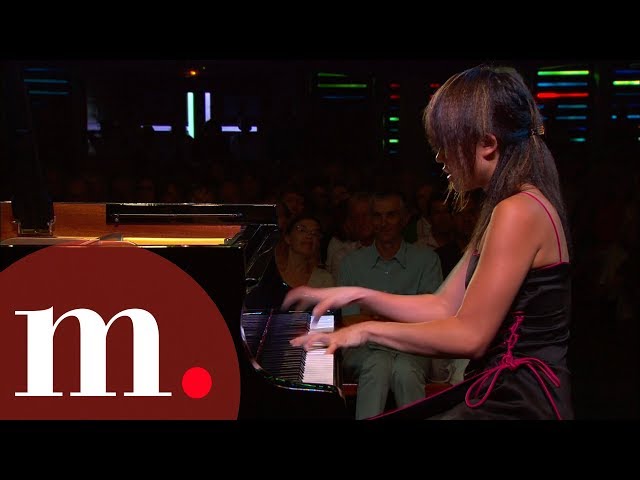
A colorful orchestral piece by the Russian composer Nikolai Rimsky-Korsakov.
Depicting a scene from the opera The Tale of Tsar Saltan, this work is a short interlude that portrays the flight of a bumblebee.
It is characterized by rapid, continuous sixteenth notes and is known as a piece that tests performers’ skills due to its technical difficulty.
Composed between 1899 and 1900, it enjoys popularity as a standalone work despite being part of an opera and has been arranged for various instruments.
With its brilliant melody and dynamic rhythm, it is an appealing piece recommended for advanced players seeking to hone their technique.
Nocturne No. 8, Op. 27 No. 2Frederic Chopin

Among Chopin’s many challenging works, one I particularly recommend is his Nocturne No.
8 in D-flat major, Op.
27, No.
2.
Chopin is known for his intricate left-hand accompaniment patterns, and this piece is no exception, featuring arpeggiated figures with wide leaps.
The ornamented variations in the right-hand melody are also striking, introducing improvisatory passages rich in non-harmonic tones.
Moreover, as the piece progresses, these elements appear with increasing frequency, making it, despite its serene character, a highly demanding work that requires considerable skill.

[For Advanced Players] A Curated Selection of Classical Masterpieces to Challenge at Piano Recitals (31–40)
The Alps at sunsetTheodor Oesten

Theodor Oesten was a piano teacher and composer active in 19th-century Germany.
Born in Berlin in December 1813, Oesten was familiar with music from a young age.
This piece is a short work that depicts the beauty of the Alps at dusk.
It is characterized by rich harmonies and melodies, evoking a romantic sentiment.
Reflecting the 19th-century tradition of expressing beautiful natural landscapes through music, this work invites you to perform it while imagining Alpine scenery.
It’s a piece that fully showcases the piano’s appeal, so give it a try!
Ballade No. 1 in G minor, Op. 23Frederic Chopin

Among Chopin’s works, the Ballade No.
1 in G minor, Op.
23 is especially famous for its demanding right hand.
Except for the opening and the ending, it is written in 6/4 time.
In other words, it follows a “boom–ta-ta” rhythm.
Over this rhythmic base, the right-hand melody develops with many off-beat accents.
To begin with, 6/4 time is not a familiar rhythm for many Japanese listeners.
Maintaining this rhythm while playing a complex melody is challenging in itself.
As for the coda, it is extremely effective in performance, but the difficulty is correspondingly overwhelming, so be sure to listen with the ending in mind.
Impromptu FP 176 No. 15 in C minor “In Praise of Édith Piaf”Francis Poulenc

Among the fifteen piano Improvisations composed by the French composer Francis Poulenc, the piece Hommage à Édith Piaf enjoys great popularity for its sweet, bittersweet atmosphere.
As its title suggests, it is dedicated to Édith Piaf, the chanson singer who remains a beloved national icon of France, and its main theme incorporates a motif from the chanson classic Autumn Leaves.
To bring out the piece’s mature character, careful control of pacing and dynamics is essential.
Listening to actual chansons and studying approaches to tempo rubato and phrasing may help refine your interpretation.

Four Études, Op. 2 No. 1Sergei Prokofiev

This piece is by Sergei Prokofiev, one of the defining composers of the 20th century.
Composed in 1909 when he was just 18, the first of his Four Etudes, Op.
2, showcases Prokofiev’s originality and technical prowess.
Marked by complex rhythms and a powerful musical voice, it tests both the performer’s technique and expressiveness.
Written in D minor, the work is brief yet passionate and challenging.
Why not perform this valuable piece—one that offers a glimpse of his burgeoning talent—at your next recital?
Piano Sonata No. 3 in B minor, Op. 58, Fourth MovementFrederic Chopin

Chopin’s masterpiece Piano Sonata No.
3 in B minor, Op.
58, Fourth Movement is striking for its intensity and brilliance.
The highlights of this work are undoubtedly the opening and the finale.
The opening, with its repeated modulations, creates an overwhelming sense of immersion.
The ending, characteristic of the rondo form, culminates in a fierce, driving conclusion.
This piece is also renowned for its high level of difficulty.
In particular, the third edition/version is exceptionally demanding, so be sure to check it out.