

Challenge Pokémon senryu! From laugh-out-loud gags to outstanding works

Pokemon and senryu may seem like an unlikely pairing at first, but when these two meet, they can produce verses that make you chuckle.
Why not peek into the world of Pokemon senryu, where the 5-7-5 rhythm captures the traits of Pokemon, the frustrations of battles, and those little moments of everyday life? From lines you can relate to, to ones that make you think, “I never would’ve thought of that!”, there’s a collection that any Pokemon fan will enjoy.
Be sure to find your favorite verse!
- Burst out laughing! A collection of outstandingly brilliant otaku senryu masterpieces
- Funny senryu poems composed by junior high school students: introducing outstanding works that will make you burst out laughing
- A chuckle-worthy collection of masterful senryu poems themed around sushi toppings
- Parenting Senryu: Relatable Parenting Moments That Make You Say “So True!” Turn Everyday Struggles into Laughter with Senryu
- Senryu about goldfish. A collection of works filled with love for goldfish.
- Irresistible reads! A collection of classic and outstanding humorous golf senryu
- [Traffic Safety Senryu] Outstanding works shining with humor and lessons. A carefully selected line to always keep in mind.
- [Elementary School Senryu] A Collection of Hilarious Masterpieces about Summer Vacation, Friends, and School Life. Tips and Explanations Learned from Outstanding Works
- Funny senryu with the theme of toilets. Presenting a selection of masterpieces and gems all at once
- [Pokémon Trivia] A collection of quizzes you’ll want to share with friends. A compilation of questions that can be enjoyed across generations
- [For Elementary School Students] Turn Summer Memories into Haiku! A Collection of Fun Summer Haiku Ideas
- Origami Pokémon! A collection of simple and cute character ideas
- Nagoya dialect tongue twisters are exquisite! A fun collection where your tongue gets tied in knots with regional dialects
Try your hand at Pokémon senryu! From laugh-out-loud gags to brilliant gems (1–10)
Oshawott’s move lands—double circle!

The charm of this verse lies in the playful closeness of the sounds.
By directly linking the name’s ring to “double circle,” meaning “full marks,” it gently and humorously conveys that the move was executed perfectly.
The middle line, “the technique lands,” gives a clear through-line to the wordplay before and after it, creating a structure that lets the scene come into focus.
Without saying anything complicated, it conveys a warm, tender tone that makes you smile and think, “I’m glad it went well.” The rhythm of the words is straightforward and easy to read, making it a lively verse that even children can enjoy saying aloud.

Got hit by Raikou’s electric shock—wha, Raikou-chan?!
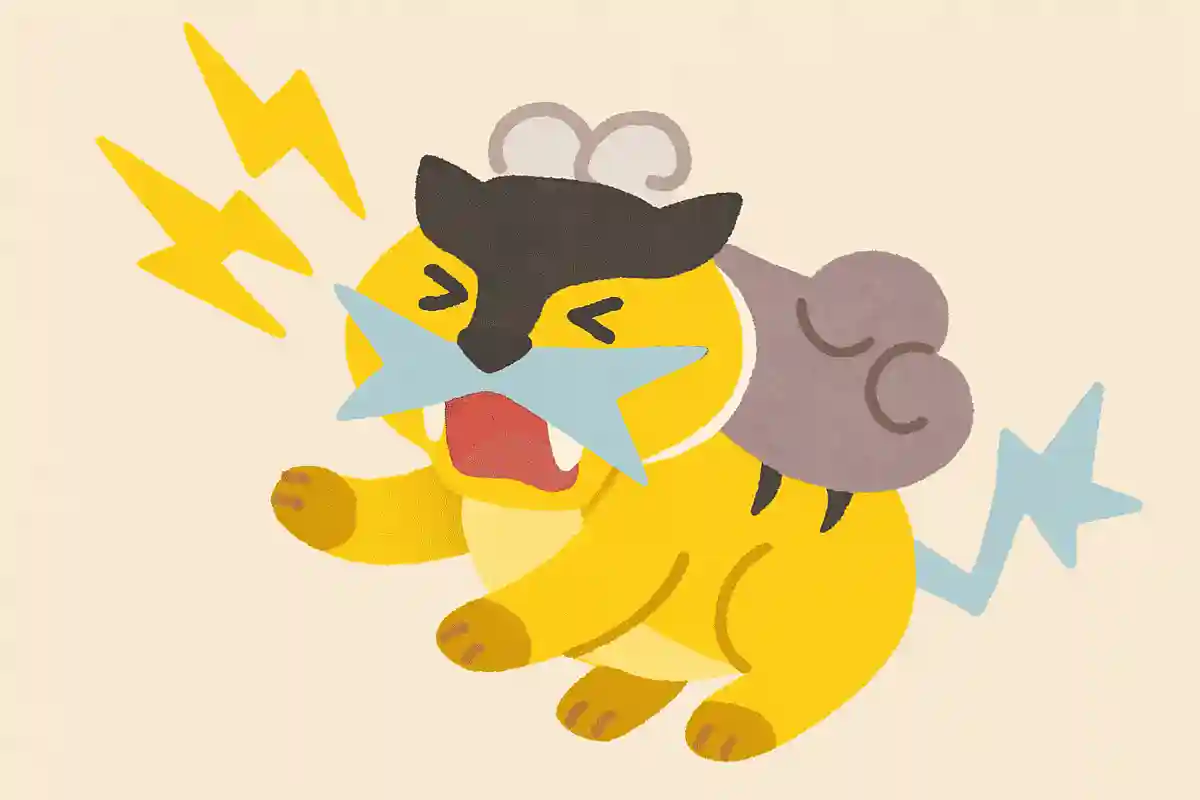
This is a senryu that makes you laugh through the force of its sound, layering the impact of the move with a Kansai-style reaction.
Even though the subject is getting hit by a powerful electric shock, it’s brilliantly wrapped up not with pain or fear, but with a lighthearted quip, “Eh, Raikou-cha,” like a quick Kansai retort.
That sudden shift in tone, turning something serious into a joke in an instant, feels wonderfully satisfying.
On top of that, the gap between the coolness of the legendary Pokémon “Raikou” and the thick, old-school Kansai reaction works doubly well, making for a perfect punchline.
Though it’s a pun, it never feels forced—the rhythm, sound, and overall worldbuilding mesh tightly—resulting in a highly polished verse.
Ten years ago: Milotic’s wife; now a Feebas.

By swapping the beautiful Pokémon Milotic with its plain pre-evolution Feebas, the piece expresses the passage of time and the honest feelings of a married couple.
What’s interesting is that it’s not merely poking fun at a change in appearance.
Ten years ago, it symbolized admiration and a sense of specialness, which gradually becomes ordinary in daily life.
That reality is tucked away in the casual tone.
It’s a bit cheeky, but there’s a hint of self-deprecation, striking a perfect balance that lets the reader get by with a wry smile.
You could say it’s a highly polished verse as a metaphor, cleverly turning the Pokémon evolution concept on its head.
Try your hand at Pokémon senryu! From laugh-out-loud jokes to outstanding works (11–20)
Sandpan: three times bread—morning, noon, and night.

This piece is a verse centered on overlapping sounds.
By pairing the resonance of the name with the everyday phrase “morning, noon, and night,” it conjures a humorous scene of “bread at every meal.” The combination of playful word feel and everyday subject matter leads naturally to a straightforward laugh.
The three-line structure is easy to follow, flowing neatly from the characters, to the scene, to the wordplay punchline.
Without resorting to difficult explanations, it’s balanced in a way that makes it easy for the reader to catch the spark, making for a pleasant verse.
As a senryu that elicits smiles through the fun of puns and the familiarity of everyday life, it’s a highly polished work.
It’s so cold— the dugong’s home is ice, I’m sick of it.

It’s distinctive for beginning with the simple line, “It’s cold,” a gentle phrase that reads like a gripe or a mutter and instantly draws the reader into an everyday sense of temperature.
Layering in the premise of “a dugong living in an icy sea” creates a light comedic gap: a Pokémon that ought to be hardy in the cold is letting out a little whine.
The final “kōri-gori” is a wordplay on “kōri” (ice) and “koregori” (fed up).
It’s a pun, but the polite lead-in of “back home…” connects the situation smoothly, guiding us to the punch line without strain.
The sounds are soft as well, making the whole verse a gentle piece that wraps a cold world in warm humor.
There’s a coil perched on the power line.

The name itself is seamlessly woven into a natural Japanese word order, and the way the situational description of “there’s one on the power line” lines up with the Pokémon’s name without any sense of incongruity is what makes it amusing.
The scene is very easy to picture too—you can clearly imagine a single metallic Coil perched on a power line.
Because it’s constructed with a matter-of-fact phrasing rather than a showy description, the punchline doesn’t shout; it lingers as a quiet kind of humor, which is also appealing.
It’s also clever how the pairing of the words “densen” (power line) and “Coil” subtly overlaps with the Electric type’s characteristics.
Even though it’s a light pun, it works out to a convincing verse.
Nidorino pokes with its horn and gets angry-no.
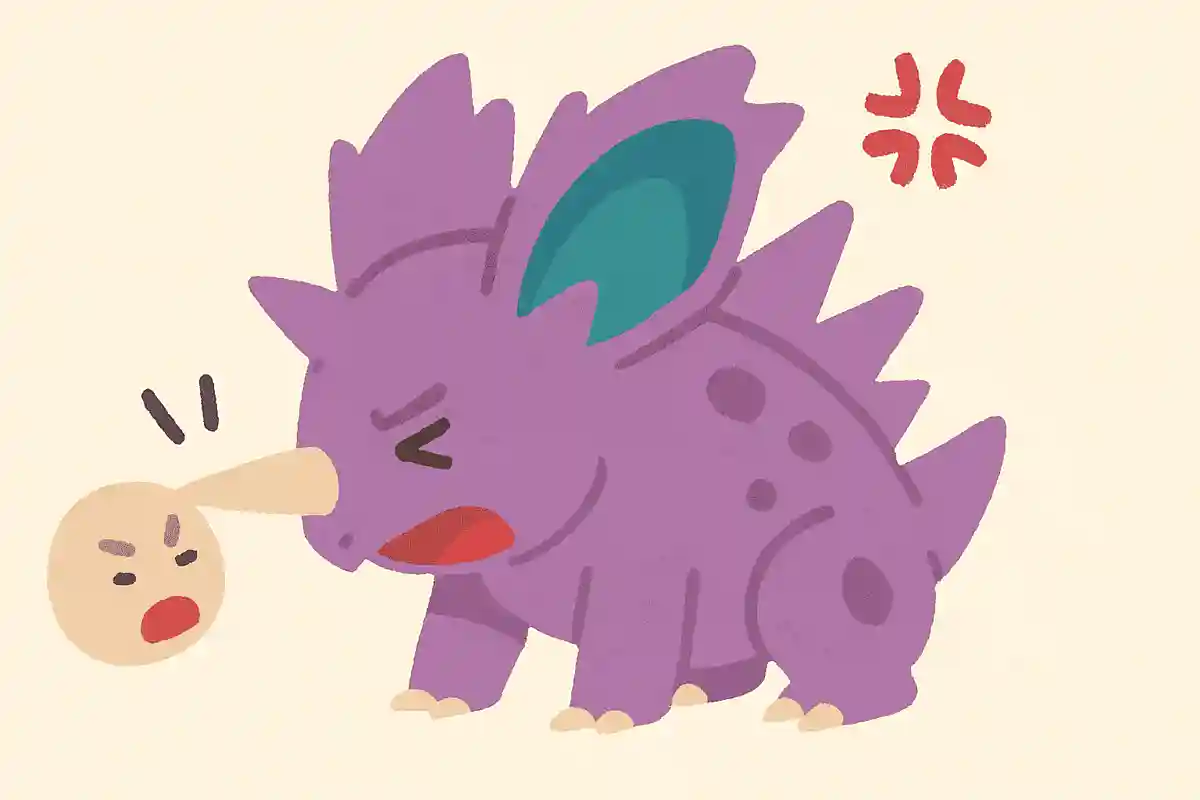
The charm of this verse, first and foremost, lies in the wordplay of matching the endings of “Nidorino” and “okorīno” (“gets angry”).
By carrying the sound of the name straight through to the conclusion and using it as the punchline, it sticks in your head with a snappy rhythm.
The content is a very easy-to-grasp single scene: “It gets poked by a horn and gets angry.” Even without any complicated explanation, a comical exchange comes to life.
The phrase “poked with a horn” is straightforward, and the childlike way of speaking fits nicely with the light tone of the entire verse.
It’s an accessible piece that even people who don’t know Pokémon can enjoy purely for its sound.