

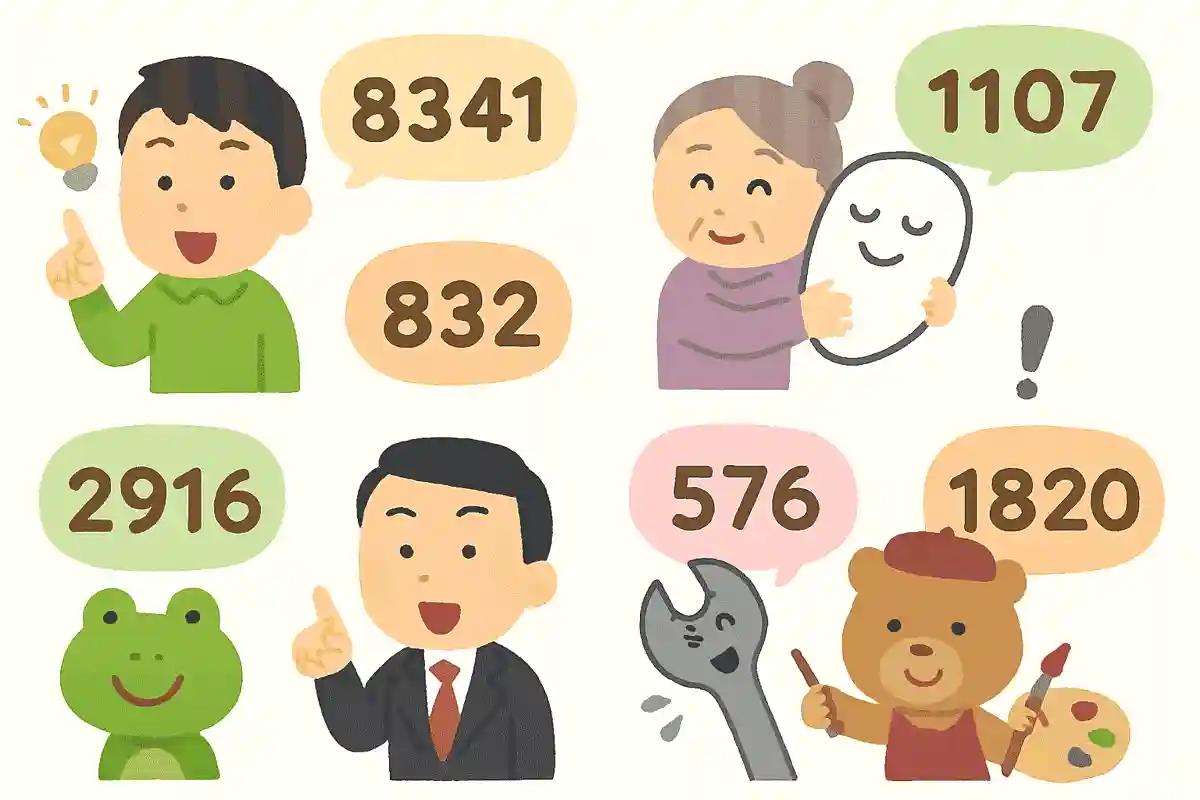
Easy to remember and fun! A collection of number pun/mnemonic ideas

Just like reading “4649” as “yoroshiku,” these are puns that combine numbers and words.
While they’re often introduced as a tip for memorizing historical dates, they also come in handy in unexpected places—like making November 22nd “Good Couple Day,” putting nicknames on class T-shirts, or choosing a car license plate number.
This time, I’ll introduce some easy-to-remember and fun number-word puns.
You can also use them as quiz-style recreational activities.
Be sure to try creating your own original ones, too.
Easy to remember and fun! A collection of number pun ideas (1–10)
8341 / gentle
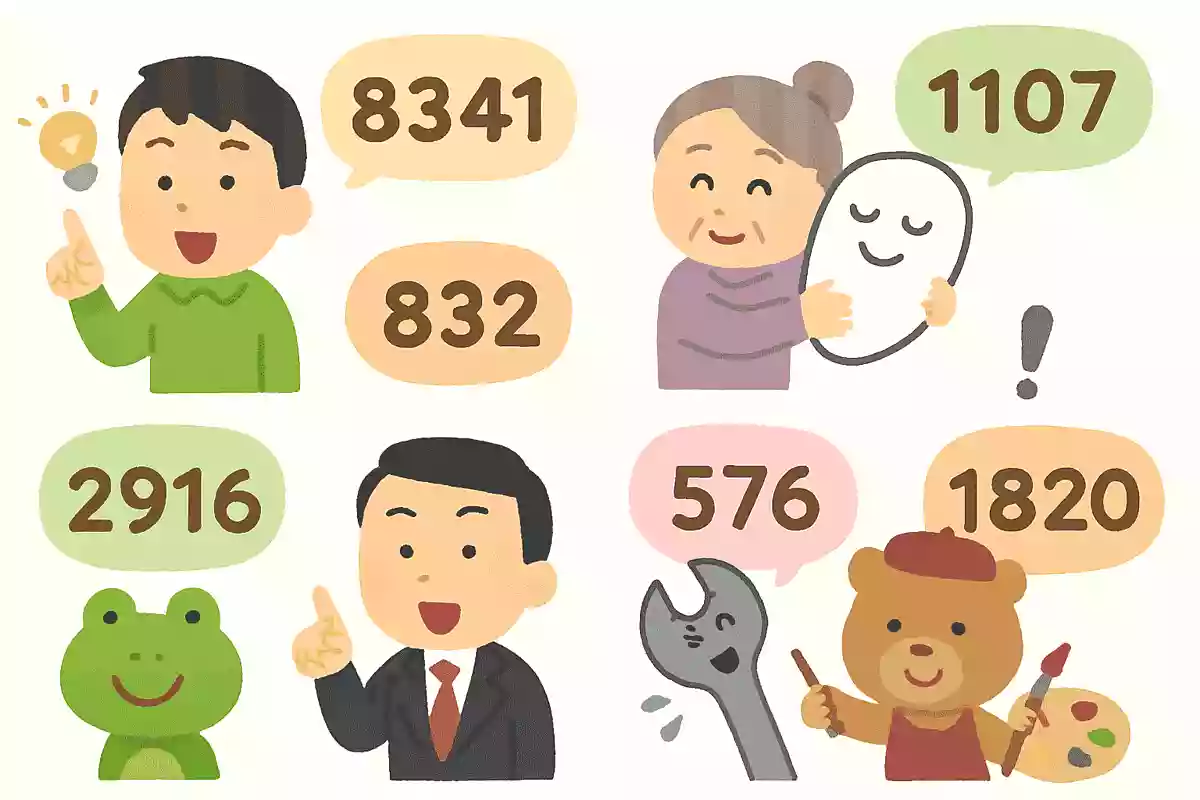
Mnemonic number wordplay is handy for memorizing timelines in history and such, but perhaps the pager generation used those numeric mnemonics more than anyone else.
When I got a pager message from the company reading “88951,” I’d hurry back to the office.
“88951” was a mnemonic for hayaku koi—‘come quickly.’ Compared to that, the “8241” I’m introducing here is much more yasashii—‘gentle’ or ‘kind.’ It’s a mnemonic that’s easy on the eyes and soothing to the heart when you read it.
It’s the kind of number wordplay you’d want to use suggestively even on LINE!
104/Angel
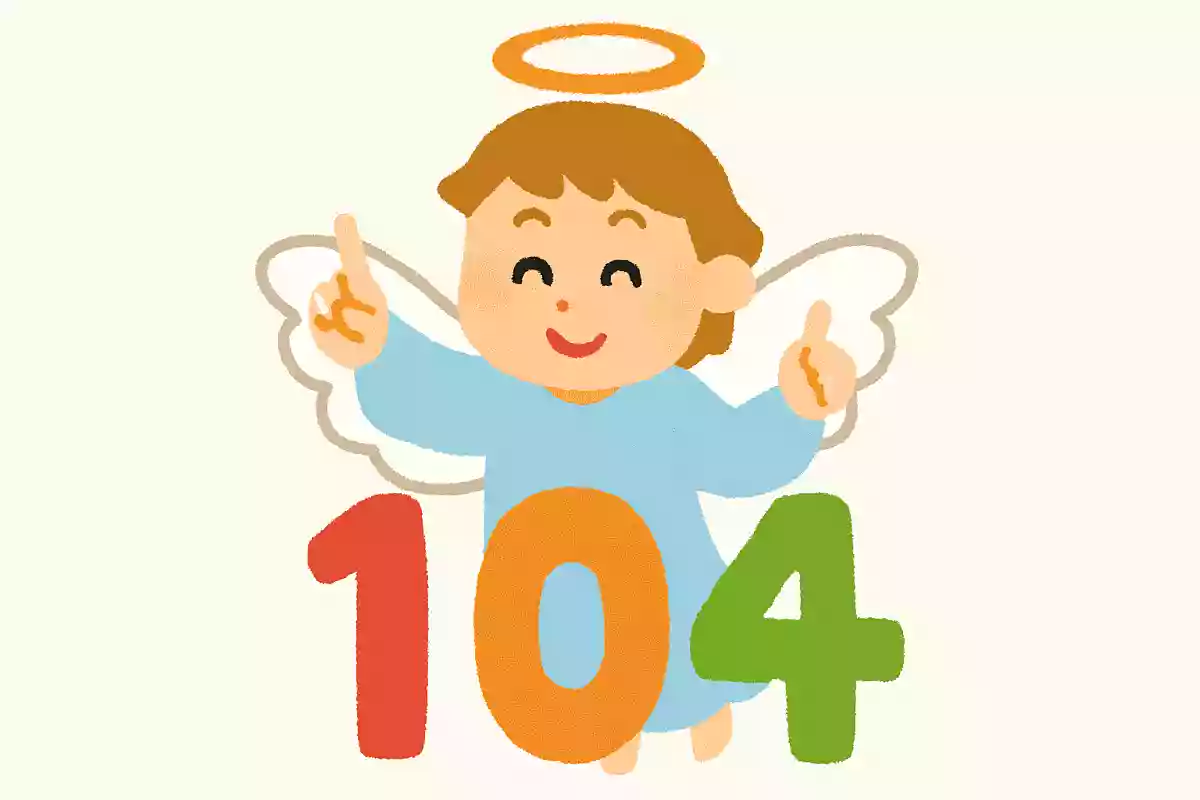
Useful for fan activities, too! Here are some ideas for using “104/Angel.” Many of you have probably looked at your favorite idol, artist, or anime character and thought, “They’re an angel!” Try using the wordplay of “104/Angel” not only for social media usernames, email addresses, and class T-shirt numbers, but also as your own lucky number that makes you happy whenever you see it.
For example, a product priced at 104 yen or a car with a .104 number—every time you spot it, it might remind you of your fave.
4649 / Yoroshiku
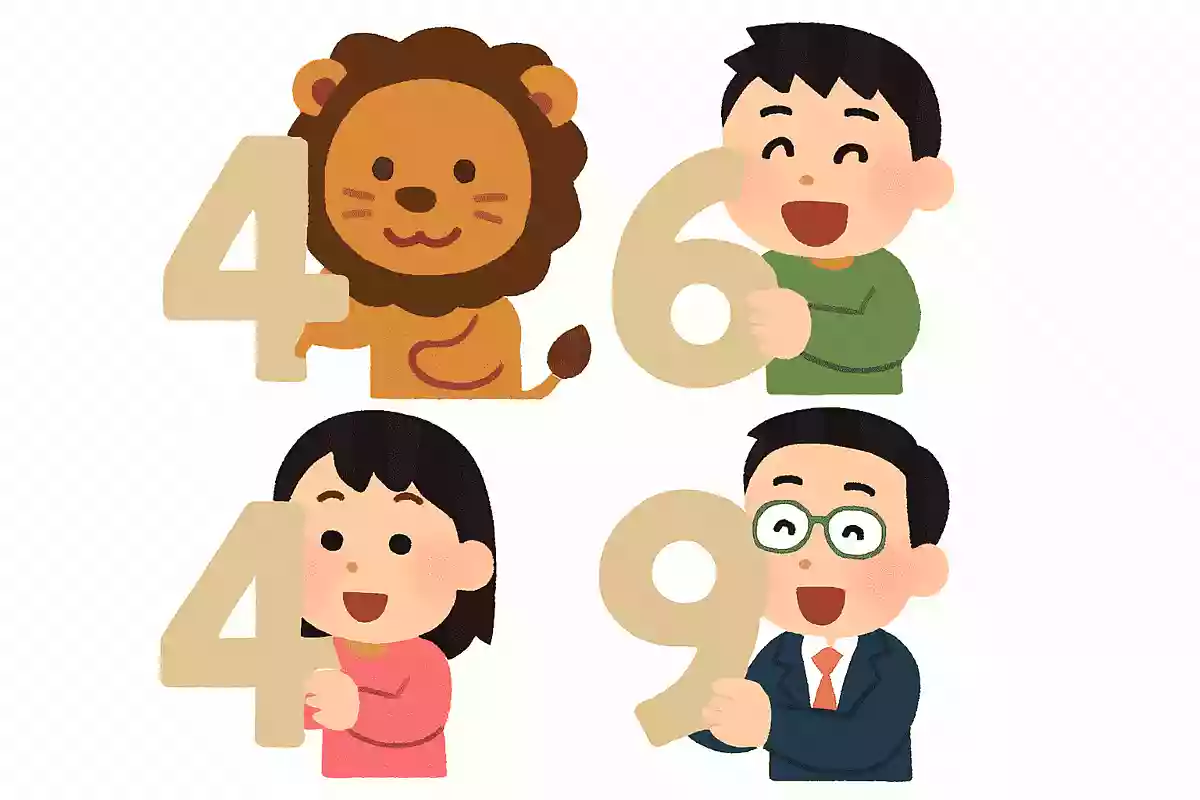
A casual greeting you can use anytime! Here’s the idea behind “4649 / yoroshiku.” It wouldn’t be an exaggeration to say this is one of the most popular number-based wordplays in Japanese.
It’s said to have been used back in the days before cell phones became widespread, on pagers—small wireless beepers.
Why not make it a go-to code with friends or in messaging apps? This could be a great chance to explore other number puns too.
Give it a try and work it into your routine!
39 / Thank you
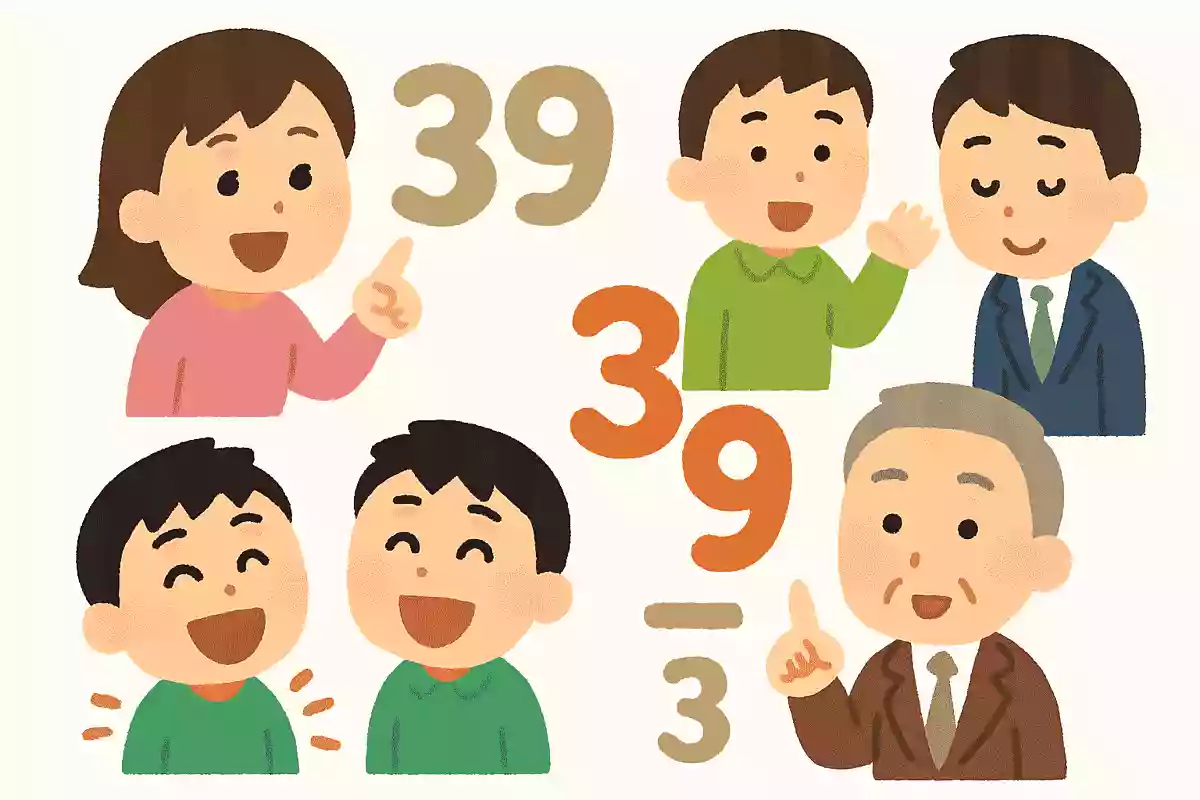
Easy to use with fewer characters! Here are some ideas for using “39/Sankyu.” How about using “39” as a casual wordplay for people you’re close with, like friends or family? It takes fewer keystrokes than typing “arigatou” or “thank you,” which is nice and convenient.
Plus, if you suddenly start using it, it might feel like a secret code and make the other person curious.
These days, it’s easy to express your feelings with stickers in chat apps, but deliberately using number wordplay in your conversations could be fun too.
Chirps (794) the bush warbler—Heian-kyō.
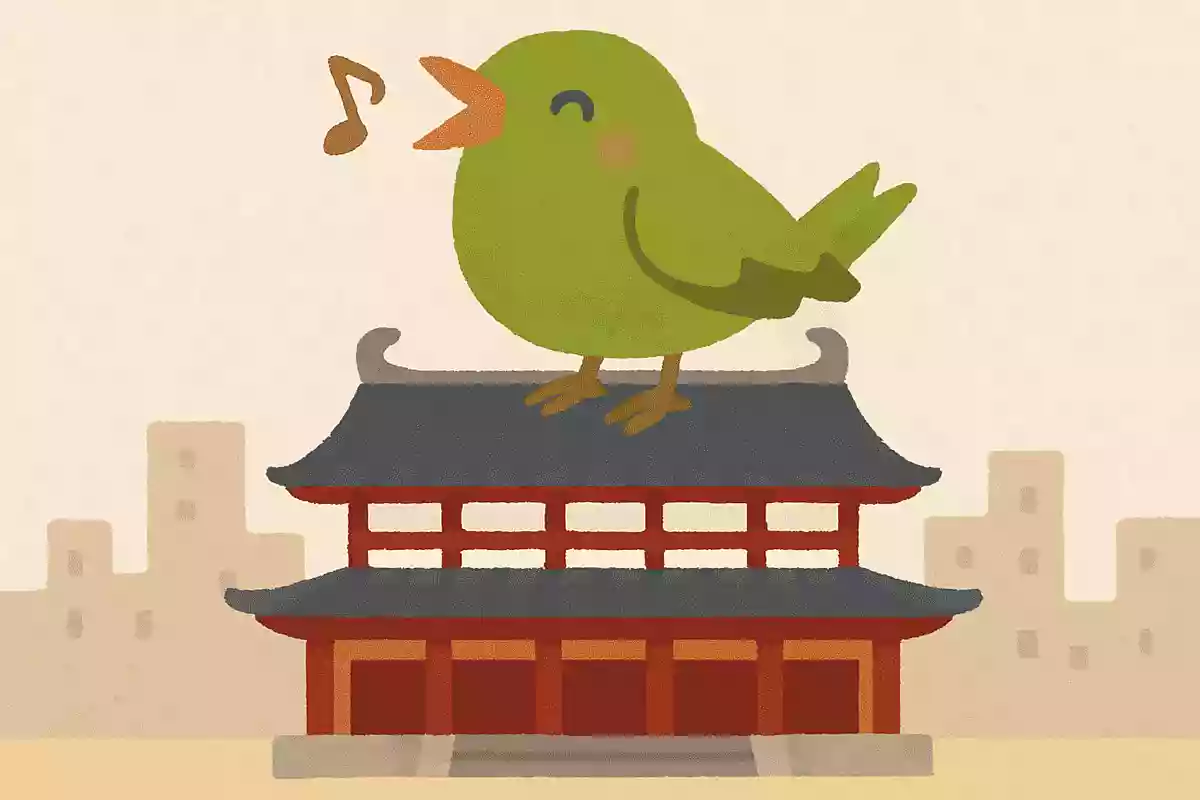
Everyone used to memorize it as “In 1192, a good country—Kamakura shogunate,” but nowadays it’s no longer considered that the Kamakura shogunate was founded in 1192, and history textbooks have changed in various ways.
Since the mnemonic is so catchy, you kind of wish they’d just leave it as 1192, right? There’s also the classic mnemonic that stands shoulder to shoulder with the Kamakura one: “794—when the bush warbler sings, Heian-kyō.” The pairing of the bush warbler and Heian-kyō is brilliant, showing the cleverness of whoever came up with it.
Writing it as “794—naku yo” also feels perfectly natural, and wouldn’t it be wonderful if every date in history were as easy to remember as these?
2574 / No accidents
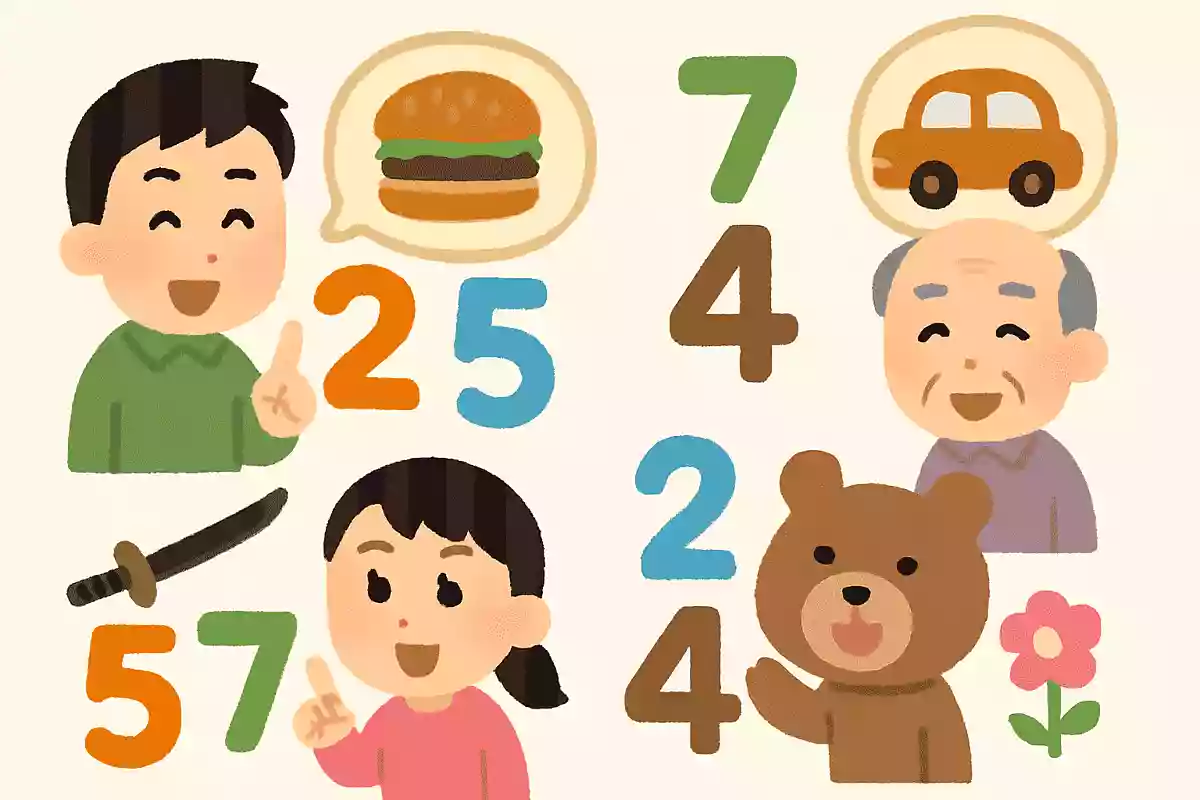
I want to use this on a license plate! Let me introduce the idea of “2574 / jiko nashi” (no accidents).
If you have a chance to choose your number, such as when you buy your first car, this wordplay is highly recommended.
Even if you drive safely, the possibility of getting into an accident is scary.
With a bit of a protective charm in mind, try using “2574 / jiko nashi.” Every time the number catches your eye, it might tighten your focus and encourage even safer driving.
If you don’t have a special number in mind, this could be a great one to adopt.
3150 / Saikō
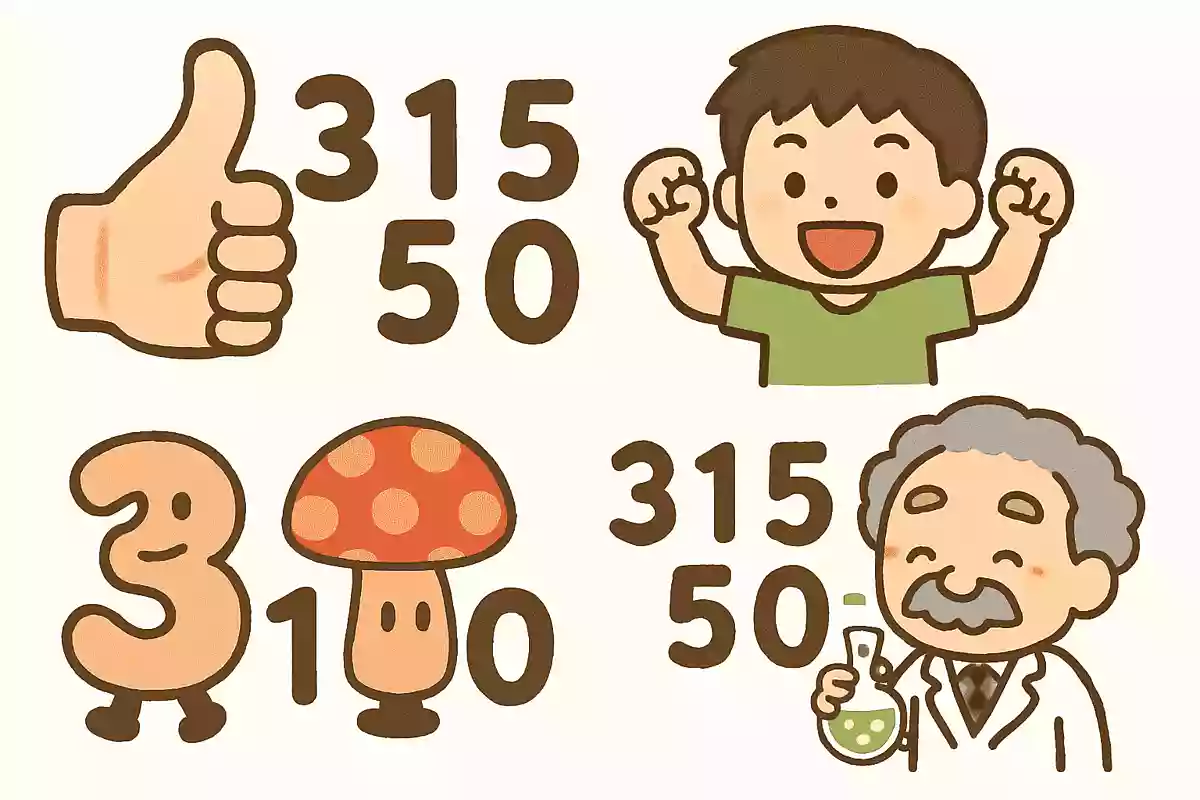
Easy to use in everyday life! Here are some ideas for “3150 (saikō).” Many of you have probably seen this number-based pun on social media, right? The “3150 pose” got popular along with it, too.
It’s said to have started as a wordplay used by Shiro Kameda, but it spread rapidly online and seems to have caught on with young people as well.
The word saikō (“awesome” or “the best”) is also very versatile for expressing happiness or fun, so it’s easy to use—and pretty entertaining, too.