

Easy to remember and fun! A collection of number pun/mnemonic ideas

Just like reading “4649” as “yoroshiku,” these are puns that combine numbers and words.
While they’re often introduced as a tip for memorizing historical dates, they also come in handy in unexpected places—like making November 22nd “Good Couple Day,” putting nicknames on class T-shirts, or choosing a car license plate number.
This time, I’ll introduce some easy-to-remember and fun number-word puns.
You can also use them as quiz-style recreational activities.
Be sure to try creating your own original ones, too.
- Cute and funny mnemonics made with four-digit numbers
- Boost your vocabulary with four-character idioms that include numbers! A collection of four-character idioms for elementary school students to learn.
- Four-character idioms with numbers: clear explanations of meanings and usage
- [Rec] Interesting! A roundup of wordplay games
- Funny palindromes. A masterpiece collection that makes you burst out laughing when you imagine them.
- Ideas for the Telepathy Game: From Classic Crowd-Pleasers to Unexpected Topics
- A fun number-guessing magic trick! A collection of easy ideas
- You can’t help but laugh! A collection of funny puns you’ll want to share with someone
- [Interesting] Summary of Kanji Reading Quiz Questions
- Amusing four-character idioms you’ll want to use right away! A collection of expressions to remember as general knowledge.
- Games for conversation practice: a collection of ideas everyone can enjoy
- All-Agree Game Prompt Ideas! A Collection of Topics to Get Everyone Excited
- Get hyped! Tongue twisters that sound cool if you can say them—wordplay that makes you want to take on the challenge
Easy to remember and fun! A collection of number pun ideas (1–10)
Good work, 5963.
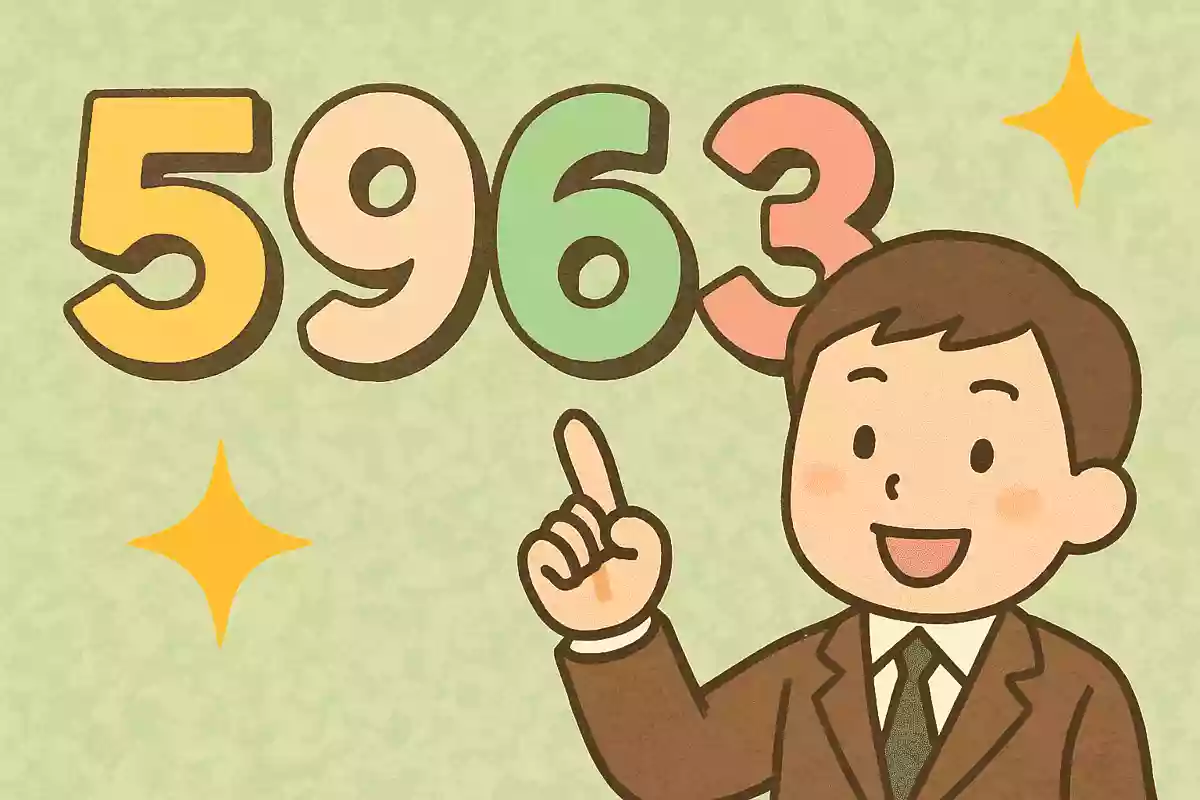
I want to intentionally use a number pun! Here are some ideas for “5963,” which reads as gokurō-san, meaning “good job” or “thanks for your hard work.” Back when pocket pagers—small wireless beepers—were common, a culture emerged of expressing everyday messages through numeric wordplay.
Since this pun has been used since that era, it could be fun to use it on purpose in family chats.
You might even get a reply using a different number pun! It’s the kind of wordplay that can prompt conversation, like, “What does this mean?”
810/heart
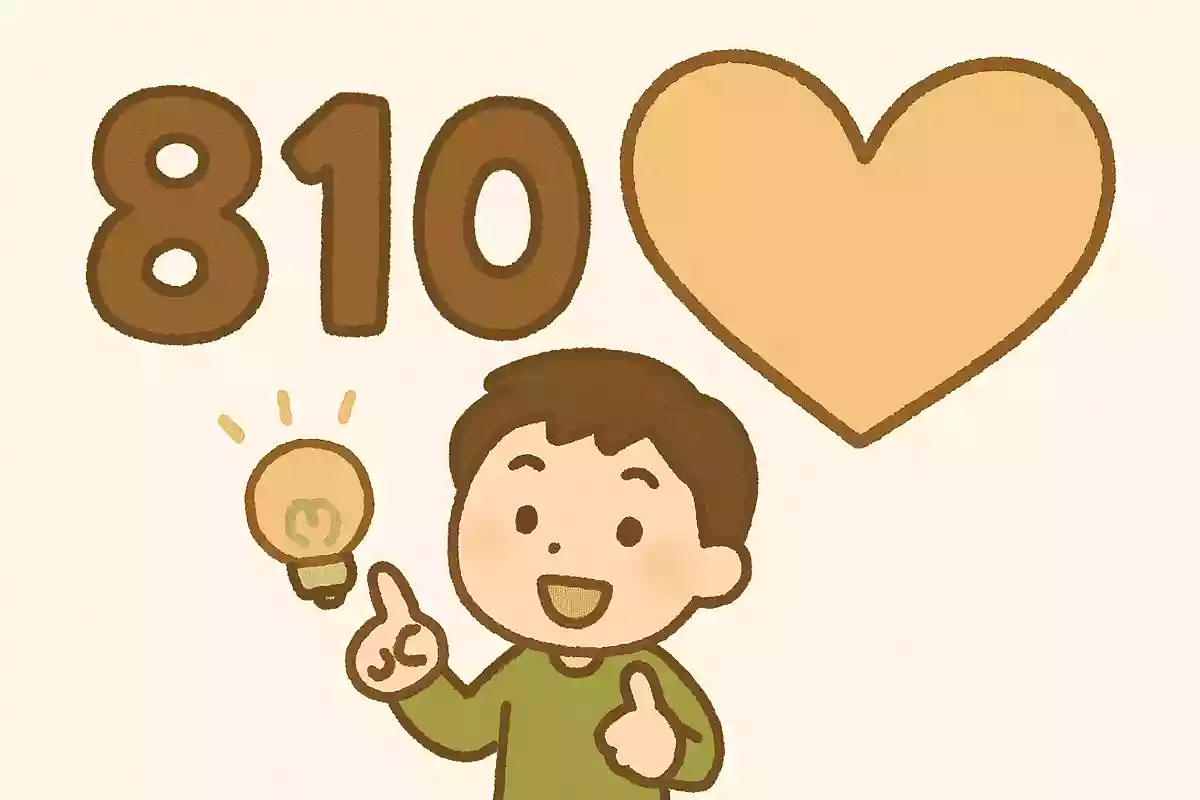
A cute number-word pun! Here’s the idea for “810 / heart.” It’s perfect for situations where you can’t use emojis or stickers—like usernames on social media, email addresses, or jersey numbers on class T-shirts for a school sports day.
This is a great idea for anyone who wants to add a touch of cuteness! Combining different number puns could be fun, too.
It would pair well with combinations like “8251 / first love.” Try customizing it as you use it!
1122 / Good Couple

Recommended for anniversaries and the day you submit your marriage registration! Here are some ideas for “1122/Good Couple.” On social media and in the media, November 22 has become a standard “Good Couple Day.” It seems it began to take hold generally in the 2000s.
Thanks to its memorability and positive, forward-looking meaning, many people choose it for anniversaries or to submit their marriage paperwork.
It’s a play on numbers that makes you want to express gratitude and thoughtfulness to each other.
We hope it becomes a lovely day, full of cuteness and wrapped in love!
Easy to remember and fun! A collection of number pun ideas (11–20)
716 / Seven Colors
Imagine a colorful rainbow! Here are some ideas for “716/Seven Colors.” In Japan, many people probably associate “seven colors” with a rainbow.
Interestingly, the number of colors in a rainbow varies by country.
For example, in the United States it’s often described as six colors; in Russia and Indonesia, four; and among Taiwan’s Bunun people, three—there are many perspectives, and it’s fascinating.
Since the boundaries between colors in a rainbow appear fuzzy, I think it’s fine for everyone to see it differently.
It could also be fun to decide together with friends or family what aspects of the seven colors you want to express with “716.”
No way, my lord! (1853) Perry’s arrival

During the Yamato period, the Ashikaga era, and the time of Toyotomi Hideyoshi, advances into Korea and China long captivated Japanese history.
It’s easy to imagine Japan’s astonishment upon learning that neighboring China—whom they themselves had never managed to subdue—was invaded by Great Britain, a small island nation.
Soon after, Perry arrived in Japan with his Black Ships, so of course people felt, “1853? No thank you!” It’s curious how neatly that number pun fits.
Japan, which had maintained sakoku (national isolation) for so long, accepted the outrageous demands of Perry’s squadron and was drawn into the maelstrom of the world…
If only there weren’t tests, history would be so much more fun!
3.141592653 (pi) — a groom in a foreign land
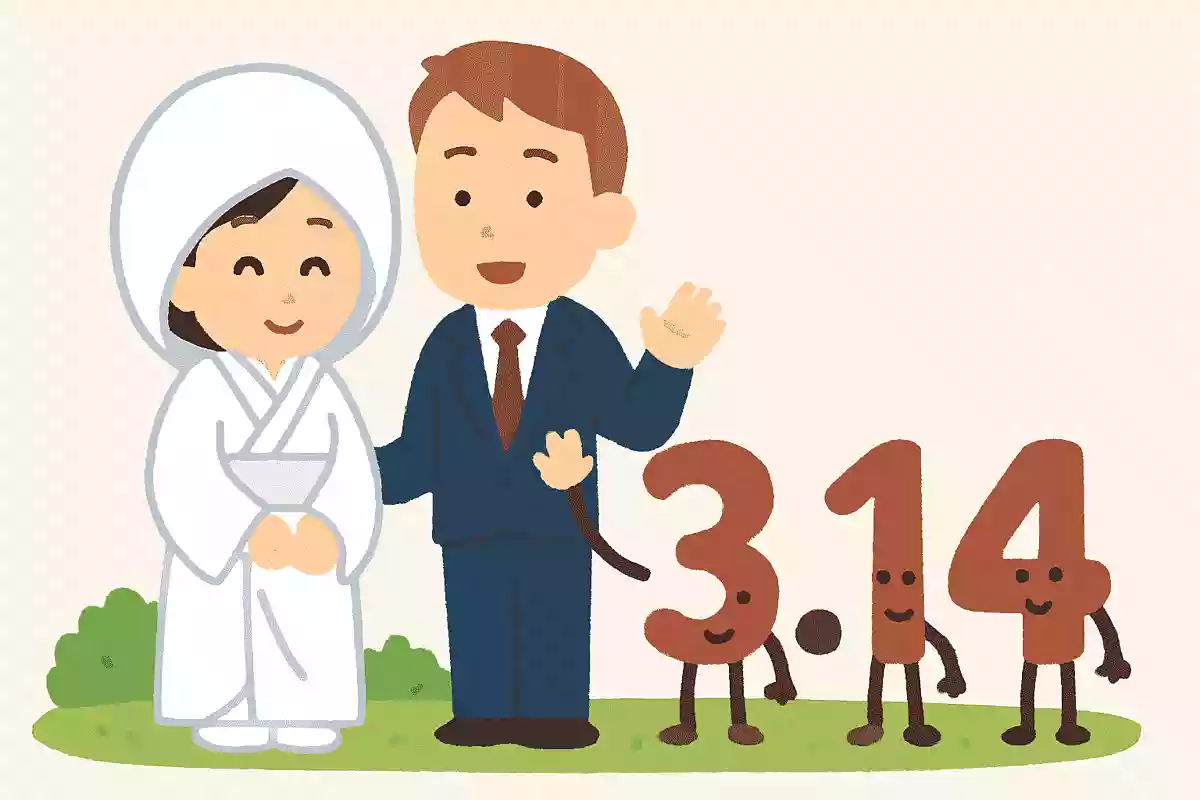
During the era of “yutori education,” the value of pi was set to “3.” The program boldly began by giving students Saturdays completely off to foster “zest for living,” but it ultimately led to a decline in academic performance and was later reversed—something widely known.
Pi was restored to the original 3.14.
Once you reach junior high school, π/pi shows up, so your time with it is brief, but even as adults, everyone remembers the word “pi,” right? The mnemonic is ‘san ten ichi yon—ikoku ni muko-san’ (3.14—“a groom to a foreign land”).
Even if you remember the digits up to 4, you don’t really use them…
How splendid—Heijō-kyō (in 710)!
This is a very personal impression, but compared to Heian-kyō, Heijō-kyō feels a bit plain—what do you all think? I think it’s brilliant that people matched the year Heijō-kyō was founded, 710, with the exclamation “nanto!” (“how surprising!”) as a mnemonic.
The site of Heijō-kyō is now the National Heijō Palace Site Historical Park, one of Nara’s tourist attractions.
There’s enough to keep you busy all day, from a photo exhibition themed on summer birds to a hands-on corner where you can make Sue ware, an ancient type of pottery.
If you’re in the area, definitely stop by!