

Recreation Popularity Rankings for Seniors

We’ll introduce recreational activities for seniors in a ranked format.
The focus is on indoor activities that can be enjoyed even by those with weak legs or who have difficulty going out.
If you’re looking for recreation that seniors will enjoy, want games that can be done while seated, or need activities with simple rules, please use this as a reference.
These ideas can also be used during recreation time at day service centers and care facilities.
Let’s create fun moments together.
- [For Seniors] Easy and fun seated activities you can do in your room
- For Seniors: Fun and Lively Exercise Recreation
- [For Seniors] Simple Tabletop Games: Fun and Engaging Recreational Activities
- [For Seniors] Refresh Your Mood! Lively, Get-Moving Games
- Recreation Activities Effective for Long-Term Care Prevention for Seniors
- [For Seniors] Today’s Recommended Activity: Fun and Engaging
- [For Seniors] Simple Recreational Activities You Can Enjoy While Seated
- [For Seniors] Hand and finger play roundup: Finger exercises that lead to brain training
- For Seniors: Effective Recreation for Preventing Care Needs—Have Fun While Staying Healthy
- [For Seniors] Fun and Engaging Recreational Activities in Nursing Homes
- [For Seniors] Recommended Easy Strength Training
- [For Seniors] Have Fun and Relieve Stress! Introducing Dances Everyone Can Enjoy Together
- [For Seniors] Fun Autumn Activities: Recreation Games
Recreation Popularity Rankings for Seniors (71–80)
Local Specialty Quiz71rank/position

A perfect option for brain training is the “Local Specialties Quiz.” Most people have a rough idea of each prefecture’s famous products.
This quiz simply asks you to name them.
Some prefectures are known for multiple specialties, so in those cases, prepare several choices and have participants pick the one that isn’t a local specialty.
Since it’s a quiz that heavily tests memory, it’s great to try repeatedly and aim for a perfect score.
If you come across a specialty that piques your interest during the quiz, try looking into it in detail—or even tasting it yourself.

Table hockey72rank/position

Let us introduce a game that gets everyone excited with simple preparation: table hockey.
Once you have a table ready, build walls at both ends so the ball won’t fall off.
Make mallets out of cardboard, and when you have a ping-pong ball, the game begins.
Push the ball to make it fall onto the opponent’s side, and race to five points.
It’s a simple yet incredibly thrilling game.
It can also help with rehabilitation from the hands to the shoulders, so even those who don’t like rehab can enjoy getting exercise benefits.
Give it a try!

cherry blossom73rank/position

There are various theories, but it is said that wild species of cherry trees have existed in Japan since ancient times.
Representative wild species include Yamazakura and Oshima-zakura.
It’s understandable that something like a “sakura culture” runs through the DNA of the Japanese people, who have been gazing at blossoms blooming in spring for nearly 2,000 years.
Of course, in the world of haiku it is also one of the most frequently used seasonal words, and Matsuo Bashō’s famous line “Samasama no koto omoidasu sakura kana” (“Cherry blossoms that bring to mind all manner of things”) appears in many textbooks.
There are so many sakura-related seasonal words—such as hana no en (flower banquet), hanagoromo (flower robes), hana-zukare (flower weariness), yozakura (cherry blossoms at night), and hanami-bune (flower-viewing boats)—that they can’t all be listed here.
When composing a haiku, it’s better to avoid making the scenery overly grand.
Kanji Guessing Game74rank/position

Let’s play a kanji guessing game that’s fun even with a big group! You write a kanji on a whiteboard one stroke at a time—but doing it in the normal order would be boring! So mix up the stroke order and write it randomly instead.
That makes the game harder and more exciting.
Even simple, familiar kanji become tricky to recognize when you change the stroke order.
Take it slow, add one stroke at a time, and have fun!

Kanji riddle problems75rank/position

Here is an idea for a spark-of-inspiration style brain-training game themed around kanji: “Kanji Riddle Challenges.” Instead of focusing on readings or radicals, the appeal lies in a fresh way to enjoy kanji by paying attention to their appearance and how they combine.
What happens if you split this kanji in two? What if you flip the top and bottom? Seemingly simple, yet surprisingly deep—these puzzles demand a shift in perspective.
For those who’ve grown up familiar with kanji, the satisfaction and delight of reaching the answer are exceptional.
As you play, your concentration and memory are naturally stimulated.
It’s an intelligent and fun kanji riddle game, perfect both for quiet, thoughtful moments and for lively play with others.
How many days are there in a leap year?76rank/position
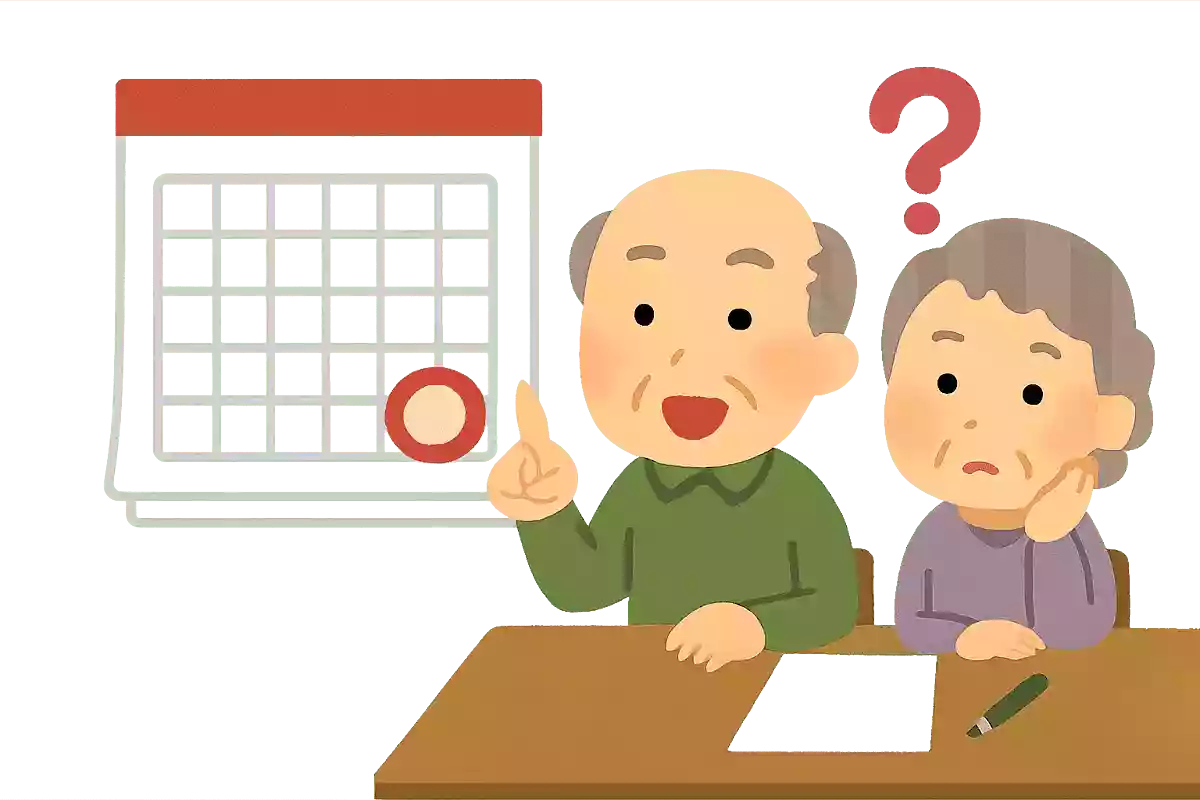
- 366 days
- 364 days
See the answer
366 days
A leap year comes around once every four years. In an ordinary year, February ends on the 28th, but only in a leap year does February 29th exist. Since that year has one extra day, the answer is 366 days. You might be momentarily confused—Which is it?—but if you think about it carefully, it makes sense!
What is the nickname ending with “-chan” for the inflatable vinyl dolls known by names like “Tree-climbing Winky” and “Kuronbo Bura-chan”?77rank/position
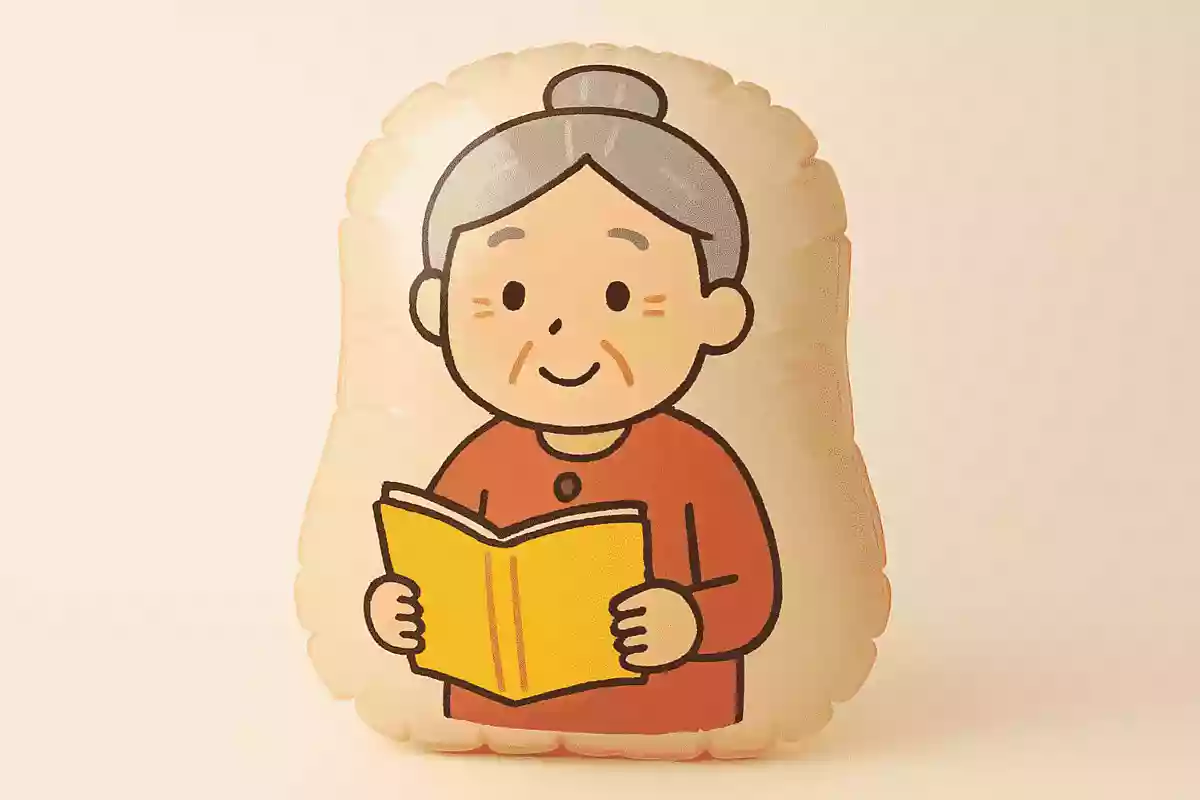
The inflatable vinyl doll that was sold under names like “Tree-Climbing Winky” and “Little Blacky Bura-chan” is widely remembered as rarely being called by its product name.
Popular across generations, this doll—shaped to cling to a tree, as the names suggest, and often worn wrapped around the arm—was affectionately known as “Dakko-chan” (Hug-chan).
Perhaps due to the lasting impact of this nickname, the 21st-century revival adopted “Dakko-chan” as its official product name.
