

Ranking of Popular Folk Songs

That nostalgic melody, passed down through generations—the heart of our hometowns.
We’ve researched a wide range of folk songs from past to present, from East to West! In this article, we’ve selected popular tracks based on reliable feedback from music fans who’ve contributed to our site so far.
Among them, we’ll introduce the most acclaimed ones in a ranked format.
Please take a look.
We also researched children’s songs like nursery rhymes and lullabies, as well as work songs and songs for ceremonies and events.
In recent years, new ways of listening to folk music—championed by acts like Minyo Crusaders and Riyō Sanmyaku—have been attracting a fresh audience.
- Folk songs you’ll want to sing at karaoke: classic and popular tunes everyone can enjoy
- [Japanese Folk and Regional Songs] A Collection of Beloved Masterpieces from Across Japan, Brimming with Local Pride
- Ranking of popular songs for senior citizens
- Ranking of Popular Children's Songs [2026]
- Folk songs, children's songs, and nursery rhymes of Nagasaki: the heart of the hometown passed down through song
- Okinawan folk songs, children’s songs, and nursery rhymes: the heart of our hometown passed down through song.
- Popular Songs Ranking for Toddlers
- [Folk and Children's Songs of Hokkaido] Songs of Hokkaido that continue to be loved across generations
- Collection of winter nursery rhymes, folk songs, and children's songs. Includes fun winter hand-play songs too.
- Children’s songs, school songs, and nursery rhymes with a river theme. Beloved classics about nostalgic watersides.
- Nursery rhymes to sing in spring: a collection of classic songs you'll want to sing with your children
- [Warabe-uta] Beloved Classic Songs Passed Down Through Generations
- [Sky-Themed Nursery Rhymes and Songs] Children’s Songs Loved Across Generations
Folk Song Popularity Ranking (71–80)
Child of Autumn71rank/position

Here is a song with lyrics by Hachirō Satō, known for works like “I Found a Little Autumn” and “Happy Hinamatsuri.” The music was composed by Yasuo Suehiro, who is also known as the director of an aquarium.
You can feel Satō’s warm, affectionate perspective toward children in the lyrics.
It may be less well-known among children’s songs, but it’s a lovely piece—please try singing it together with your child.
It’s a charming song filled with the spirit of Japan’s good old days.

Bountiful Harvest Dance72rank/position

Hounen Ondo has an upbeat ondo rhythm that feels great.
This song is a Ryukyuan folk tune in the “kachaashii” genre, meant to be danced at a fast tempo while shaking your wrists side to side.
Along with Tinsagu nu Hana’s famous counterpart “Tōshin Dōi,” it’s extremely popular in Okinawa! The drum phrases that emphasize the off-beats here and there are striking, giving it a vibe like a rock ’n’ roll version of Okinawan folk music.
It’ll make you want to jump into an Eisa dance!

Snow (Yuki ya Konko)Sakkyokusha: Fushō73rank/position

When it snows, many people probably think of this song first! One of the most iconic children’s songs about snow, “Yuki” (Snow).
It warmly portrays the scene of snow piling up and how dogs and cats react differently when it snows.
Even though it’s cold outside, it somehow makes you feel cozy inside.
Snow can be a hassle for adults, but for children it’s fun even in the cold! It would be nice to sing this song and then go play in the snow when it piles up.

A Town Where It SnowsSakkyoku: Nakada Yoshinao74rank/position

Yuki no Furu Machi o is a slightly melancholic children’s song that depicts a town where cold snow falls.
First introduced in 1951 as an insert song for the radio drama Eriko to Tomo ni broadcast on NHK Radio, it has a long history.
It was later featured on Minna no Uta, which helped it gain wider recognition.
Winter’s chill has a way of making us feel lonelier and more desolate than in other seasons, stirring a bittersweet mood.
This subtly mature children’s song expresses the hope that such feelings will drift away with the cold winter wind as we move toward the warmth of spring.
Red sky at duskSakushi: Nakamura Ukō / Sakkyoku: Kusakawa Shin75rank/position

In autumn, sunsets look especially beautiful, don’t they? It depends on the region, but in November the sun usually sets around 5 p.m., so if you’re out for an evening walk with a little child, there’s a good chance you’ll catch the sunset.
At times like that, how about singing this song together with your child? Parents will certainly know it, and since it’s a classic children’s song, your child has probably learned it somewhere too.
It may seem like an ordinary moment, but it’s sure to become a scene that remains in your child’s heart as a lasting memory of autumn.

King Kamehameha of the Southern Islandssakushi: itō akira / sakkyoku: morita kōichi76rank/position
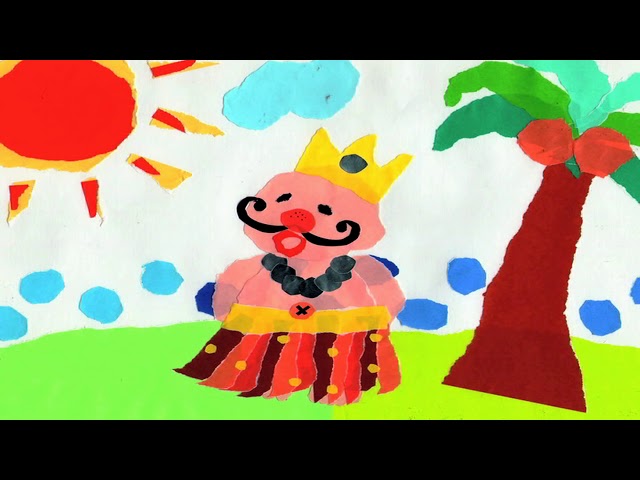
This is a heartwarming song that lightens the spirit, depicting the laid-back daily life of King Hamehameha and his family on a southern island.
The unique premise is that everyone on the island shares the same name, and their relaxed tropical lifestyle is sung over a warm melody.
It was first broadcast in 1976 on NHK’s “Minna no Uta,” performed by Ado Mizumori and Top Gallant.
The accompanying puppet-show visuals also drew attention, and the song was released that June as a double A-side single.
Sing it with the whole family and you’re sure to enjoy a delightful time!
FlowerSakushi: Takeshima Hane / Sakkyoku: Taki Rentarō77rank/position

The spring classic “Hana” was composed by Rentaro Taki.
Its rhythmic melody conveys the buoyant feeling of spring! The lyrics depict the colorful, splendid scenes typical of the season.
Simply listening to the song while taking in the lyrics brings vivid springtime images to mind.
Because the Sumida River appears in the lyrics, Tokyo’s Sumida City has adopted the song as a beloved community anthem.
There is also a monument inscribed with the lyrics in Sumida Park along the Sumida River.
Take a cheerful stroll along a springtime path and sing along!