

Ranking of Popular Folk Songs

That nostalgic melody, passed down through generations—the heart of our hometowns.
We’ve researched a wide range of folk songs from past to present, from East to West! In this article, we’ve selected popular tracks based on reliable feedback from music fans who’ve contributed to our site so far.
Among them, we’ll introduce the most acclaimed ones in a ranked format.
Please take a look.
We also researched children’s songs like nursery rhymes and lullabies, as well as work songs and songs for ceremonies and events.
In recent years, new ways of listening to folk music—championed by acts like Minyo Crusaders and Riyō Sanmyaku—have been attracting a fresh audience.
- Folk songs you’ll want to sing at karaoke: classic and popular tunes everyone can enjoy
- [Japanese Folk and Regional Songs] A Collection of Beloved Masterpieces from Across Japan, Brimming with Local Pride
- Ranking of popular songs for senior citizens
- Ranking of Popular Children's Songs [2026]
- Folk songs, children's songs, and nursery rhymes of Nagasaki: the heart of the hometown passed down through song
- Okinawan folk songs, children’s songs, and nursery rhymes: the heart of our hometown passed down through song.
- Popular Songs Ranking for Toddlers
- [Folk and Children's Songs of Hokkaido] Songs of Hokkaido that continue to be loved across generations
- Collection of winter nursery rhymes, folk songs, and children's songs. Includes fun winter hand-play songs too.
- Children’s songs, school songs, and nursery rhymes with a river theme. Beloved classics about nostalgic watersides.
- Nursery rhymes to sing in spring: a collection of classic songs you'll want to sing with your children
- [Warabe-uta] Beloved Classic Songs Passed Down Through Generations
- [Sky-Themed Nursery Rhymes and Songs] Children’s Songs Loved Across Generations
Folk Song Popularity Ranking (71–80)
play yardMaekawa Morikata78rank/position

Mamoru Maekawa is a singer who specializes in Okinawan folk music.
His 1988 release “Asibinaa” is an easy-to-listen-to track with a light, lively rhythm.
By the way, the title is pronounced “ashibinaa.” Its approachable arrangement, which also resonates with modern pop, makes it a great recommendation even for people who don’t usually listen to Okinawan folk.
I’ve heard it’s popular in karaoke boxes in Okinawa as well, showing how its friendly melody is loved by many.
Since it’s so well-known, it also seems like a good choice for dancing Eisa!

We are children of the sea.Monbushō shōka79rank/position

When it comes to classic children’s songs about the sea, “Ware wa Umi no Ko” (We Are Children of the Sea) stands out.
First published in 1910 in the Ministry of Education’s Elementary School Reader as a song for singing, it has long been loved and cherished.
Although the lyricist and composer are unknown, it is considered a masterpiece and was selected as one of Japan’s 100 best songs.
The scene it depicts is the summer sea.
The lyrics are said to portray the growth of a boy raised by the seaside.
With imagery that evokes the sound of the wind and the sight of vast seas crowned with whitecaps, it is a work of grand scale.
It’s the kind of song you’ll want to sing out clearly during the summer, picturing the ocean landscape.

Frog Chorus80rank/position

Speaking of rounds, “Frog Chorus”! Surely everyone has tried singing it as a round at least once, right? It only has a first verse, and the lyrics are very simple, so you won’t spend time memorizing them and can start enjoying the round right away—that’s one of this song’s charms.
Plus, you can come in every two measures from anywhere, which makes it easy to catch the timing.
It’s truly the perfect song for your first round! Encourage the entry with a big, “Ready, go!”

Popular Folk Song Rankings (81–90)
The Bento Box Song81rank/position

When it comes to classic nursery songs that parents and children can enjoy together, “Obentōbako no Uta” (The Lunchbox Song) is a top choice, isn’t it? It’s fun to learn and dance the moves with your child that match the side dishes in a lunchbox.
It might even spark their interest in food or help reduce picky eating.
You could also try packing the same side dishes mentioned in the song’s lyrics into an actual bento.

Tanuki of Fist Mountain82rank/position
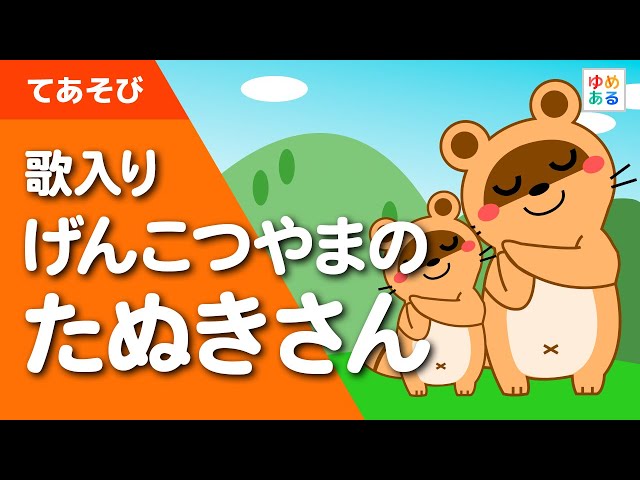
As a hand-play song, the nursery rhyme “Genkotsuyama no Tanukisan” is something children can enjoy while playing.
It depicts a baby raccoon living on a mountain called Genkotsuyama, nursing from its mother and then falling asleep in her arms.
In the hand-play, matching the word “genkotsu” (fist) in “Genkotsuyama,” you start the song by alternately tapping your two fists up and down.
After that, you move your hands according to the lyrics.
At the end of the song there’s also a rock-paper-scissors part, so if your child has learned how to play, be sure to try that together too!

Piglet-raccoon dog-fox-cat83rank/position

This is a famous play song that has long been loved on NHK’s program “Okaasan to Issho,” with a vocal version by Yuko Kanzaki and Osamu Sakata released in February 2007.
Written and composed by Naosumi Yamamoto, it’s packed with the fun of wordplay that strings together four animals.
Its short lyrics and easy-to-remember melody are part of its charm, making it enjoyable even for small children.
When rainy seasons keep you indoors, why not sing it at home or in daycare?
Zuizui Zukkorobashi84rank/position

It’s a traditional Japanese children’s song that has been passed down for generations.
The lyrics also use old Japanese words.
It’s often sung during games to choose “it” or to pick someone.
A mouse that comes to eat rice appears in the song.
It’s a nursery rhyme you can sing with grandparents.
