

Children’s songs, school songs, and nursery rhymes with a river theme. Beloved classics about nostalgic watersides.

Children’s songs and school songs that entrust the babbling and flow of rivers to music are filled with a unique sentiment that deeply resonates with the Japanese heart.
From nostalgic tunes hummed in childhood to memorable songs learned at school, many people still remember river-themed pieces even as adults.
In this article, we introduce works that sing of the river’s beauty as it changes with the seasons and of the creatures that live in and around it.
Please enjoy as you bask in fond memories.
Children’s songs, school songs, and nursery rhymes with a river theme. Beloved classic melodies of waterside nostalgia (1–10)
hometownSakushi: Takano Tatsuyuki / Sakkyoku: Okano Teiichi

Published in 1914 in Songs for Elementary School, Sixth Grade, “Furusato” is a piece known not only in Japan but around the world as a beautiful Japanese song.
For many years the lyricist and composer were unknown, but in the late 1960s it was determined that the lyrics were by Tatsuyuki Takano and the music by Teiichi Okano, and since 1992 both names have been printed in music textbooks.
The song is also familiar for its use as train departure melodies in various regions and in community disaster-prevention broadcasts.
Song of the RiverSakushi: Mine Akira / Sakkyoku: Nakata Yoshinao
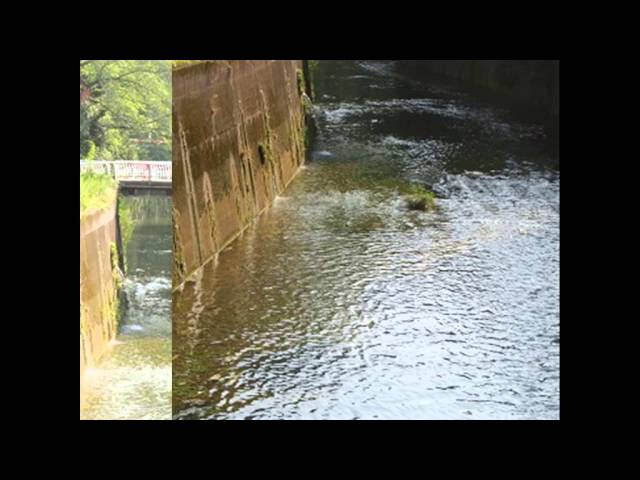
This is a heartwarming choral piece by lyricist Miné Akira, who had a deep compassion for child welfare, and by Nakata Yoshinao, known for many classic children’s songs.
Through the image of an ever-flowing river, it gently portrays the workings of life and the passage of time.
With simple words, it weaves a gaze filled with affection for the shimmering water’s surface and the living creatures that breathe there, and listening to it evokes a calm, peaceful scene in the mind.
This work is also included in a choral collection for elementary school students, for which the sheet music was released in December 2022.
The river is calling.Guy Beart

A heartwarming classic that likens the murmuring river and the vibrancy of life to the irreplaceable image of a young girl.
Sung from the gentle perspective of an older man watching over her, the lyrics make you feel as if you’re listening to a story.
The song was composed as the theme for the 1957 French film “L’Eau vive,” and it topped the French charts for three weeks in June 1958.
In Japan, it was also broadcast on the program “Minna no Uta,” so many may find it nostalgic.
It’s a song full of gentle charm that you’ll want to listen to on a calm afternoon while picturing scenes of nature.
riverSakushi: Hayashi Genzaburō / Sakkyoku: Fukuda Wakako

This is a heartfelt song that likens life’s journey to the flow of a mighty river.
The lyrics were written by Gonsaburo Hayashi, with music composed by Wakako Fukuda.
It depicts a river traveling single-mindedly toward the sea, mirroring people who press forward while believing in their dreams.
Broadcast on NHK’s “Minna no Uta,” it became a beloved classic for many listeners.
It was also released as a single in December 2021.
If you’re about to take a step toward something new, listening to this song may give you a quiet courage.
A Little Bear in the RainSakushi: Tsurumi Masao / Sakkyoku: Yuyama Akira

This song depicts an adorable bear cub observing its surroundings in the rain.
You can vividly picture the cub’s innocent curiosity as it delights in the rain, peers into a brook, and looks for fish.
First featured on NHK Television’s “Uta no Ehon” in June 1962, the song was later included in school textbooks and became widely beloved.
A picture book based on the song, “Amefuri Kumanoko” (The Little Bear in the Rain), has also been published, so it’s fun to enjoy it alongside the book.
It’s a heartwarming children’s song that will make you look forward to rainy days.
The kappa knows.Sakushi: Sakurai Yoko / Sakkyoku: Sakita Hajime

This unique song features a meddlesome kappa who lives by the river and gently teaches kids about the dangers lurking near the water.
It comically portrays the kinds of things children tend to do—like going near the water when adults aren’t watching or chasing after sandals that have been swept away.
Created with the hope of preventing water-related accidents, the song aired in August 2023 as a tie-in on NHK’s “Minna no Uta.” Before heading out to the waterside, why not hum this tune together as a family and go over the safety rules?
Whose river is it?sakushi sakkyoku: Minami Ranbō

“Whose River Is It?” was broadcast on NHK’s Minna no Uta in 1995 and became widely known, especially among children.
The following year, it was released as a single CD by Nippon Columbia, performed by the Tokyo Broadcasting Children’s Choir.
The song conveys the origins of a river and the importance of rivers.