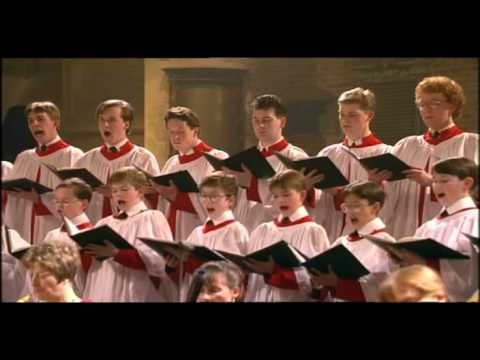
Georg Friedrich Handel, a German-born composer known as a major figure of the late Baroque period.
Despite parental opposition, he immersed himself in music, and from a young age his extraordinary talent was evident—he surpassed his teachers in composition, organ, harpsichord, and violin.
In this article, we present a ranking of Georg Friedrich Handel’s most popular works.
Whether you’re a classical music enthusiast or not, be sure to check it out!
Hallelujah Chorus from “Messiah”Georg Friedrich Händel72rank/position
Handel, Messiah – Hallelujah
This piece was composed as an oratorio—a musical drama that tells a story through music alone—belonging to a genre Handel had newly turned his attention to.
“Messiah” comes from the English rendering of “the Savior,” and “Hallelujah” is a word of Hebrew origin meaning praise.
Although it is a sacred work that sings of the life of Jesus Christ, many people in Japan may listen to it without knowing much about its content, partly due to the language difference.
That said, the “Hallelujah Chorus” has a catchy melody that everyone knows—and can sing.
Water Music, Suite No. 1 – AndanteGeorg Friedrich Händel73rank/position
George Frideric Handel – Water Music Suite No. 1 in F Major: Andante – London Symphony Orchestra
Handel was a German musician.
The suite Water Music was premiered in 1717 during a royal boating party on the River Thames.
In the Andante of the First Suite, to the slow accompaniment of harpsichord and strings, two oboes perform a calm, elegant, solemn, and wistful melody.
“Lascia ch’io pianga” from the opera RinaldoGeorg Friedrich Händel74rank/position
007 Handel from the opera Rinaldo: Let me weep (Lascia ch’io pianga)
An aria sung in the opera Rinaldo, it expresses the heroine’s sorrow in captivity and her longing for freedom.
The melody is simple yet laden with deep emotion, characterized by a gentle triple meter and a memorable, recurring melodic line.
Premiered in February 1711, this piece is part of Handel’s first Italian opera presented in England and served as a catalyst in establishing his international fame.
It is a recommended piece for those interested in the world of opera or wishing to experience the beauty of Baroque music.
Using a hymn for a chorus competition is fresh and great, isn’t it? Since it’s a well-known piece, it should go over well.
If you want to sing it joyfully like gospel, commit fully to that approach; if you want to emphasize cohesion as a choir, you’ll need appropriate arranging and practice in the choral singing style.
Harp ConcertoGeorg Friedrich Händel77rank/position
Handel: Harp Concerto, 1st Movement / Kyoto Botanical Garden
An elegant piece in which the harp’s timbre resonates pleasantly.
Until Handel composed solo works for the harp, the instrument had never truly taken a leading role; however, this piece sparked the creation of numerous harp concertos.
It’s music you can listen to naturally, yet it conveys a profound depth.