

Georg Friedrich Handel Popular Songs Ranking [2026]

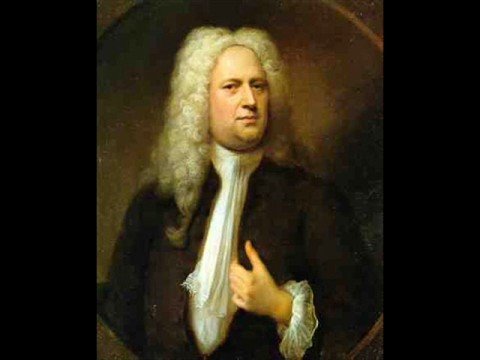
Georg Friedrich Handel, a German-born composer known as a major figure of the late Baroque period.
Despite parental opposition, he immersed himself in music, and from a young age his extraordinary talent was evident—he surpassed his teachers in composition, organ, harpsichord, and violin.
In this article, we present a ranking of Georg Friedrich Handel’s most popular works.
Whether you’re a classical music enthusiast or not, be sure to check it out!
- Handel’s Masterpieces | A Comprehensive Introduction to His Popular Works
- George Frideric Handel Popular Songs Ranking [2026]
- Mendelssohn’s Masterpieces | Popular Classical Music
- [Haydn] Pick up famous and representative pieces!
- Jean-Philippe Rameau Popular Songs Ranking [2026]
- [Baroque Music] A Curated Selection of Timeless Masterpieces and Famous Works
- A famous piece by Georg Philipp Telemann. Popular classical music.
- Johann Nepomuk Hummel Popular Song Rankings [2026]
- Carl Maria von Weber Popular Song Rankings [2026]
- César Franck Popular Songs Ranking [2026]
- Niccolò Paganini Popular Song Rankings [2026]
- Gabriel Fauré Popular Songs Ranking [2026]
- François Couperin Popular Songs Ranking [2026]
Georg Friedrich Händel Popular Songs Ranking [2026] (1–10)
Water Music: HornpipeGeorg Friedrich Händel8rank/position

There is an orchestral suite by George Frideric Handel written to adorn a royal river outing, and one of its pieces combines a refreshing coolness with festive brilliance that suits summer perfectly.
At its premiere on the Thames in July 1717, it captivated audiences so much that King George I reportedly ordered multiple encores.
With trumpets and horns in lively motion, it lifts listeners into a bright, celebratory mood.
It’s also known for coloring a scene in the film Dead Poets Society.
For those seeking a brisk, invigorating moment on muggy days, or anyone who wants to enjoy the majestic yet light charm of Baroque music with ease, this piece is just the thing.
The Sprightly BlacksmithGeorg Friedrich Händel9rank/position

The Harmonious Blacksmith is the concluding piece of a harpsichord suite published by George Frideric Handel in 1720.
The work consists of a recurring theme and five refined variations, featuring technical elements throughout such as trills, arpeggios, and triplets.
Today, it is widely known as a staple piece for piano learners, and listening to it on instruments actually used in the Baroque era—like the harpsichord—can leave quite a different impression.
Water MusicGeorg Friedrich Händel10rank/position

It’s a Handel piece whose generous, flowing music lets you picture a broad river, gently soaking into the heart and bringing comfort.
It wouldn’t be an exaggeration to call this the essence of classical music.
The slightly Baroque feel is truly lovely.
Georg Friedrich Händel Popular Song Rankings [2026] (11–20)
The Lucky BlacksmithGeorg Friedrich Händel11rank/position

A piece composed by George Frideric Handel, who was active in an era before the piano had been invented.
It is one of the suites written for the harpsichord, the keyboard instrument of that time.
Its bright and lively character perfectly matches the image suggested by the title “The Harmonious Blacksmith,” making it a delight to listen to.
A simplified version with fewer notes is included in many beginner piano books, so it’s also very popular as a recital piece.
It might be nice to spend some calm time with your baby on the way and play it on the piano for them to hear.

“Ombra mai fu” from the opera “Xerxes”Georg Friedrich Händel12rank/position

An aria from Act I of Handel’s opera Xerxes.
King Xerxes I of Persia, resting comfortably in the shade of a tree, sings of his love for the plane tree’s shade, declaring that never before has there been such dear, gentle, and pleasant shade.
It’s a piece that evokes dappled sunlight, a gentle breeze, and the enveloping comfort of a soothing canopy of leaves.

Hallelujah from the oratorio MessiahGeorg Friedrich Händel13rank/position
Handel’s Messiah is a masterpiece of oratorio that stands alongside Bach’s St.
Matthew Passion, and it is famous in European concerts for the audience giving a standing ovation during the “Hallelujah Chorus.” This custom stems from the British tradition of standing when songs praising God are performed.
Come Again to Please Me (from the opera “Alcina”)Georg Friedrich Händel14rank/position

The dazzlingly beautiful “Tornami a vagheggiar,” which sings of the feeling of love, is a famous da capo aria from one of the masterworks of opera by the great Baroque composer George Frideric Handel, Alcina.